• Looking for a smarter way to manage your heating this winter? We’ve been testing the new Aqara Radiator Thermostat W600 to see how quiet, accurate and easy it is to use around the home. Click here read our review.

Extending Ring Main in Kitchen - Advice.

Joined
9 Jan 2025
Messages
15
Reaction score
2
Country
United Kingdom
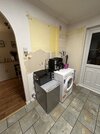
Stripped out my kitchen and looking to extend the ring main as the kitchen has next to no sockets to use.

I have one existing socket on this wall and I’m looking to extend the ring to add two single sockets and two double sockets. See photo attached. The circuit is 32amp.

Just want some confirmation that this would work and that I can extend the ring in two directions from a socket. Or is it better to extend the ring in one direction and just spur in the other?

Cheers
 

Attachments

  • image.jpg
    image.jpg
    428.1 KB · Views: 59
  • IMG_2451.jpeg
    IMG_2451.jpeg
    317.5 KB · Views: 57
Do you understand what a ring final is?
Ring final.jpg
the whole idea is it goes in a ring, and all sockets can be fed from either leg, so the load is shared.

The problem I find with a ring final is the maximum permitted loop impedance is 1.38Ω and most of the cheap testers pass at 1.9Ω, so the first point is to rake out the installation certificate or electrical installation condition report, and see how close to the limit, is there room to expand.

There are two limits, one is to ensure, if there is a short circuit, it will trip in the required time, and second should there be a leak to earth again it will trip within the required time.

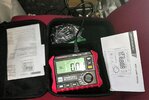
You can of course ignore the regulations, and the chance of you having a problem is likely slim, but you have asked, so not to tell you that you should test would be wrong, however I would think most people don't worry. The tester Loop-test-socket_tonemapped.jpg seen here, even the cheapest will likely cost around £75, and not much cheaper to hire for a week.

If you follow the regulations, then DIY will not save you much.
 
Are you sure you only got one socket?

If you spur off the socket, you'll only be able to supply only one socket (unless if you add a FCU which won't be suitable for a kitchen.)

Extending the ring will be the best option.

Is the circuit protected by a RCD?
 
Are you sure you only got one socket?

If you spur off the socket, you'll only be able to supply only one socket (unless if you add a FCU which won't be suitable for a kitchen.)

Extending the ring will be the best option.

Is the circuit protected by a RCD?
yes only one socket on this particular wall in the kitchen but there is more than one socket on the ring main I’m assuming. Yes it’s got a RCCB. See photo of fuse board. Kitchen comes under ground floor sockets.

I definitely want to extend the ring, but my question is can I extend the ring from a socket in two directions. I’m guessing it doesn’t matter as it is going to loop back regardless??

I’m more than confident installing all of this, just want to clarify details prior to getting started.
 
Do you understand what a ring final is? View attachment 373478 the whole idea is it goes in a ring, and all sockets can be fed from either leg, so the load is shared.

The problem I find with a ring final is the maximum permitted loop impedance is 1.38Ω and most of the cheap testers pass at 1.9Ω, so the first point is to rake out the installation certificate or electrical installation condition report, and see how close to the limit, is there room to expand.

There are two limits, one is to ensure, if there is a short circuit, it will trip in the required time, and second should there be a leak to earth again it will trip within the required time.

You can of course ignore the regulations, and the chance of you having a problem is likely slim, but you have asked, so not to tell you that you should test would be wrong, however I would think most people don't worry. The tester View attachment 373480 seen here, even the cheapest will likely cost around £75, and not much cheaper to hire for a week.

If you follow the regulations, then DIY will not save you much.
Thanks, I will take a look into this more. Just bought the house so don’t think there are any certificates. House is about 1980s.
 
I definitely want to extend the ring, but my question is can I extend the ring from a socket in two directions. I’m guessing it doesn’t matter as it is going to loop back regardless??
Cutting the original ring cable and adding your new sockets from there will be a better idea by using a junction box.
 
You could add a loop of new 2.5mm cable from the socket but the cable will need to supply the new sockets and then join back where it originates.

However, you'll have to insert 4 wires in each terminal at the back of the socket.

I prefer adding a junction box somewhere before the socket to avoid having the ring unbalanced under high loads.
 
You could add a loop of new 2.5mm cable from the socket but the cable will need to supply the new sockets and then join back where it originates.

However, you'll have to insert 4 wires in each terminal at the back of the socket.

I prefer adding a junction box somewhere before the socket to avoid having the ring unbalanced under high loads.
Why does have to insert 4 wires in each terminal at the back of the socket??

Why can't he join a new cable with an old cable in connector blocks or wagos
and
join remaining new cable and remaining old cable to the terminals on the back of the socket?
 
Although one should keep to the rules, if you have RCD protection then the line - earth loop impedance is not that important. In the main line - neutral will be above 1.38Ω, and it was 1.44Ω, and it is unlikely you will have problems if under that.

I like helping people, but they need to understand the dangers, in theory the volt drop is the limiting factor in how much cable can be used in a ring final, the calculations are not easy, and I would not expect you to do them, we work on the basis that there will be a 20 amp load centre of the ring, and the remaining 12 amps is even spaced, so we work on 26 amp as the load, this would give around 86 meters when 4% volt drop was allowed, so now 5% is allowed so now 106 meters, so normally we can add 20 meters to the ring of an old house. In fact, if using Imperial cable it is more like 3 mm² to 2.5 mm² so likely not a problem, but you need to consider when to use a fused spur, when to use unfused spur, and when to extend the ring final, and of course test to show it is still a ring.

RCD's have improved over the years, the old RCD's were prone to going out of spec if the casing was warped slightly by the strain exerted by heavy cables in the terminals, so it was important after fitting they were tested, now quite so likely a new RCD will be out of spec today with the electronics used today, but in my own house I have today only tested 2 out of the 16 RCD's fitted, it is on my today list, they work with test button, but not tested with proper tester. Let's face it, in 2001 we only used them for items used outside.

I would say do the improvements, then get an EICR done to find any mistakes.
 

If you need to find a tradesperson to get your job done, please try our local search below, or if you are doing it yourself you can find suppliers local to you.

Select the supplier or trade you require, enter your location to begin your search.


Are you a trade or supplier? You can create your listing free at DIYnot Local

 
Back
Top