1950s Bungalow Ventilation Options - Suspended Timber Floor - MVHR / PIV etc?

Joined
7 May 2025
Messages
25
Reaction score
2
Country
United Kingdom
Hello,

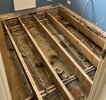
I am renovating my 1950s bungalow with a suspended timber floor. As you can see in the photo I've stripped the floors down to the joists, with a composition of external cavity walls, timber joists, a small sleeper wall, and air vents. I'm shortly looking to get started putting everything back together and am looking for some advice please.

Firstly, in terms of the flooring, I'm trying to decide whether to use PIR or some kind of flexible insulation. It looks like the ideal method is: breathable membrane, then timber battens, then flexible insulation, then a VCL, then tongue and groove chipboard, before finally underlay and LVT. However, if using PIR, then presumably the VCL wouldn't be necessary?

Also, given that my son has some health conditions I'm looking at ventilation methods and ensuring that the air is as clean as possible whilst minimising the chance of damp/mould, including researching MVH and PIV etc, but feel totally lost with what the right option is. We have a low pitched cold roof, with floorboards and insulation that I'm going to replace, with no vapour barrier above the plasterboard ceilings. I'm curious if anyone has any experience of PIV or MVHR, and could suggest what might be best for my situation?

Thanks in advance for any advice and support
 

Attachments

  • thumbnail_IMG_0057.jpg
    thumbnail_IMG_0057.jpg
    495.1 KB · Views: 49
I would suggest you split your questions into separate posts:
Floor insulation,
PIV and
MVHR.


By all means provide links to each post.
As far as your floor insulation is concerned, you don't need the lower support for your flexible insulation to be a membrane of any sort. Simple wire or nylon netting would suffice to support your flexible insulation. The netting can be stapled to the sides of the joists. The insulation is simply laid onto this support.
 
Don't see the issue with a 3 in 1 thread, it's all related...

I'm going to add MVHR to our 1950s bungalow. You'd be missing out not to, you have the luxury of all that accessible loft space to install it all in a bungalow, much easier than a house.

IMO PIV is hugely inferior, it's basically a draught. Cold outside air pushed right into the middle of your home, which inevitably will push warmth out elsewhere. With MVHR you recover most of the heat from the air that's extracted.

We have concrete floors so we can't add insulation, but the advantage is that our place is basically sealed. As you don't have concrete then you'll need to ensure your floors are airtight. Otherwise the rooms with extraction will probably pull cold damp air from the floor instead of from the adjoining rooms. Similarly the rooms with positive air pressure may just vent out through the floor.

Sealing the floors will be a big job, in addition to the insulation. You'll need tongue and groove chipboard with a vapour barrier below. With glued joints and the perimeter sealed to the wall or skirting. Ensure there's good cross ventilation via air bricks, as the structure will be losing any air movement that currently occurs to/from the rooms above.
 
If those are central heating pipes in the photo below the joists, you need to consider how to place them relative to the insulation.

How deep are the joists? They look quite substantial to me. What U-value do you get if you fill between the joists with rockwool (or similar)?
 
Don't see the issue with a 3 in 1 thread, it's all related...

I'm going to add MVHR to our 1950s bungalow. You'd be missing out not to, you have the luxury of all that accessible loft space to install it all in a bungalow, much easier than a house.

IMO PIV is hugely inferior, it's basically a draught. Cold outside air pushed right into the middle of your home, which inevitably will push warmth out elsewhere. With MVHR you recover most of the heat from the air that's extracted.

We have concrete floors so we can't add insulation, but the advantage is that our place is basically sealed. As you don't have concrete then you'll need to ensure your floors are airtight. Otherwise the rooms with extraction will probably pull cold damp air from the floor instead of from the adjoining rooms. Similarly the rooms with positive air pressure may just vent out through the floor.

Sealing the floors will be a big job, in addition to the insulation. You'll need tongue and groove chipboard with a vapour barrier below. With glued joints and the perimeter sealed to the wall or skirting. Ensure there's good cross ventilation via air bricks, as the structure will be losing any air movement that currently occurs to/from the rooms above.
Hi Ivor, thanks for the reply, really appreciated.

I think you are right with the MVHR option, it seems like the most sensible approach, particularly as some rooms (including the bathroom) have only VELUX windows. Does this mean I shouldn't place extractor fans in wet rooms, as they will allow drafts in and counteract the MVHR?

Agreed that sealing the floors is a big job, but I want to do it right and then not have to worry about it, so will look to do exactly as you've suggested, including sealing around the perimeter.


If those are central heating pipes in the photo below the joists, you need to consider how to place them relative to the insulation.

How deep are the joists? They look quite substantial to me. What U-value do you get if you fill between the joists with rockwool (or similar)?

Hi endecotp, thanks for replying. Most of the pipework under the subfloor is actually redundant, with the exception of the gas pipe going to the boiler (not in this photo). This is because the heating pipes are plastic and behind the skirting boards. I'll remove the old copper pipes though, along with all of the debris that is down there, to help the air to circulate.

The joists are deep, and I'll measure them later this week, but must confess I'm ignorant to U-values and what I should be aspiring to.

Thanks again
 
I would suggest you split your questions into separate posts:
Floor insulation,
PIV and
MVHR.


By all means provide links to each post.
As far as your floor insulation is concerned, you don't need the lower support for your flexible insulation to be a membrane of any sort. Simple wire or nylon netting would suffice to support your flexible insulation. The netting can be stapled to the sides of the joists. The insulation is simply laid onto this support.

Hi TomWW, thanks for your reply. I've researched that 'wind-washing' is an issue, which is why I thought a breathable membrane was required? I should say that I also looked at using Celotex but concluded that what I've proposed is a better option,
 
I did seal the old floorboards at our last house. Just buy a job lot of outdated sealant on ebay (together with some kneepads) and fill every joint from end to end, flatten out with an old scraper. Hoover them out with the thin nozzle first. You'll get smears on the adjoining boards but it doesn't matter at all.

I immediately noticed a whole different feel to the room after sealing it up. Hard to describe but you'll notice. Probably also quieter.
 
... some rooms (including the bathroom) have only VELUX windows. Does this mean I shouldn't place extractor fans in wet rooms, as they will allow drafts in and counteract the MVHR?
I would suggest the very opposite.
The MVHR takes some air from the house and transfers the heat (not the moisture) to the incoming air.
It's the damp warm air from the bathroom and kitchen that you want to extract and probably has the most heat to donate to the incoming air.
 
I would suggest the very opposite.
The MVHR takes some air from the house and transfers the heat (not the moisture) to the incoming air.
It's the damp warm air from the bathroom and kitchen that you want to extract and probably has the most heat to donate to the incoming air.
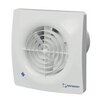
Sorry I think I may have worded that badly. I meant should I not include a traditional bathroom extractor fan similar to the below that vents directly outside, because there will already need to be an extraction point as part of the MVHR set up?

Whilst on the subject, does anyone have any recommendations for MVHR companies (for supply and / or install)?
 

Attachments

  • extractor fan.jpg
    extractor fan.jpg
    4 KB · Views: 22
I did seal the old floorboards at our last house. Just buy a job lot of outdated sealant on ebay (together with some kneepads) and fill every joint from end to end, flatten out with an old scraper. Hoover them out with the thin nozzle first. You'll get smears on the adjoining boards but it doesn't matter at all.

I immediately noticed a whole different feel to the room after sealing it up. Hard to describe but you'll notice. Probably also quieter.
Thanks Ivor. Without wishing more work on myself... should I also be looking to put a vapour layer in the loft, underneath the insulation? It's just regular plasterboard, but I'm thinking if I install an MVHR system in the loft, presumably I want to separate the cold loft from the warm house as much as possible?
 
You want just one barrier, on the warm (top) side of the insulation. Its purpose is to stop the potentially moist air from the room condensing within the colder insulation. The timber needs to be able to breathe below it, you shouldn't trap it in.

I was wondering the same about our bathrooms, MVHR is very much in the distance for me as I have plenty else to do before. My idea is to have the MVHR running all the time (or all on or off with a timer). But when the bathroom is in use then I might keep the additional extractor too, on and off with the light as normal. If the MVHR was powerful enough to take care of a shower then it would be a ridiculous amount of airflow to have all the time. I guess it's more of a background trickle. So yes, you will waste all that lovely heat from the shower but I'm thinking I will extract it.

Or... are there MVHR systems that can increase their airflow when the bathroom light is on and/or when the cooker is in use?
 
You wouldn't normally have extraction in the other rooms.
So why not limit your extraction to the bathroom and kitchen only, and have the supply to the other rooms only.
 
Thanks again for the replies, really appreciated.

I think I'm going to try and do some research and find some companies that provide an MVHR design service, as they should hopefully also be able to inform me on the best set up for my needs.
You want just one barrier, on the warm (top) side of the insulation. Its purpose is to stop the potentially moist air from the room condensing within the colder insulation. The timber needs to be able to breathe below it, you shouldn't trap it in.

I was wondering the same about our bathrooms, MVHR is very much in the distance for me as I have plenty else to do before. My idea is to have the MVHR running all the time (or all on or off with a timer). But when the bathroom is in use then I might keep the additional extractor too, on and off with the light as normal. If the MVHR was powerful enough to take care of a shower then it would be a ridiculous amount of airflow to have all the time. I guess it's more of a background trickle. So yes, you will waste all that lovely heat from the shower but I'm thinking I will extract it.

Or... are there MVHR systems that can increase their airflow when the bathroom light is on and/or when the cooker is in use?

You wouldn't normally have extraction in the other rooms.
So why not limit your extraction to the bathroom and kitchen only, and have the supply to the other rooms only.
 
I'm before the start of planning my system. Yes, definitely get as much guidance as possible. It seems like a brilliant concept though, I'll definitely be doing it after working out the details.

It's also very DIYable.
 
This is basically what we did

I fitted noggins between the floor joists as they didnt seem to bother in the 50s!
100mm PIR insulation, all foamed in and foil taped joins. Then 18mm ply, with the gaps sealed up.

We fitted HMRV, it was a doddle in a bungalow, but not during this warm weather! I combined it with loft top up insulation, so laid the MHRV pipes on the existing 100mm Rockwool, then added 200mm over the top of it all, and a raised floor.

For MHRV design, BPC Ventilation were good, and if you buy the system from them, they knock off the design fee.

Im sure our house isn't sealed to the correct standard for MHRV, but it still works well; the air feels fresher, the filters are picking up dirt from the house, and the bathrooms demist quickly.
 

If you need to find a tradesperson to get your job done, please try our local search below, or if you are doing it yourself you can find suppliers local to you.

Select the supplier or trade you require, enter your location to begin your search.


Are you a trade or supplier? You can create your listing free at DIYnot Local

 
Back
Top