• Looking for a smarter way to manage your heating this winter? We’ve been testing the new Aqara Radiator Thermostat W600 to see how quiet, accurate and easy it is to use around the home. Click here read our review.

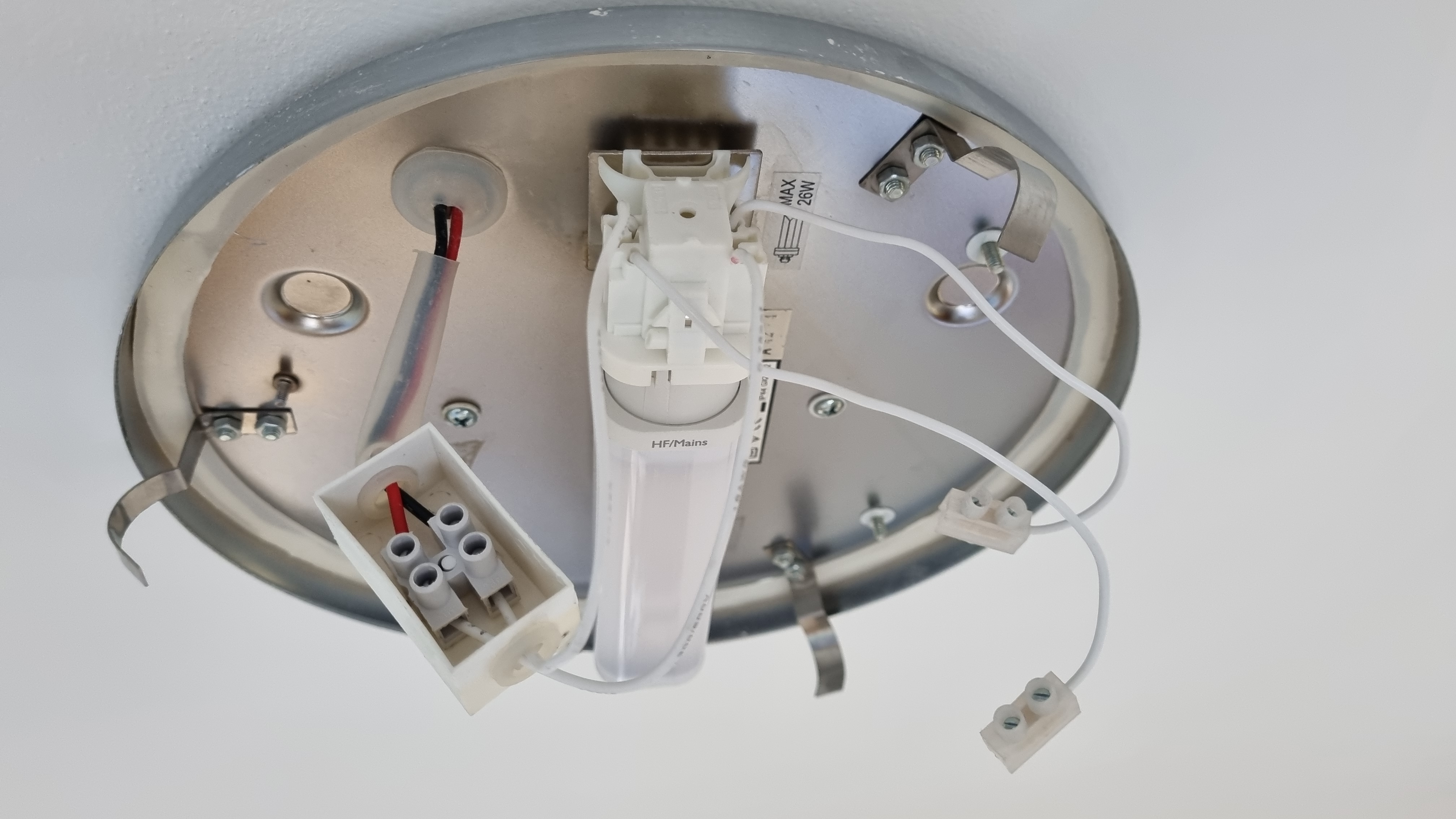
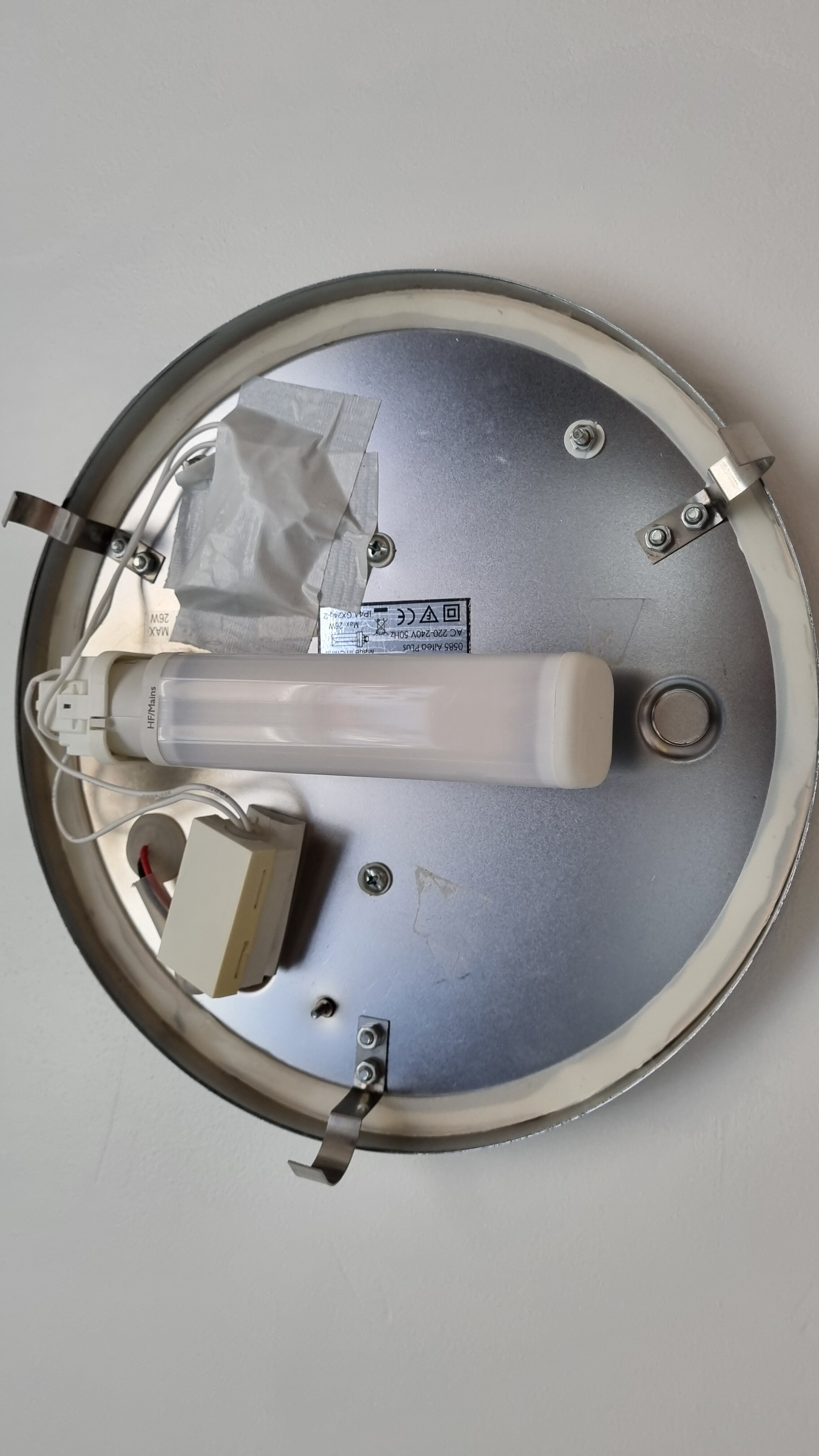
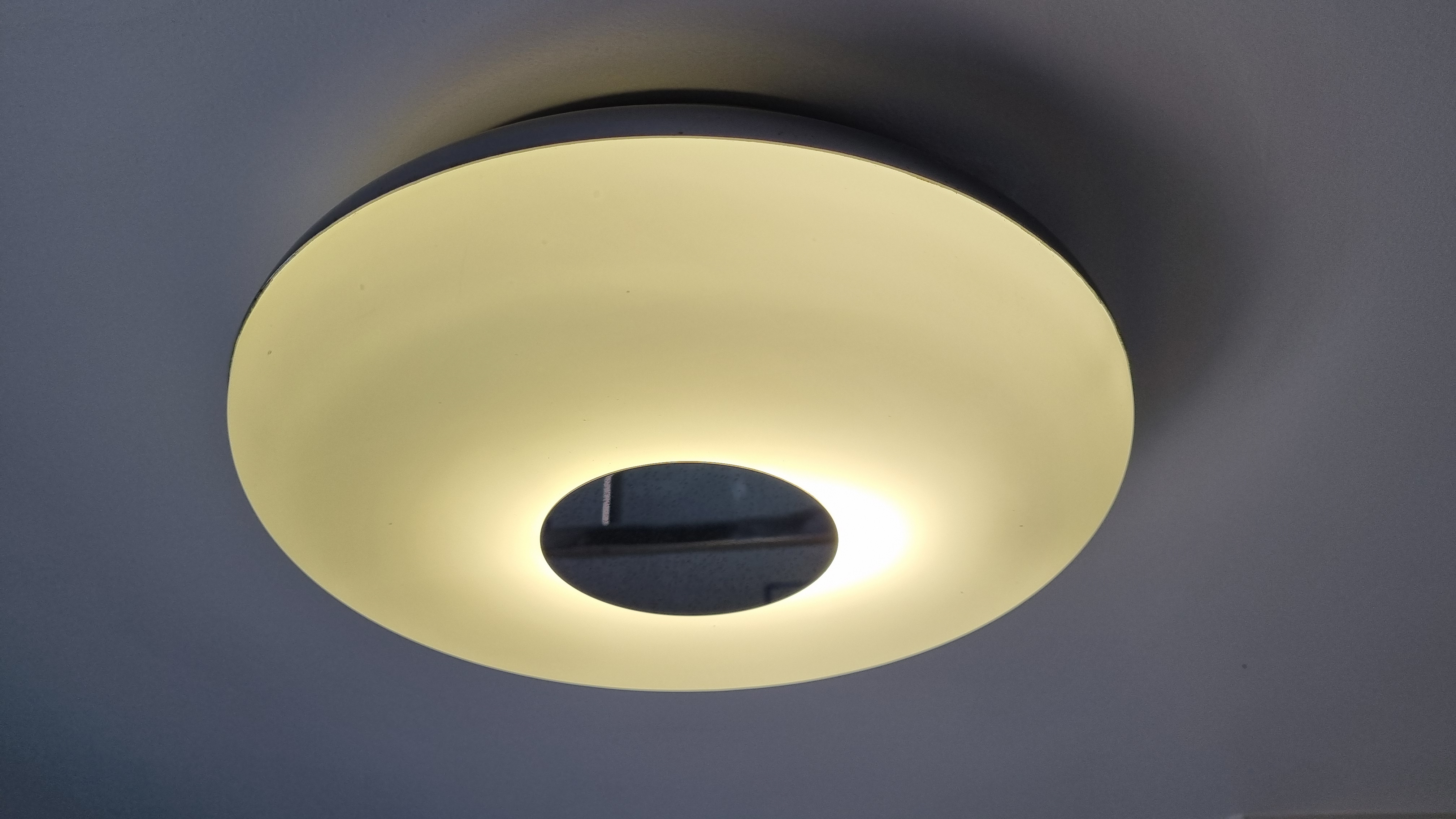
Can this light fitting be converted to accept LED bulbs?

If your handy you can simply screw in a lampholder like this, cutting the brown and blue wires and connecting direct, then fit whatever lamp will fit

That would be my solution, but depending on how much space there might be, for an LED lamp, between the shade/cover, and the backplate. A potential concern, is cooling for the LED's electronics, in such a tight, enclosed space, limiting the life of the LED - for that reason, a new, complete LED, would be a better bet.
 
Any-Lamp have now responded regarding my question about simply replacing a CFL lamp with their LED lamp in my fitting. And the answer is only if the LED is compatible with the ballast and after further investigation, the electronic ballast in the fitting does not appear to be on any compatibility list.

Any-Lamp have confirmed this LED lamp will work directly from mains AC, so I'm going to go ahead and remove the electronic ballast, then fit this LED lamp.
 
That would be my solution, but depending on how much space there might be, for an LED lamp, between the shade/cover, and the backplate. A potential concern, is cooling for the LED's electronics, in such a tight, enclosed space, limiting the life of the LED - for that reason, a new, complete LED, would be a better bet.
It's quite a large light fitting, so lots of space/air around the lamp. I thought LED bulbs ran cool, which is one of the reasons they are so efficient? I would be surprised if a LED replacement bulb was running hotter than the CFL bulb, so heat shouldn't be an issue.
 
I thought LED bulbs ran cool, which is one of the reasons they are so efficient? I would be surprised if a LED replacement bulb was running hotter than the CFL bulb, so heat shouldn't be an issue.

There is little difference, between the efficiency of a CFL, and an LED. LED's don't generate much waste heat, but their drivers, are much more sensitive to heat, so ability to dispose of their waste heat is absolutely crucial, for a long life.

Earlier, I made mention of three of my wall lights, where I had replaced the BC tungsten lamps, with LED's. The LED's didn't survive long. The shades on the fittings were open at the bottom, facing down and thus the waste heat was collecting up at the LED base. Simply inverting the fittings and shades, has completely resolved the issue - heat was able to rise, away from the lamps.
 
Last edited:
Any-Lamp have now responded regarding my question about simply replacing a CFL lamp with their LED lamp in my fitting. And the answer is only if the LED is compatible with the ballast and after further investigation, the electronic ballast in the fitting does not appear to be on any compatibility list.

Any-Lamp have confirmed this LED lamp will work directly from mains AC, so I'm going to go ahead and remove the electronic ballast, then fit this LED lamp.

No, don’t mess with the ballast. That lamp is specifically designed for what you are doing. Just plug it in.

(Did you speak to a human, or was it a chatbot?)

Edit: if you were to connect directly to the incoming mains, how would you connect the four pins to live and neutral? Did they give you any advice about that?
 
Certainly the LED tubes I've seen have come with instructions on how to wire the fitting for direct mains operation and say that you must do that if the fitting originally had an electronic ballast.
 
No, don’t mess with the ballast. That lamp is specifically designed for what you are doing. Just plug it in.

(Did you speak to a human, or was it a chatbot?)

Edit: if you were to connect directly to the incoming mains, how would you connect the four pins to live and neutral? Did they give you any advice about that?
The email response I got from support at Any-Lamps was:

"These lamps CAN replace the existing CFL lamp but you have to ensure that it is compatible with your installation (ballast). You can refer to the compatibility list under downloads. If your ballast make and model is not listed, then most likely it will not work.

The products you and I are referring to are (Electronic (HF); Mains (AC) Without Starter), this means it can work with your ballast (if compatible) and it will definitely work if you connect it to the mains
."

I can't see my electronic ballast listed in their compatibility list (on the Dulux lamp website via the link I posted earlier), so I have assumed I will need to remove the ballast.

I've ordered the Dulux lamp I linked to earlier, but not from Any-lamp as they are more expensive than The LED Specialist Store. I'm not sure if I should simply plug the lamp into the existing fitting, as is, to try it first, or if I should go ahead and remove the electronic ballast and re-wire the fitting. Not sure exactly what the impact of using a "non-compatible" ballast would be on the lamp, but don't want to take the risk it will damage it.

I agree about the four pins from the fitting. I see 4 white wires going into the electronic ballast and until I open up the ballast and check how these are connected, I won't know exactly how these 4 white wires should be connected to the mains live and neutral wires. Given there's a live and neutral feed into the ballast, I had assumed that 2 of the white wires would be "connected" to neutral and the other 2 white wires "connected" to live, but unless there are some specific markings showing this inside the ballast I may not be able to determine this. If not, I could always purchase a replacement electronic ballast from the Dulux compatibility list, although I'd rather not do this.
 
There won't be no markings all you have is the drawing on the ballast.
Look at a similar 2 pin PL lamp, the L ( though via a ballast) and N are connected diagonally.
Best consult instructions when you get it
1749119121260.png
 
Last edited:
After a fair bit of Googling, I came across the following diagram for the G24Q fitting, which seems to reflect what you are saying:

1749122967545.png


I guess rather than working from the ballast and trying to figure out which is live and neutral, I can take 2 of the 4 wires from one side of the G24Q fitting and connect to live and the other 2 to neutral, ensuring the fitting is orientated as shown in the above diagram.

Is there anything I can do with a multimeter to double check this?

Edit: Having compared the CFL bulb to this diagram (held in the same orientation), the left side appears to be one bulb and the right side appears to be the other bulb! I would have expected each bulb to have 1 live and 1 neutral wire, whereas the above diagram would result in the left bulb having both live wires and the right bulb have both neutral wires, which doesn't seem right.

Hopefully the bulb will come with some instructions, but I'm not convinced they will be detailed enough to determine how to connect the 4 white wires from the lamp fitting to the incoming supply!
 
Last edited:
Is there anything I can do with a multimeter to double check this?

In your bottom diagram - the two pins on the right, and the two pins on the left, will have the heater element connected between them, in the fluorescent lamp. Meaning, if you apply a meter to them, you will see a very low resistance.
 
Job done!

The new LED bulb had L and N markings on two of the four pins, so I simply connected the corresponding two existing wires from the lamp fitting to the L and N supply after removing the electronic ballast and terminated the two unused wires.


Tidied the wires up a bit before putting the cover back on.


The fitting is now using an LED bulb fed directly from the mains supply.


If you need to find a tradesperson to get your job done, please try our local search below, or if you are doing it yourself you can find suppliers local to you.

Select the supplier or trade you require, enter your location to begin your search.


Are you a trade or supplier? You can create your listing free at DIYnot Local

 
Back
Top