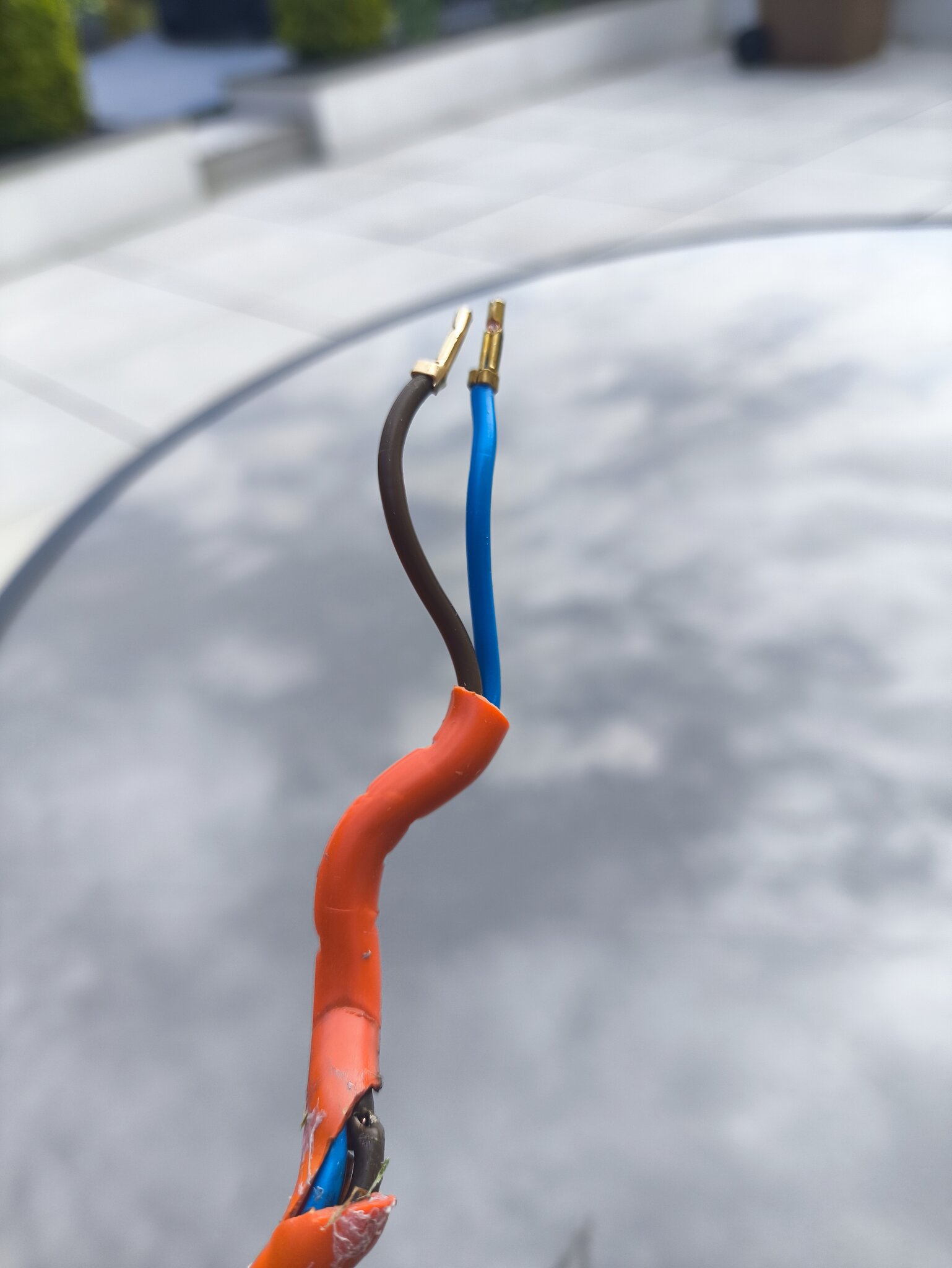
My cable has went this morning on my flymo. On opening the switch unit I noticed the break that caused the issue. I plan to reuse the cable agter cutting back but my question is what's the name of the the small clips at the end of the cable and are they easily obtainable and finally really needed for wiring back into the switch unit

You are using an out of date browser. It may not display this or other websites correctly.
You should upgrade or use an alternative browser.
You should upgrade or use an alternative browser.
Flymo
- Thread starter misterboumsong
- Start date

- Joined
- 27 Jan 2008
- Messages
- 29,271
- Reaction score
- 3,594
- Location
- Llanfair Caereinion, Nr Welshpool
- Country

Ferrules, 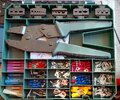 I got a kit from Lidi, I would fit them backwards and cut off the plastic insulation. May be cheaper to just tin the wires with a soldering iron.
I got a kit from Lidi, I would fit them backwards and cut off the plastic insulation. May be cheaper to just tin the wires with a soldering iron.Thank you all I'll. Probably strip the the cable back and try without ferrules
If you do it 'properly', that will work fine.Thank you all I'll. Probably strip the the cable back and try without ferrules

May be cheaper to just tin the wires with a soldering iron.
That is bad advice, the solder will creep under the screws pressure, potentially causing a poor, overheated connection.
I say the same to everyone these days but I have to say that in the distant past I always did it (as I had been taught to), and I was never aware of any consequent problems, despite the theoretical 'risk' you mention. I have to wonder whether sold is much (if any) more likley bto 'creep' than copper?That is bad advice, the solder will creep under the screws pressure, potentially causing a poor, overheated connection.
I wonder what those who give that advice are meant to say about conductors which come 'tinned' - should they be advised to scrape the tin off before putting the conductor into a screwed terminal?
I say the same to everyone these days but I have to say that in the distant past I always did it (as I had been taught to), and I was never aware of any consequent problems, despite the theoretical 'risk' you mention.
There is nowt theoretical about it, I have personally suffered examples of the problem. Why do you suppose manufacturers moved away from tinned ends, to furrels, when tinned was quicker, cheaper?
Soldering works fine, except when the solder is connection is via a mechanical compression, when the solder can migrate due to the pressure. The end result, is then a poor connection between the wire and the terminal.
I suppose it's essentially semantic, depending on one's interpretation of "theoretically". Maybe you would nlt have 'taken me to task' had I instead written "theory-based" (which I personally often talk of as 'theoretical')?There is nowt theoretical about it,....
There is no doubt that the phenomenon we are talking about is (by way of an 'explanation') 'based on theory', and that remains true even if the phenomenon is experienced/observed in the real world.
As I said, I personally have not so suffered, which I suppose is one of the reasons I referred to 'theory'I have personally suffered examples of the problem.
Presumably because, like you, (and rightly/wrongly) they felt that the phenomenon in question was a significant issue.Why do you suppose manufacturers moved away from tinned ends, to furrels, when tinned was quicker, cheaper?
In theory it can, and in practice it undoubtedly does to some extent. However, the same is true, at least to some extent, with copper (particularly if subjected to 'thermal cycling') - so, as I said, I am not necessarily convinced that there is necessarily all that much difference between solder/tin and copper.Soldering works fine, except when the solder is connection is via a mechanical compression, when the solder can migrate due to the pressure.
- Joined
- 27 Jan 2008
- Messages
- 29,271
- Reaction score
- 3,594
- Location
- Llanfair Caereinion, Nr Welshpool
- Country
I have not tried putting wires in the flymo switch when not held together with a ferrule. If it can be physically done, then no problem.
We haven't been told whether they are push-in (spring-loaded) or screwed terminals. If spring-loaded, then it could be difficult/impossible to get a stranded conductor in but it would probably be more likely to work if one first soldered the end - and, if one could do that, and if the terminal was spring-loaded, I imagine that Harry's concern about the solder would probably go away?I have not tried putting wires in the flymo switch when not held together with a ferrule. If it can be physically done, then no problem.
In theory it can, and in practice it undoubtedly does to some extent. However, the same is true, at least to some extent, with copper (particularly if subjected to 'thermal cycling') - so, as I said, I am not necessarily convinced that there is necessarily all that much difference between solder/tin and copper.
Lead, is much more 'fluid', than copper, or brass, both of which are much more resilient to deformation.
and, if one could do that, and if the terminal was spring-loaded, I imagine that Harry's concern about the solder would probably go away?
To a large extent, yes! The spring pressure, would take up any slack, from the lead deformation, whereas a screw terminal would simply remain lose, until someone came along and tightened it.
Exactly. The perceived advantage of spring-loaded terminals is that the electrical connection remains good if the conductor deforms (and does not have a screw to 'come loose'). For that reason, I see no reason why one should not solder conductors going into a spring-loaded terminal.To a large extent, yes! The spring pressure, would take up any slack, from the lead deformation, whereas a screw terminal would simply remain lose, until someone came along and tightened it.
In fact, it might be even better to solder - the sprung contacts are usually flat, whereas conductors are usually roughly round, so there might well be better electrical connection if the conductor was covered with something which could be squished more easily than the underlying copper!

DIYnot Local
Staff member
If you need to find a tradesperson to get your job done, please try our local search below, or if you are doing it yourself you can find suppliers local to you.
Select the supplier or trade you require, enter your location to begin your search.
Please select a service and enter a location to continue...
Are you a trade or supplier? You can create your listing free at DIYnot Local
Similar threads


- Replies
- 31
- Views
- 20K