Bidirectional RCD socket or RCD FCU, are there any?

Joined
27 Jan 2008
Messages
28,778
Reaction score
3,511
Location
Llanfair Caereinion, Nr Welshpool
Country
United Kingdom
On another forum someone wanted to fit balcony solar with an old Wylex fuse board with MCBs fitted, it was pointed out to have 230 volts outdoors it needs RCD protection, but I simply could not find a single FCU or socket with an RCD which says bidirectional.
 
On another forum someone wanted to fit balcony solar with an old Wylex fuse board with MCBs fitted ...
If the someone has money with which to buy 'balcony solar'' kit, it sounds that there are probably much more appropriate ways he could use the money to 'upgrade' his/her electrical installation :-)
.... I simply could not find a single FCU or socket with an RCD which says bidirectional.
That's hardly surprising, is it? Until these recent discussions about what may become legal to use in the UK in the future, there was absolutely no reason why anyone would have wanted/needed a 'bidirectional' FCU/socket, so it would be fairly unlikely that anyone would have felt it appropriate to manufacture any ('speculatively'), wouldn't it?
 
This
1780667496090.png
is the problem, solar panels are not expensive, so if someone has money with which to buy 'balcony solar'' kit, no longer means they have the money to do other things we would normally think should be done before starting. Rated 300 watts including inverter, it says made by Parkside, so assume German Lidi.

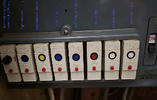
8 way consumer unit, £48.48, RCBO £28.14 so £273.60 for a CU populated and that is without SPD. By time fitted looking at over 3 times likely 4 times the price of the solar panel to have a CU which will work with it, considering Part P means £100 plus vat to DIY and get is pro fitted not much difference. He showed picture of the CU 1780668427121.png so to be within a reasonable price, only options to have RCD protection is a RCD socket or FCU, or the price means he will use without RCD protection.

It is very clear he is not fitting a new CU, not sure that he could even if he wanted, the question of rented of owner occupied has not been asked, for a tenant to swap a socket OK may be not quite what he should do, but likely he can get away with it, but to swap a CU is a non starter.

In the past this
1780668877809.png
was the answer, advert says type AC but picture shows
1780669013968.png
so looks like type A? It is not really any good as active type, but nothing shown on the data sheet shows it to be unidirectional so it may be OK.

But other than that can't find any RCD suitable for DIY fitting.
 
If a guy has bought plug in solar which can back feed into the grid, to then say he must spend 4 to 5 times what he has already paid to use it, is not going to work, tell him he needs to spend an extra £20 OK he may do it, but having paid £100 to then tell him he needs to spend another £400 to use it, the answer will be "go away", it works, so I am using it as supplied. Well it may be a tad more colourful!
 
You can get small enclosures into which you can fit din-rail mounted RCDs.
Agreed, but that is not really a DIY approach, I, and I am sure most people in this thread, have already got RCD protection on all circuits, so it is just a case of swapping a unidirectional for a bidirectional unit, I was surprised that the guy in question had gone to 1.8 kW with 4 x 460 watt panels.

The efixx guy has also fitted 3 inverters with his plug in system, not just the one, they have done at least 3 videos now 1780705344687.pngand they seem to be saying there is really no problem, which I find surprising, as it was also them who did the test with the unidirectional RCBO and showed how fast it failed.

I have no intension of testing a good RCBO on solar panels by pressing the test button when the panel is producing solar, and I can see the problem if they had done that test in his rented home, but the way they did not even say do not test with the test button when the solar is producing, but is you want to test use a plug in tester is a bit sneaky, we have realised it is the built-in test button which is the problem at least they could point this out.
 
You can get small enclosures into which you can fit din-rail mounted RCDs.
Sure - but, as i keep on saying, the moment one starts talking about things like that I think one has moved away from what one really can sensibly call 'plug-in solar'.

As I've said, all this discussion seems to be premature and pretty inappropriate speculation about something which may become 'allowed'/'legal' at some point in the future.

Personally, I find it fairly hard to believe that, in the UK, we will ever be 'allowed' to buy and use PV kit which comes with a fitted BS1363 plug unless 'they' feel that it would be acceptable (and relatively 'safe') for it to be plugged into any existing BS1363 socket ... and if they don't allow that, then I don't think that anything else they may come to 'allow' (e.g. involving 'specially-installed' sockets which were not BS1363 compatible) would correspond with what people seem to be currently imagining 'plug-in solar' will be.
 
The efixx guy has also fitted 3 inverters with his plug in system, not just the one, they have done at least 3 videos now .... and they seem to be saying there is really no problem, which I find surprising ...
As I've just repeated, I do think that this discussion is very premature, but it certainly is possible that any perceived theoretical 'dangers' may actually be so small as to be of minimal cause for concern, despite ....
.... , as it was also them who did the test with the unidirectional RCBO and showed how fast it failed.
Both you and I were very surprised by how quickly their bang and smoke appeared, so I'm a little sceptical. If we assume that RCCBs born many years ago were probably 'unidirectional',then countless of those have been in service for very long periods without us having heard of any problems. In fact, looking around here, my three up-front Type S RCCBs have(for convenience) been installed 'upside down'(supply at bottom) from how they would usually be installed in a CU but, despite the fact that their test buttons have all been pressed regularly for many years, I've yet to experience any bangs or smoke :-) ...

1780711155562.png
 
Agreed, but that is not really a DIY approach, I, and I am sure most people in this thread, have already go
Again, there is no DIY approach, yet, they should be installed "properly" by an electrician.

Who knows what might change in the future.
 
Again, there is no DIY approach, yet, they should be installed "properly" by an electrician.
I think we all agree on that, and to be frank, even as a retired electrician I did not fit my own solar panels. I used GRC Solar who 20 months after the installation were still helping me to get it all set up free of any extra charge, due to me in the first place refusing their help, getting my feed in tariff, much of the delay was due to British Gas charging an early leaving fee of £75 so it was over the winter so very little export, so waited for the contract to end.

Not even talking about how installed, it was the after installation service which I was very thankful for.

But the government with the March announcement have caused people to either wait to see what will happen, or to charge ahead without waiting and fit some type of plug in solar, it has removed business from the installers as a result of the announcement and to date has done the reverse to what the government said its intension was, less solar is being installed while people wait to see what will be on offer.

Also, we have been misled as to what has happened in Germany, it is not plug and play, they do have to register the work, and it seems the whole idea was not to get people to fit balcony solar, that was already being done, it was to get some record of how many solar systems were being fitted. They realised it was going on anyway, so they wanted some control, if for no other reason, they could stop the systems which could cause problems by putting a government acceptance label on those which were OK.

It seems in Germany not everyone is paid for export, in the UK if installed correctly we should have a second MPAN number, and everyone should be paid for export.

We know from this forum not everyone does get paid for export, often due to people like British Gas making it hard to get the MPAN number, so depriving people of the payment, but also due to DIY installs or at least installs by people without the training like Flexi-Orb allowing them to register the work, and so get payment for export.

This is going to be a problem for those who jump the gun, but once one has the MPAN number, adding more solar can be done without anyone knowing what has gone on, I suspect also if you don't have the MPAN number, adding a ligament solar array will get you that number.

But what we are looking at, is solar being installed even if not 100% compliant or legal. In the same way as DIY people for years have fitted extra sockets, even extra circuits using help from forums like this one, and we realise if we don't help they will do it anyway, and it may be dangerous, so even if not strictly compliant, we still help as it is safer that way.

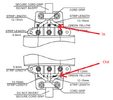
So I have looked at the instructions 1780741936319.pngand if you look carefully it is marked in and out so unidirectional so as it stands the adaptable box with an RCD in the box seems the only option. Or of course no RCD protection.

 
Again, there is no DIY approach, yet, they should be installed "properly" by an electrician. Who knows what might change in the future.
I think we all agree on that ....
You say that, but a lot of people (I thought including yourself) seem to assume/believe that, withing the foreseeable future, true 'plug-in solar' will be legal and regs-compliant. By 'true plug-in solar', I mean .... go out and buy it, then plug it in to any existing BS1363 socket, with no electrician involvement - just as with a TV, hair dryer or whatever.
..... But the government with the March announcement have caused people to either wait to see what will happen, or to charge ahead without waiting and fit some type of plug in solar ...
I would suggest that for those who want to remain in the right side of the law and regs, "wait (maybe for a long time) and see" is probably the only really sensible approach.

As I understand it, in 2010 the government "announced" that the entity of then then-planned HS2 would be completed by December 2026 - so, had it been possible, some people might then have bought tickets to travel on one of the first scheduled trains in late Dec 2026 or early 2027. However, we are now being told that the first train (on the curtailed line) is not expected to run until 2036-39 with 'full opening' of the curtailed line (as far as Euston) not until 2040-43. This perhaps ought to be born in mind when interpreting "government announcements" about other things :-)
 
By 'true plug-in solar', I mean .... go out and buy it, then plug it in to any existing BS1363 socket, with no electrician involvement - just as with a TV, hair dryer or whatever.
That is what I assumed to start with, but it seems I was taken in, and the German system was not to allow a new plug in solar, but to legalise what was already happening, and regain some control. So plug is solar in Germany still required their version of out G98, and there are two systems, one using the standard Schuko socket, and one using an upgrade and so higher output allowed.

Looking at YouTube it seems the March announcement has started something similar here, with people jumping the gun, including some who we would have hoped had more sense, like efixx, who seem to be telling everyone there is no problem.

In the main I agree, if the socket is RCD protected with a bidirectional RCD/RCBO 30 mA type A there is unlikely to be a problem.

There are some other technically issues, like measuring export to either be paid, or to control a battery, but that only means loss of revenue and does not present a danger.

So we are going to see either damaged RCDs or missing RCDs and as it stands I have not found out how to work out which RCD are which.
 

If you need to find a tradesperson to get your job done, please try our local search below, or if you are doing it yourself you can find suppliers local to you.

Select the supplier or trade you require, enter your location to begin your search.


Are you a trade or supplier? You can create your listing free at DIYnot Local

 
Back
Top