• Looking for a smarter way to manage your heating this winter? We’ve been testing the new Aqara Radiator Thermostat W600 to see how quiet, accurate and easy it is to use around the home. Click here read our review.

Bottle gulley and aco drains install

Joined
22 Nov 2010
Messages
29
Reaction score
3
Location
West Glamorgan
Country
United Kingdom
Looking for advice critique on a diy drainage install.

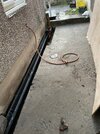
I’ve laid everything out as shown in the photo , is it possible to rest the acos on pea gravel tamp down and concrete in either side of the acos and around the gulley and outlet or is a cement bed required?.

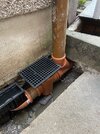
I have cut down an elbow to receive the aco rain water. I plan on covering the opening of the the modified elbow to the gulley to stop anything falling in while back filling and concreting.

Can the bottle gulley also be just bedded in pea gravel tamped down or does this need a cement bed?

Just to add, this is a permitted joint rain water and foul system on an old terraced house.
 

Attachments

  • IMG_9098.jpeg
    IMG_9098.jpeg
    559 KB · Views: 68
  • IMG_9097.jpeg
    IMG_9097.jpeg
    642.6 KB · Views: 68
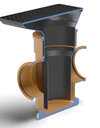
Ok to bed the gulley on pea gravel and the end bit of the aco, but if that’s a soil pipe on the right, won’t you get smells coming up from the aco? I think those 2 way bottle gulleys will only trap the middle part as it’s got the dip tube and the trap level sits below both horizontal pipes. May be wrong, trying to picture one inside.
 
If that’s the case (probably is, as the flow is reversible), I might have to put a p-trap instead the the modified elbow and route the aco into that maybe?
 
Last edited:
Back inlet on the Bottle Gully is designed to accept incoming downpipes, (assuming you've got the Bottle Gully the right way around!), the water in the Gully will be adequate to seal off the drainage system. P traps are more of a pain to clean out, you'll be fine as you are if Gully is in the right orientation. Personally, I would bed the Gully and Aco on some semi dry concrete and haunch a bit around it to prevent any unwanted movement. Once concrete has gone off, backfill as required.

Underground pipe/fittings are not suitable for above ground use though, they don't have UV protection from sunlight, I would recommend changing that upstand section to soil pipe, which will have the required protection if that is to stay.
 
Is there a marker on there to say which way round it should be? I took the cap out of one side which I’m assuming was the back inlet but can’t remember which side it was??? The upstand was off cut, just to use as a guide for standout off the wall
 

Attachments

  • IMG_9103.jpeg
    IMG_9103.jpeg
    468.2 KB · Views: 30
It may be either way, but if it’s still trapped, so there’s no air flow between left and right, as @Hugh Jaleak says, you’re ok. I thought it wasn’t, but probably got that wrong.
 
Floplast have confirmed odours can travel both ways, but not up through the grid.
Looking at the cross section detail would suggest this also.

Having looked this up, there are some back inlet gulleys that operate in one direction, through differnt height inlet outlet i think.
 
Seems they've changed the design, the whole idea of the Back Inlet was to allow a downpipe connection straight into the gully without needing an additional trap. Thanks for clarifying that, not sure if the other Manufacturers have followed suit with that idea. Osma have a different design on theirs, which does allow connections to the Bosses without the need for additional traps.
 
I’m now ready to replace the concrete around the ACOs and gulley/downpipe on this setup but the area is so small I’m not sure how I can compact any fill and also use pea gravel. Will concrete on top of the pea gravel work on this small area?
 
You need to be careful and ensure that if that is a SVP, the fast flow of the flushed water does not pull the trap out of that gully.

Has the manufacturer approved that layout?

That really should be a rest bend at the base of an SVP too.

Surface drains set on gravel can move if the gravel does.
 
It’s a 45deg y-branch pointing downstream directly into the inspection chamber, the location of the channel drainage and the house toilet wastes just wouldn’t allow for the use of a rest bend.
 

If you need to find a tradesperson to get your job done, please try our local search below, or if you are doing it yourself you can find suppliers local to you.

Select the supplier or trade you require, enter your location to begin your search.


Are you a trade or supplier? You can create your listing free at DIYnot Local

 
Back
Top