Boiler fused spur and power cut

Joined
21 Nov 2005
Messages
78
Reaction score
3
Country
United Kingdom
thinking about power cuts and the gas boiler.

Currently the feed for the boiler is spurred off a ring (all good). 3A fuse.

Is it allowed to change the spur in such a way that is spurs off the ring, but you could disconnect in the even of a power cut and plug in to a portable power supply short term?

Yes its physically possible, yes its a cheap way of getting it up and running instead of a UPS or specific boiler essential circuit for the whole house and as it would be affecting the mains supply at all its couldn't feed back to the grid that they are working.

I am thinking of buying one of these portable power units and this if possible may help swing my decision as to which one and how big a battery. To be fair we have never needed a back up supply, but you never know.
 
why not change the spur to a 13a socket and put a 13A plug (with a 3A fuse) on the lead to the boiler , thats how mine was installed 2 years ago ... i dont see why not - someone else may show any regs, but i had a bolier fitted in 2010 with a plug and again in a different house in 2023

then you could just unplug and plug into the generator ,
 
Fair enough point I could utilise a plug socket that’s relatively close by and put what is there elsewhere. It’s not easily accessed accidentally so be perfect.

The fused spur would stay in place, just change the connection under the floor and a long enough lead so it be easy enough to plug into the portable power.
 
It must be an unswitched socket.

Boilers require double-pole isolation and some switched sockets are only single-pole. Someone could switch off the switch and the boiler would not be completely isolated if still plugged in.

Gas rules / boiler instructions usually.
 
Easy to isolate and lock off a 13A plug,
1771407859007.png
the lock off device is reasonably universal for all 13 amp plugs. You can get them for a FCU, ⁣1771408002141.png but as @OwainDIYer says, needs to be all poles, so the FCU has to be switched, as removing fuse only isolates the line, and the lock off device has to be for that make of FCU, so in general better to have a plug and socket. Even if the switch is only single pole, unplugging clearly isolates both line and neutral.

Not sure any FCU switch is classed as isolation, as in the main, isolators down is off, so anything falling on the switch will turn it off not on, however most household switches are down for on. This tends to include switched FCU. The old list says OK if to BS 1363-4 but since that would not be readable once fitted, in real terms safer with a plug and socket.

The only exception is where the boiler supply is not RCD protected, it depends on date fitted, but now all 13 amp sockets need protection, when rules first came out, if written on the socket for boiler only, or for freezer only, there was an exception. But today that's no longer true, so my boiler, the only item in the whole house, is not RCD protected, so has to be a FCU. But reason why not RCD protected is it is supplied from my UPS supply, 6.4 kWh.
 
Do you have anyway to check the boiler will run on a portable power supply before forking out for one?
Some require an earth connection that the portable power supply might not supply.
Something to do with flame-detection I believe, no doubt someone with more knowledge will comment.
 
It must be an unswitched socket.

Boilers require double-pole isolation and some switched sockets are only single-pole. Someone could switch off the switch and the boiler would not be completely isolated if still plugged in.

Gas rules / boiler instructions usually.
When you take the plug out, you have better isolation and greater separation than any switch can give.
 
Okay let’s clarify a few things first on current setup.

1. Spurs off upstairs sockets, on an unswitched fused spur, with screw operated fuse opener.

2. All house circuits are on RCBOs.

3. It’s unlikely to be unplugged, when boiler was replaced it was isolated by gas engineer at the unswitched fused spur, I certainly didn’t switch the sockets off.

4. I could easily move it from those upstairs sockets to a double socket radial circuit if that’s the best way but I would need a new single socket upstairs to plug it into. Only the double socket on that circuit now, which is in the hallway and is only ever likely to be used for a a hard wired vac (if cordless not up to job) or Christmas tree, I was advised by the sparky doing the RCBOs and consumer unit upgrade that would be okay, but that was a few years ago and I am not a sparky.

I found this spare cable under the floor some years ago, and put it in a junction box, no idea how long it had been live under the floor boards. When the spark replaced the consumer unit he detected the cable which I had forgotten about, but told him I think I knew where it was and he confirmed with testing. That’s what is being used for the double socket in the hallway, was going to put a single socket on the landing, but decided against that in the end.

Hope that’s enough information to get a better idea of the setup.

As for the power station, I will check it’s earthed but I would hope so, looking at a lithium, at least 2kWh with output of at least 2.8kW, as that means I can make a brew and watch tv and plug in a small portable fridge unit or run a microwave.

The boiler uses very little power, the biggest draw would be the kettle at 2.6kW I believe but will test to see actual draw as it was recently changed and draws less power than previous water boiler did.
 
Hope that’s enough information to get a better idea of the setup.

None of it matters, all that's suggested is that you replace the current FCU with an unswitched single socket.

(It's a bit odd that it's currently on an unswitched FCU though, hmm. Taking the fuse out only disconnects the live.)

As for the power station, I will check it’s earthed but I would hope so

Why do you think that? How exactly would it be earthed? Do you think the input's earth - assuming it is plugged in - is connected through to the earth pins on the outputs? And also the neutrals?

output of at least 2.8kW, as that means I can make a brew

Get a camping stove for boiling water. Then everything else needs next to no power in comparison.
 
Nothing wrong with a boiler on a plug and socket.
Until some gas fitter comes along and insists it has to be an FCU as the MIs require it. Yes, I've had that "discussion" when I insisted the fitter put the socket back that he'd just replaced with an FCU.
 
No way on the camping stove. Not practical for us and not a safe option either for us.
By the way had a decent camping stove in the past.

Agreed on the power front mind and I know what things use pretty much and where demand can be lowered it is, but not at any price. Standby power used to be excessive but nowadays modern standby power consumption is very low.

Not a sparky or gas engineer so don’t know what requirements were when it was done , when it was upgraded and last week or now, hence why I am asking.

Trying to work out what options there are and simplicity and practicality.
I doubt I will need it based on the time I have had a house and had no power. But get an increasing feeling a time is going to come where there will be no power for a few hours and it be bloody cold.

To be fair we are more likely to use it when doing work in a given area in the house and things are isolated for safety, but need local power supply, if I had a shell of a home I would probably rewire things a little differently, but aren’t going to start that process now.

For the record we did look at a house ups and a gateway, but again that was not practical or affordable with current commitments/ house design. As this would be a much better option for us than the portable power unit.

The isolation seems to be the biggest concern, I can tell you what I have only. Everything is how the setup is changed.

Swapping the FCU with a socket isn’t practical currently, the simplest action is to deal with the point the cable spurs to the boiler and taking it off the spur and converting to a plug in connection. Then it’s where the plug goes for future plug into the portable power unit. Makes sense to put it as close as possible to put it close to other things we will want on.

If things have to be changed, it makes sense to me to bare in mind that it should be kept simple / is to undo any option.
 
Swapping the FCU with a socket isn’t practical currently
Why ? Surely you just detach the flex from the FCU and put a plug on it, and replace the FCU with a single socket ?
I'm struggling to understand a situation where that isn't possible. If there's something specific to your property, telling us about that might allow for practical suggestions.
 
In which case, you need to make absolutely sure, that the entire heating system, is fed from that single point.
That was also my problem, There is still one small problem, the TRV in my wife's bedroom is out of direct range of the Hub, so I have a smart socket adaptor which relays the signal, so with a power cut, wife's bedroom can't call for heat. I also lose internet, so can no longer turn heating up/down with the phone or voice control, but it should, not tested, continue to work, even if not with full functionality.
Swapping the FCU with a socket isn’t practical currently, the simplest action is to deal with the point the cable spurs to the boiler and taking it off the spur and converting to a plug in connection. Then it’s where the plug goes for future plug into the portable power unit. Makes sense to put it as close as possible to put it close to other things we will want on.
I don't fully understand, but the plug and socket arrangement could be anywhere. I have seen where a commando plug and socket powered a whole consumer unit, so with a power cut it was simply unplugged and plugged into a generator. Where one does the change, depends on the design of the house. We are hoping it will be rare, and having to leave a window open when it happens is not really a big deal.

I have a 1 kW induction hob, which I would not want to use, would prefer the camping stove, this design
1771527702021.png
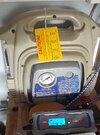
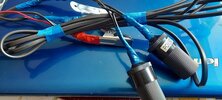
and I can't see how the induction would be any better to camping stove? The biggest problem would be to find it. The jump-starting battery, Battery pack and charger.jpg has a 150 watt 230 volt outlet, and a built-in torch, the compressor has failed, but that will power a light etc. The new version with a lithium battery is not so versatile. It may help start the car, and does have a small light, and USB outlets, but to use an internal inverter has to be running, so I made up a simple lead Emergancy power kit.jpg two crock clips one end, and to cig sockets the other end, be it an old car battery, or the actual car battery, or even the battery of the moblity scooter, it can be adapted to do a lot, including connecting the jump start until to another battery, the jump start unit comes with a lead with two cig sockets so it can be recharged from the car.

Cig lighter to USB means can recharge phone etc, or recharge USB torches.
 

If you need to find a tradesperson to get your job done, please try our local search below, or if you are doing it yourself you can find suppliers local to you.

Select the supplier or trade you require, enter your location to begin your search.


Are you a trade or supplier? You can create your listing free at DIYnot Local

 
Back
Top