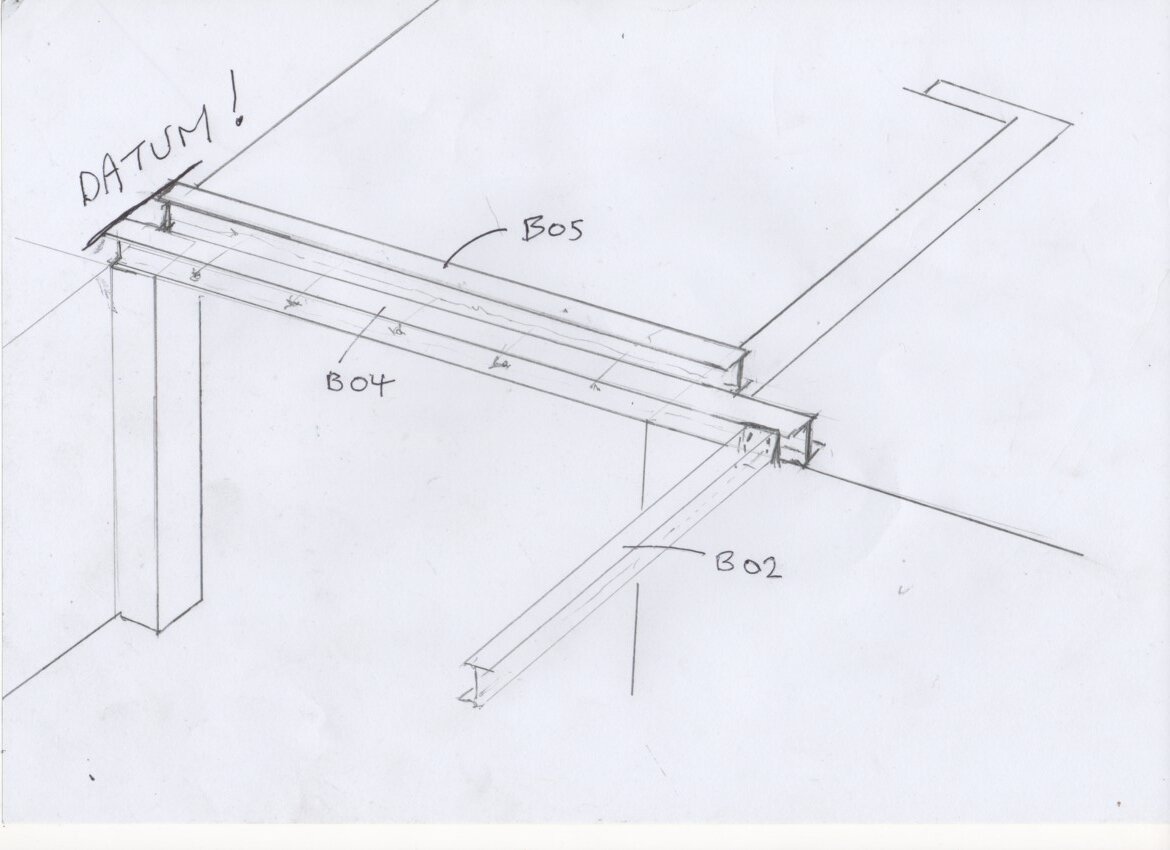
Bolting a steel beam to another steel beam.

Joined
24 Jul 2023
Messages
102
Reaction score
8
Country
United Kingdom
The first beam has been in a while it's got a plate welded with the holes for the bolts. Then needs another one attached to form a T shape. The first one is nice and plumb and I assume the second one will be square and true but it occurred to me that once it's screwed tight it might be off slightly and not giving a perfect 90 degrees.
My question is, is there any way of adjusting it slightly if that's the case? Possible where the washers go?
 
Always best to fit all steels at the same time if you can to avoid this worry.

You may need to add some shims between the plates if you have a misalignment. Unless you have a really bad fabricator and or installer of first beam you'll only need very thin sheet: maybe cut up a baked bean tin.
 
The first beam has been in a while it's got a plate welded with the holes for the bolts. Then needs another one attached to form a T shape. The first one is nice and plumb and I assume the second one will be square and true but it occurred to me that once it's screwed tight it might be off slightly and not giving a perfect 90 degrees.
My question is, is there any way of adjusting it slightly if that's the case? Possible where the washers go?
Is the new beam dictating where the wall goes or is it being aligned under an existing wall?
 
Always best to fit all steels at the same time if you can to avoid this worry.

You may need to add some shims between the plates if you have a misalignment. Unless you have a really bad fabricator and or installer of first beam you'll only need very thin sheet: maybe cut up a baked bean tin.
Something that can crush you mean?
 
Put your beam in under the wall. Bolt it up but don't tighten the nuts too much. Mortar it all up and remove the props. Tighten the bolts (with any necessary shims) once the wall above has 'settled'.
Sorry but that is a bad idea: you want the support as rigid as possible before letting the load ac fully: any movement can lead to cracking.
 
Sorry but that is a bad idea: you want the support as rigid as possible before letting the load ac fully: any movement can lead to cracking.
I'm talking about applying a modest pressure to the nuts without spraining the beam and then fully tighten them afterwards. What do you think might happen, lol?
 
Put your beam in under the wall. Bolt it up but don't tighten the nuts too much. Mortar it all up and remove the props. Tighten the bolts (with any necessary shims) once the wall above has 'settled'.
Will not the settling lead to cracking of the supported wall ?
 
Will not the settling lead to cracking of the supported wall ?
Probably used the wrong term there. Loaded or load transfer was probably the right word or some such, i.e. when the beam takes up the weight from above.
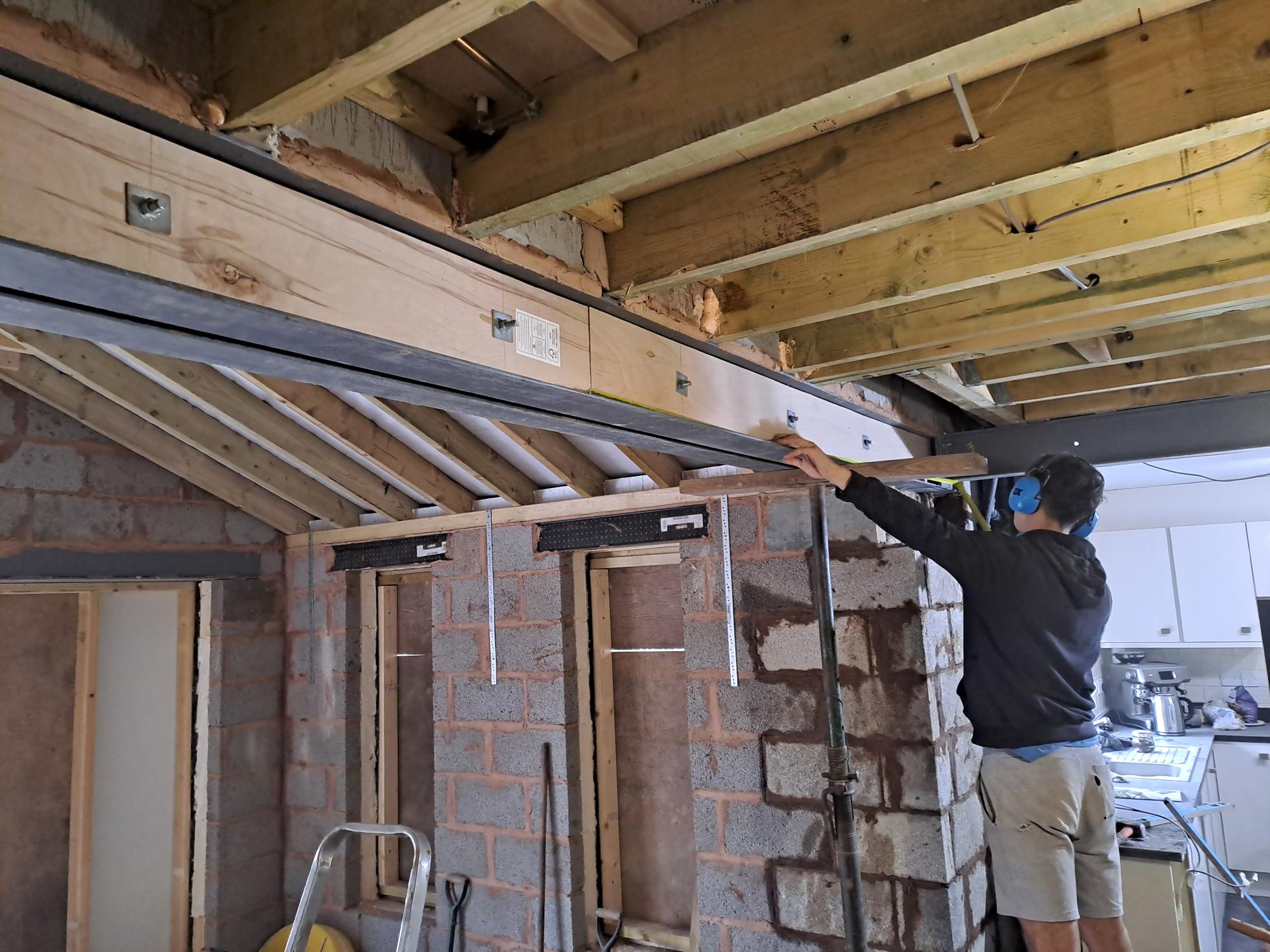
We did something similar as we were faced with a similar scenario to the OP...


Last edited:

If you need to find a tradesperson to get your job done, please try our local search below, or if you are doing it yourself you can find suppliers local to you.

Select the supplier or trade you require, enter your location to begin your search.


Are you a trade or supplier? You can create your listing free at DIYnot Local

 
Back
Top