

- Joined
- 27 Jan 2008
- Messages
- 29,636
- Reaction score
- 3,663
- Location
- Llanfair Caereinion, Nr Welshpool
- Country

In this house I have had one faulty socket, The RCBO tripped, and I left it tripped until roof leak fixed, I visually inspected the socket, and could see the plastic at the back deformed, I wish now I had looked at it more carefully and taken pictures, but I didn't it just went in the bin, and new one fitted. I never put my tester on it, and it would seem likely not fault would be found, possibility is an insulation tester would have found the fault. But in real terms, my eyes were good enough to know it was faulty.
But other than that socket, it is rare to find a faulty socket, in the main it is a plug which has failed with the socket, so swapped as a pair, there was a debate about swapping sockets where non BS1363 device has been plugged in, these
 stupid things for example, technically they could be oversize and often pins are undersized and one has no idea of the damage they could cause, this website blames the covers for this
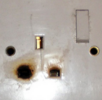 as to if correct make your own mind up. However, to swap all sockets found with the stupid covers fitted and give the tenant the bill, would seem a little extreme. However, the statement:-
 they are so cheap, if not sure, stick a new one in.
If, however, we are looking at the reason an RCD is tripping, this rarely has anything to do with the socket, my example at top is the odd one out. As to checking, we have a number of methods at our disposal. I would be interested in feed back on this, in the early days the RCD tester had a ½ setting, and we would consider if it did not trip on the ½ setting, then it must be OK, the early clamp-on meter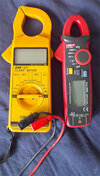 left only has a resolution of 10 mA increments, all well and good saying 30% or 9 mA limit, few could measure 9 mA, however the meter on the right can measure in 1 mA increments, so today we can check the background leakage. Before these meters dropping to a reasonable price, I paid £35 for mine, the other option was the insulation tester
 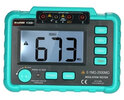 in some cases where the RCD will not reset, the only way to test, but it has some problems, one it uses DC, so will not detect capacitive or inductive linking, it can cause damage on the 500 volt range, so care is needed, and any surge protection devices can show as a near short circuit, at 250 volts not so much of a problem, and the price has dropped, again I got mine for £35, but they are good for testing the appliance without even plugging it in, measuring neutral to earth (not line as often relays and switches in the line supply) and so easy, clip on the wires, press the button, and if below 1MΩ declare it as faulty.
A PAT testing machine would do the same, but they are a bit expensive. What you as the landlord want, is some way to test in front of the tenant and say, sorry that item is faults, it needs to be repaired before use, and I want to see the PAT test report before used again.
But because we are looking at the price of the testers, it is often cheaper to just employ an electrician then no arguments over what is actually wrong.
But other than that socket, it is rare to find a faulty socket, in the main it is a plug which has failed with the socket, so swapped as a pair, there was a debate about swapping sockets where non BS1363 device has been plugged in, these
as to if correct make your own mind up. However, to swap all sockets found with the stupid covers fitted and give the tenant the bill, would seem a little extreme. However, the statement:-Well in real terms neither is any tester. To test the tension of each of the three sockets, is a problem due to the shutters, and I really have no idea what the tension should be? I am sure there is some British standard, but unless the socket is overheated or silly bits of plastic are shoved in it, they last for years. AndPS those socket testers are not suitable for much tbh
they are so cheap, if not sure, stick a new one in.If, however, we are looking at the reason an RCD is tripping, this rarely has anything to do with the socket, my example at top is the odd one out. As to checking, we have a number of methods at our disposal. I would be interested in feed back on this, in the early days the RCD tester had a ½ setting, and we would consider if it did not trip on the ½ setting, then it must be OK, the early clamp-on meter
left only has a resolution of 10 mA increments, all well and good saying 30% or 9 mA limit, few could measure 9 mA, however the meter on the right can measure in 1 mA increments, so today we can check the background leakage. Before these meters dropping to a reasonable price, I paid £35 for mine, the other option was the insulation tester in some cases where the RCD will not reset, the only way to test, but it has some problems, one it uses DC, so will not detect capacitive or inductive linking, it can cause damage on the 500 volt range, so care is needed, and any surge protection devices can show as a near short circuit, at 250 volts not so much of a problem, and the price has dropped, again I got mine for £35, but they are good for testing the appliance without even plugging it in, measuring neutral to earth (not line as often relays and switches in the line supply) and so easy, clip on the wires, press the button, and if below 1MΩ declare it as faulty.A PAT testing machine would do the same, but they are a bit expensive. What you as the landlord want, is some way to test in front of the tenant and say, sorry that item is faults, it needs to be repaired before use, and I want to see the PAT test report before used again.
But because we are looking at the price of the testers, it is often cheaper to just employ an electrician then no arguments over what is actually wrong.


