
At absolute best that will be a quick visual inspection.Shield insurance policy with Southern Electric.
A proper inspection and test of that installation would be a full days work and cost £200+
The hob will work fine on that 32A circuit breaker.

At absolute best that will be a quick visual inspection.Shield insurance policy with Southern Electric.


That does not sound like a full EICR, it sounds more like the type of checks the suppliers use to do before connecting you up.[SIZE=4][B]SSE Electrical Wiring Cover [/B]advert[/SIZE] said:Electrical Wiring Inspection
An initial inspection is a visual inspection of your home electrical wiring and fuse box and an earth loop impedance test, and may be deemed necessary if your house is over 15 years old, hasn’t been rewired in the last 15 years or has an old style fuse box. "Fixed electrical wiring system" covers electrical wiring, fuse box, light fittings and switches, wall sockets and shower isolation switches.
[SIZE=4][B]SSE Electrical Wiring Cover [/B]advert[/SIZE] said:What’s not included
[SIZE=4][B]SSE Electrical Wiring Cover [/B]advert[/SIZE] said:
- Repairing the power supply to your property or the electricity meter
- Any items that do not form part of the fixed electrical wiring system
- Electrical heating equipment
- Major rewiring works. This Agreement only covers repairing Fault


Thank you. ISTR that when I first subscribed to the Shield cover I had to have a thorough wiring test by the SSE engineer since they only want to insure properties which are properly wired and protected from the outset.At absolute best that will be a quick visual inspection.
A proper inspection and test of that installation would be a full days work and cost £200+
The hob will work fine on that 32A circuit breaker.
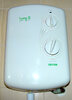
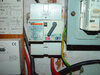


Doubtful - that RCD is a 1980s part, possibly early 1990s at the latest.parts of the CU, meter, RCD etc were installed or upgraded in 2001.
And the RCD is 100 mA so needs changing, it is well past use by date.Triton said:A 30mA residual current device (RCD) MUST be installed in all UK electric and pumped shower circuits. This may be part of the consumer unit or a separate unit.
It seems to say it will not interfere with the operation of a RCD. It also does not say one must be fitted. © 09.2009 so BS 7671:2008 was in force when this was printed. I also found the Australia version that also has nothing about requiring RCD protection. I had expected it to say must be RCD protected, but nothing.Belling FSE 60i said:This induction hob complies with the applicable EMC and EMF standards. Therefore it should not interfere with other electronic units. Persons fitted with a pacemaker or any other electrical implant should clarify with their doctor or the producer of the implant, whether there implant is adequate and fail-safe, the pacemaker must be designed in compliance with the appropriate regulations.
I found the instructions here. They say: "To enhance electrical safety a 30mA residual current device (RCD) should be installed in all UK electric and pumped shower circuits. This may be part of the consumer unit or a separate unit." Since their other electrical instructions all use the word "must", I assume that the 30mA RCD advice is not mandatory. In any event, after 20 years of electricity consumption, nothing has ever gone wrong - including the one occasion when I cut through a live cable and really did need the RCD to work and it did.I looked for the instructions for Triton Ivory II and failed, but all the Triton showers I found said
And the RCD is 100 mA so needs changing, it is well past use by date.
Indeed I have had occasions when a single device has tripped the RCD and it's inconvenient, once every 2-3 years. And I do use a portable RCD in any socket I'm attaching a heavy-duty appliance to such as a jet washer or a drill.BS 7671 is not law, the building regulations are, but not BS 7671, so no one can tell you that the fuse box needs upgrading. But with my house there are 14 RCD's all 30 mA built in with the MCB called RCBO's so if my cooker did stop the RCD from working then the other 13 remain unaffected. Even with a malfunction of some equipment, the chance of some equipment on the same supply giving me a shock and not tripping is very slim. But you have got all yours eggs in one basket.
Well, that's what I've got. My shower water comes from the cold water tank in the loft.A pumped shower won't change anything - they are only for situations that have low pressure cold water from a storage cistern.
It certainly doesn't sound impressive but 0.4L more would be a >10% improvement and that might just be enough to make the shower more fit for purpose. In any event, I won't be investing in new plumbing for a different shower…and the Triton with the internal pump might give me more than 10%.The flow rate of an electric shower is limited by the power rating - the only way to get more flow is to either have a cooler shower, or to put a lot more power in.
With inlet temperature of 5C and outlet of 40C (temperature rise of 35C), the flow rates are
8.5kW = 3.5 litres/minute
9.5kW = 3.9 litres/minute.
0.4 litres per minute extra flow at the same temperature.
Even going to the most powerful electric shower of 10.5kW, which would require new cable and a new consumer unit, it's still only 4.3 litres/minute.
If you want a higher flow rate, then an electric shower is not the solution.
the aggregate draw of my active appliances should not exceed 100amps, ie less than half the aggregate max capacity of the installed MCBs
Since my 100amp RCD rarely trips, I assume that I don't normally exceed 100amps
passively confirming that my old 1206 board does take 40amp MCBs

If you need to find a tradesperson to get your job done, please try our local search below, or if you are doing it yourself you can find suppliers local to you.
Select the supplier or trade you require, enter your location to begin your search.
Are you a trade or supplier? You can create your listing free at DIYnot Local

