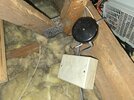
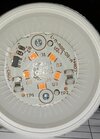
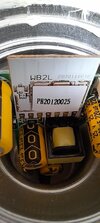
There are a number of power supplies one can have, the toroidal transformer outputs a percentage of the supply voltage, it does no regulation, and it does not matter if the load is 1 watt or 200 watt as long as not more than the transformer can provide. And if 50 Hz in, then it was 50 Hz out. They were expensive, heavy lumps, and there was a move to switch mode power supplies, (often called electronic transformers) these have improved over the years, but they regulated the output, so if the input varied 207 to 253 volts, the output stayed at 11.9 volts, often the frequency changed so output in the MHz range, early version had a minium and well as maximum power output often given as VA which is nearly the same as watts, so typically 60 to 120 VA, so changing to LED can under load the unit and cause it to switch off, latter versions do go zero to maximum but still MHz range so limited how much wire can be used on the extra low voltage side.
There is also the driver, these could be AC or DC output, but current regulated rather than voltage, I first came across them for airport runway lamps, designed, so all lamps had same output, however the lighting industry love to call new after the name used for the old, as seen with the toroidal and electronic transformer, so today drivers are normally DC, and can be either current or voltage regulated, so one has to read the label carefully, but because they are DC the length of the extra low voltage cables is not a problem.
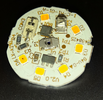
In the main 12 volts, LED down lights are AC, but just as happy with DC, there are some specials mainly designed for boats and caravans which are DC only and very economical to run, AC can be transmitted with capacitor or inductive linking, so a little power has to go through a resistor to stop lights flashing or staying on dim, this is not a problem with DC, so the specials for boats and the like produce more lumens per watt, tend to be low wattage, and can work with 10 to 30 volts, which is a huge range. Often over 100 lumens per watt.
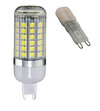
The type, for AC use, vary 75 to around 90 lumens per watt. But there it also loses with the voltage dropped as well. But most of the advantages of using extra low voltage are lost with LED, so we tend to move to low voltage (50–1000 volts is low voltage with AC) but to fit 230 volt lamps, one needs an earth to comply with regulations, note not always required to be safe, but only pendent lamps can be fitted without an earth terminated even when not really required, it is an old rule from 1966 when we started to use more fluorescent lamps, but it still applies today.
So often the wiring for extra low voltage does not have an earth, so technically you should not use the old wiring, although it will work.
Moving to low voltage means you can get smart bulbs, so you can dim, colour change, or turn sections off. So there is an advantage to moving to low voltage (Note in the USA they call extra low voltage, low voltage, so need to read the volts in case of grey imports).
So one find out what you have, and two decide on the route you want to take.