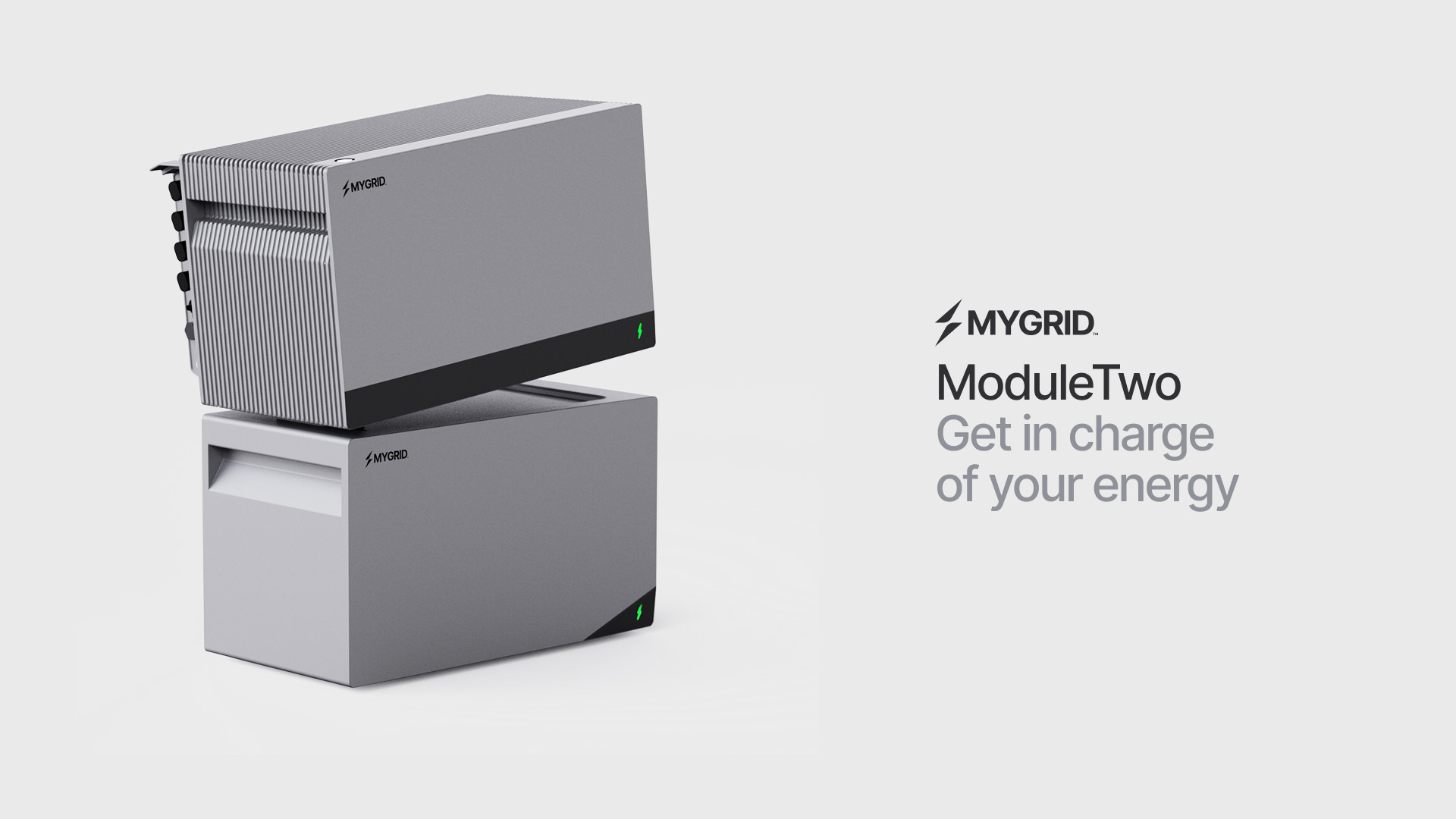
Has plug and play solar now been passed, I see adverts?

That was always my worry. The inverters should measure but voltage and frequency and if either goes out of limits auto switch off. But they will auto switch on again as well, so there needs to be a delay between auto off, and restart.

With half a dozen solar inverters it is likely they will soon go out of limits and as long as they don't restart then very fast they all in turn trip out.

But should there be two dozen inverters then the time required will be longer, so a panel can restart before the others have tripped keeping the island running.

In the main we rely on the failure causing the voltage to drop below the limit, should the failure cause the voltage to go over the limit, it can take some time to trip.
I have no idea of the intricacies of the feed in systems but I imagine the voltage would gradually rise as each inverter is trying to 'inject current'
Also, we have already read about Artisan Electrics, and how they cheated and used auto transformers to stop it tripping. And he is, it seems, is an authorised installer, and instead of revoking the authorisation, the DNO gave them a three-phase supply and paid for the work to change it all.

So with that in mind why no have it DIY, seems registered installers do daft things anyway, so it makes no never mind?
I saw that video ages ago now - I'd thought Artisan found that transformer when asked to look at the tripping problem, I'll have to dig it out again.
 
I have no idea of the intricacies of the feed in systems but I imagine the voltage would gradually rise as each inverter is trying to 'inject current'
This is the problem, if the load drops the voltage, then it will trip out reasonably rapid, but if the generation raises the voltage, they can take it in turns generating, we would hope the frequency would drift, but with half a dozen solar panels on an estate with say 200 homes on the same step-down transformer the trip will be near immediate. But with an estate built with solar panels from day one, so all homes have them, with a grid failure they could cause islanding for a long time.

So to use plug and play limited to 800 watts instead of installed panels would help, as more likely the load would not be satisfied by the panels, and once someone has panels fitted, they are less likely to replace with larger arrays, I have room for more than my 6 kW of panels, but once fitted, getting scaffold etc, to add just a few extra, is not worthwhile. I would need a second inverter mine only rated at 5 kW, so unless I get an EV, would not be worthwhile adding panels on the roof.

However, adding panels to a wall, that does have some advantages. My panels are South West, so get sun well into the evening, but are slow to start generating in the morning, this is not at the moment a problem, as end of off-peak to starting to generate is far shorter time to end of generating to start of off-peak. But if my panels had been South East, then to have extra panels to catch the evening sun would be an advantage. And winter is the time when short of solar, so wall or balcony mounted will catch the low sun in the winter, so there are advantages adding to an installed system, where you already have the second MPAN number, but once one has wall or balcony solar, the advantage of having fully installed solar is reduced, so owner occupiers who buy wall or balcony solar, are less likely to go the whole hog, and have installed solar latter.

It is however clearly aimed at tenants, and the percent of accommodation in Europe is higher than in the UK. So aimed at tenants it needs to be true plug and play, so they can simply unplug it and take it to their next home. No shelly monitors in the consumer unit etc. And likely no batteries. So this will mean generation will be as the sun shines. As my solar ends
1778333531442.png
green line, the battery takes over, so my consumption orange line is satisfied by the battery, and the grid use red line stays at zero. So the 4 pm to 7 pm peak time I am not drawing on the grid. But without the battery I would be, so the grid load 4 pm to 7 pm will get worse with plug and play, which is not going to help country as a whole.
 
I would point out that all that is missing at the moment is BSi standard due July 2026, the wiring regulations already permit it , all that is missing is the sockets are for supply bit in the BS... all the EN (CE mark) standards which are perfectly acceptable in the uk already and detail what plug in solar must have.. disconnection times, ratings etc and manufactures and sellers can choose which standard they want to conform to as apart from certain exemptions CE and BS marks are interchangeable. All electrical kit is covered by the read across.
 
Thanks, I had wondered when it would be issued, mind you with a change of government not sure what will happen now. What will Plaid Cymru do? Will there be a reshuffle, will Edward Miliband still be calling the tune?
Britsih standards are not devolved to regional governments, same as defence, drug safety etc etc, and as its policy what difference would changing milliband have, the whole cabinet had to agree and under the ministerial code all policy decisions approved by cabinet must be reversed by the whole cabinate, whoever takes his job will be stuck with the policy. With the looming energy crisis .... i can only foresee a greater slacking of any rules... bye bye mcs, any export to be paid regardless?
 
any export to be paid regardless?
That would be a huge change. It seems we have a lottery at the moment. It depends on what meter you have. Some same for import and export, some charge one for export the same as import, some simply don't pay for export, and the smart ones you can have a second MPAN number to be paid for export, seems going rate around 12p/kWh if export to same billing agent as you import from, but more like 4p/kWh is export to a different billing agent.

So at the moments all the statements like should pay for itself in 4 years etc. Is pure guess work, as so many different meters in use.
 
So at the moments all the statements like should pay for itself in 4 years etc. Is pure guess work, as so many different meters in use.
I rather doubt that any substantial solar installation, even without batteries, would "pay for itself" anything like that quickly. More realistically, I think that anyone have such an system installed (particularly if it includes batteries) should be prepared to be "worse off" for best part of a decade, maybe even more.
 
Just be glad that high capacity batteries that anyone can just plug in don't exist.

Oh wait - they already do.

Good luck to anyone invested in installing solar and/or battery storage.
 
Battery size is hard to work out.
1) Large enough to ensure when something like a washing machine it turned on, the battery covers the troughs. We want to support a 3 kW machine, so we are looking at about 3 kWh to cover the troughs.
2) Cover the time between loss of solar and start of off-peak. This is not so easy, as it varies depending on time of year, so with my use, looking at between 6 and 9 kWh, with my use of around 12 kWh per day. I have gone for 6.4 kWh which is ample in the summer, but some days in the winter, where solar has not recharged my batteries it does run out.
3) Making money by storing and then exporting energy, the limit is down to the DNO over how much you can charge in the off-peak and export at peak times.

We also have EV uses, and the battery charging being controlled by the homeowner or the billing agent. I started with 3.2 kWh and now have 6.4 kWh and I don't feel increasing that size is worthwhile when I consider how many days the battery does not last until off-peak starts.

But the calculation depends on the tariff, and it is near impossible to work out what the rates will be in 10 years time.

I as much fitted solar and batteries to give me a back-up as to save money. And the plug and play will not give any back-up.
 
Please explain how the inverters can distinguish between the DNO input and the plethora of other inputs when they are all basically a 230V 50Hz sinewave generator.
They are (supposedly) required to be able to detect it.
First line is upper/lower voltage limits.
Then upper/lower frequency limits.
Then there are measures such as ROCOF & ROCOV (rate of change of frequency/voltage). And something more complex (vector analysis ?) that I think analyses changes in the network - beyond my level of AC systems theory.

It's hard to comprehend how an island of inverters could be stable enough to stay online - unless the island is more like a country in size, and/or too many inverters just don't comply with G98.
As suggested, when voltage rises, some will drop off on over-over-voltage - until supply drops to match load.
But "many" should trip out on the various other detection methods.

If such an island does actually run offline, then that implies a lack of compliance and enforcement.
 
They are (supposedly) required to be able to detect it.
First line is upper/lower voltage limits.
Then upper/lower frequency limits.
Then there are measures such as ROCOF & ROCOV (rate of change of frequency/voltage). And something more complex (vector analysis ?) that I think analyses changes in the network - beyond my level of AC systems theory.

It's hard to comprehend how an island of inverters could be stable enough to stay online - unless the island is more like a country in size, and/or too many inverters just don't comply with G98.
As suggested, when voltage rises, some will drop off on over-over-voltage - until supply drops to match load.
But "many" should trip out on the various other detection methods.

If such an island does actually run offline, then that implies a lack of compliance and enforcement.
That's the sort of detection I was expecting.
The estate I mentioned is several hundred properties, not far from home. A friend (sadly passed in 2024, due to respiratory problems & possibly covid related) was one of the engineers doing an electrical inspection of the ofthe entire estates installations. Essentially they'd not found anything relevant to the EV before he fell ill. Loads of other problems which seemed to be mainly undersized cable.
 
I note eFIXX has talked about this problem with over voltage and EV chargers cutting out, and using current in the earth wires as part of the detection for loss of PEN.

I am not sure about having a relay/cut-out which can disconnect the earth? Same with a diode in the earth wire. To my mind if you need to fit earth rods, as well as use the gird earth connection, then we have a problem with testing to ensure they work.

Be it an all singing dancing loop impedance tester, or a simple plug-in socket tester with loop, we are one looking at £50 or more, and two relying on it actually finding a fault. The earth rod testing kit, needs one to put in test probes quite a distance from the rod under test, one moves the centre probe to see if one has selected enough distance. I think I could just about test in this house, but very few domestic premises can one get probes in at the required distance.

When my panels were fitted, the electrician showed me the earth rod was 1Ω. This is extremely unlikely, he must have disconnected a wrong wire to test, I have fitted 100s of earth rods, and to get 8Ω needed between 3 and 8 rods. So unless his rod was very close or hit some underground metalwork, that reading seems impossible for a single rod.

There is a relay in the neutral, as with loss of grid the neutral needs disconnecting before it is connected to local earth. But as to if my inverter measures earth to neutral or any earth current I would think unlikely.

So as to detecting loss of PEN, I am not sure it can do that? It will disconnect with under and over voltage, but it seems there is a move to change for -6/+10% to +/- 10% and if this happens, then using voltage to detect loss of PEN becomes a problem.

It seems with AC, we allow 50 volts arm to arm, and 70 volts arm to leg, not sure how that works? As we are not the only animals which can roam the streets, and I am told 25 volts can kill a cow, getting up in the morning to find a dead cow leaning on your EV is not something I want. OK here only tend to get sheep, badgers, foxes, squirrels, and cats. But don't really want to deal with them either.

Remember we don't all live in towns with no wild life. Lambs bleating did before double glazing change, wake me up.

The problem stems from allowing the use of a PEN, but that is unlikely to change in a hurry. But we are also looking at the size of an island, with a pole transformer with half a dozen homes, I would expect solar inverters to close down. But with a sub-station feeding 100 homes, we are looking at a different situation. If there are any motors these can smooth out the AC wave form, I remember working on the Falklands where we would run the shearing sharping wheel all the time the shearing was going on, as it acted as a reservoir to take the start load of the shears. Non inverter fridges and freezers will do the same, so the delay of the auto re-start of the inverters has to be long enough so they allow the voltage to decay before trying to re-start.

I note my inverter has an array of dip switches to allow it to comply with many countries rules, even G98 and G99 need a different setting. So the only way to ensure an inverter complies with British rules will be to have the 13 amp plug fitted to the inverter, or something in the 13 amp lead with sets the inverter to comply with British rules.

This means, until the rules are published, no one can make inverters to comply with British law, as we simply don't know what it will be. In the meantime, we have people jumping the gun, and buying and using plug in solar.

What would be interesting to know, is does the electric meter alert suppliers when there is unlicenced export? Yes with a smart meter they can detect export, but does any device send an alert which energy companies can act on?

 
What would be interesting to know, is does the electric meter alert suppliers when there is unlicenced export? Yes with a smart meter they can detect export, but does any device send an alert which energy companies can act on?
I suspect that suppliers (as opposed to DNOs) probably don't really care about 'unlicensed export' - in fact, they might be quite hapy, since it's export they are presumably not having to pay for, even if they would pay for export in other circumstances :-)
 
I suspect that suppliers (as opposed to DNOs) probably don't really care about 'unlicensed export'
I suppose it is down to who would end up in court if it all goes wrong.

I remember using the electricians mate to do all sorts, until the court case where the foreman was found guilty, for what the mate had done in the Emma Shaw case. That was the end of the electricians mate with many firms.

The problem is we can't un-take our exams, once we have taken them, it can be proved we knew what we were doing, so for me or you to fit plug in solar, we have no excuse, but Joe Public can say well it came with a plug on it, so I plugged it in.

So can a supplier say, yes we know they are being sold, we have even written a web page giving advice, but we have not done anything to find out if any in use. And the court will let them off?
 
I suppose it is down to who would end up in court if it all goes wrong.
I don't think I would sleep as well as I do if I had the same concerns as you do about matters "ending up in court".
I remember using the electricians mate to do all sorts, until the court case where the foreman was found guilty, for what the mate had done in the Emma Shaw case. That was the end of the electricians mate with many firms.
The fact that you continue to cite a court case from nearly 19 years ago is perhaps a reminder of how incredibly rare such cases have been .
 

If you need to find a tradesperson to get your job done, please try our local search below, or if you are doing it yourself you can find suppliers local to you.

Select the supplier or trade you require, enter your location to begin your search.


Are you a trade or supplier? You can create your listing free at DIYnot Local

 
Back
Top