1980 I went to Algeria, returned for a short time, then the Falklands, so I had around 10 years out of the country, and I returned on the building of Sizewell 'B' to the 16th says this, and the 16th says that, from a foreman who did not have a clue how a star/delta started worked, and was completely in the dark as to three-phase, but had done a course on the 16th edition.
The main thing was to get things working, as to if it complied to some British Standard was not really that important, but in around 2004 we got Part P, and for the domestic side of the trade, for the first time it seemed, electricians had to follow the rules.
Since that point, domestic electrics have become more complex, and the label of house basher is now no longer appropriate, the trade domestic wise has needed to catch up, with things like freezers being three phase and powered from an inverter.
However, I was aware, if I used a PLC to control my central heating, which since I had a few spare ones kicking around would have been easy for me, if I got to the stage where I could no longer DIY, there would be a problem finding a domestic electrician who could work on one.
I found it anyway with my central heating, where the heating and ventalation engineer admitted he had no idea how the electric/electronic controls worked. And I had use things like Nest and Drayton Wiser, so had expected tradesmen to understand how they worked.
But I have needed to pass the batton, and rely on tradesman to do their work, so when I wanted solar, I got the experts to install it. I was surprised to find the central heating supplied from a non RCD protected circuit, but I had a compliance certificate to say its OK.
I did consider adding a RCD FCU, but it tripped so had to be removed again, inspite of it running before solar on a RCBO, and last thing I want is in middle of winter, the central heating failing, whole idea of EPS supply was it does not fail even with a grid power cut.
I took the exam with the BS7671:2001 and again with BS7671:2008 but considered that was good enough for someone who had retired, and I have not bought the lattest edition.
I have followed the changes, but can't look at the regualtions valid today. In the 1966 edition most modern items were covered, except for the RCD.
In 1966 unidirectional and bidirectional RCBO were not an issue. And if an overload will cause automatic disconnetion of the supply, do we really need to look for more?
OK, my son decided to follow his dad, and take his RAE, so I fitted RCD protection to all circuits, but had he not taken his RAE, not sure if I had bothered.
He has continued, and now doing his masters, I only got as far as a Fdeng, he has done far better than me. But today it seems everyone gets a degree, not having one is the odd one out.
As to if it helped, no I never worked for a job which paid after getting it. OK I volunteer, but they would let anyone volunteer. Just got awarded 10 years service. Does that mean I am a steam geek?
To be frank I spend most of my time painting, not really needing a Fdeng.



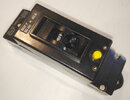 allowed that, every point switched off with one flick of the switch.


