Interesting Regulation of Yesteryear

It means every point in an installation must be capable of being switched off
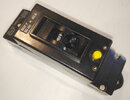
These ELCB-v.jpg allowed that, every point switched off with one flick of the switch.

I know what you mean, pre-MCB one could not isolate a single circuit without the danger of ionisation as you drew the fuse, so had to turn off all before drawing the fuse.

With no flash arrestor when drawing a plug out of the socket, ionisation is possible, but since no flash arrestor on the switch either, it is rather pointless with an AC supply.

And as a lad I did visit a village with a local 120 volt DC supply, Abergeirw in Gwynedd, Wales, was widely reported as the last full village/hamlet connected by the National Grid on December 19, 2008. So from 2008 everyone was on an AC supply so no real need for the switch on the sockets after that point.
 
I'm not reading it as every light must have a separate switch
I agree - I don't think it actually says that ....

"Every point shall be controlled by a switch..."
"Point.. termination of the fixed wiring for the attachment of a lighting fitting..."
That seems to imply every light should have a switch ....
It does. However, it doesn't say (and I don't think even implies), that each switch has to be uniquely associated with just one light - i.e. I think that one switch controlling two or more lights would have satisfied the reg (provided that every light was controlled by some switch), wouldn't it?
 
I can see how it would read as a separate switch per point but i don’t think it actually means that

Anyway very interesting topic
 
Before 1992 it was not a British Standard, it was just a bunch of chaps saying what they thought should be done.
And they did a decent enough job of it

Rules evolve and get more complicated and stringent and better

They weren’t a million miles away with switching things off at that time
 
1980 I went to Algeria, returned for a short time, then the Falklands, so I had around 10 years out of the country, and I returned on the building of Sizewell 'B' to the 16th says this, and the 16th says that, from a foreman who did not have a clue how a star/delta started worked, and was completely in the dark as to three-phase, but had done a course on the 16th edition.

The main thing was to get things working, as to if it complied to some British Standard was not really that important, but in around 2004 we got Part P, and for the domestic side of the trade, for the first time it seemed, electricians had to follow the rules.

Since that point, domestic electrics have become more complex, and the label of house basher is now no longer appropriate, the trade domestic wise has needed to catch up, with things like freezers being three phase and powered from an inverter.

However, I was aware, if I used a PLC to control my central heating, which since I had a few spare ones kicking around would have been easy for me, if I got to the stage where I could no longer DIY, there would be a problem finding a domestic electrician who could work on one.

I found it anyway with my central heating, where the heating and ventalation engineer admitted he had no idea how the electric/electronic controls worked. And I had use things like Nest and Drayton Wiser, so had expected tradesmen to understand how they worked.

But I have needed to pass the batton, and rely on tradesman to do their work, so when I wanted solar, I got the experts to install it. I was surprised to find the central heating supplied from a non RCD protected circuit, but I had a compliance certificate to say its OK.

I did consider adding a RCD FCU, but it tripped so had to be removed again, inspite of it running before solar on a RCBO, and last thing I want is in middle of winter, the central heating failing, whole idea of EPS supply was it does not fail even with a grid power cut.

I took the exam with the BS7671:2001 and again with BS7671:2008 but considered that was good enough for someone who had retired, and I have not bought the lattest edition.

I have followed the changes, but can't look at the regualtions valid today. In the 1966 edition most modern items were covered, except for the RCD.

In 1966 unidirectional and bidirectional RCBO were not an issue. And if an overload will cause automatic disconnetion of the supply, do we really need to look for more?

OK, my son decided to follow his dad, and take his RAE, so I fitted RCD protection to all circuits, but had he not taken his RAE, not sure if I had bothered.

He has continued, and now doing his masters, I only got as far as a Fdeng, he has done far better than me. But today it seems everyone gets a degree, not having one is the odd one out.

As to if it helped, no I never worked for a job which paid after getting it. OK I volunteer, but they would let anyone volunteer. Just got awarded 10 years service. Does that mean I am a steam geek?

To be frank I spend most of my time painting, not really needing a Fdeng.

 
He also said light bulbs don't give out light, they suck in the dark, this is why they have black bits on them when they fail, I just was not good enough to even win that one
Yes I like that one Eric - S W M B O opens the curtains first thing in the morning to "Let the Day in" and last thing at night closes them to "Shut the Dark Out".

I told S W M B O eric and she thinks it is a brill statement by your dad, well done
 
Last edited:
For years, it has been believed that electric bulbs emitted light. However recent information from Bell Labs has proven otherwise. Electric bulbs don't emit light, they suck dark. Thus, they now call these bulbs dark-suckers. The dark theory, according to a Bell Labs spokesman, proves the existence of dark, that dark has mass heavier than that of light, and that dark is faster than light. The basis of the dark-sucker theory is that electric bulbs suck dark. Take for example the dark-suckers in the room where you are. There is less dark right next to them than there is elsewhere. The larger the dark sucker, the greater its capacity to suck dark.
Dark-suckers in a parking lot have a much greater capacity to suck dark than the ones in this room. As with all things, dark suckers don't last forever. Once they are full of dark, they can no longer suck. This is proven by the black spot on a full dark sucker. A new candle has a white wick. You will notice after the first use the wick turns black, representing all the dark which has been sucked into it. If you hold a pencil next to the wick of an operating candle, the tip will turn black because it got in the way of the dark flowing into the candle. Unfortunately, these primitive dark suckers have a very limited range. There are also portable dark suckers. The bulbs in these can't handle all the dark by themselves, and must be aided by a dark storage unit. When the dark storage unit is full, it must either be emptied or replaced before the portable dark sucker can be operated again. Dark has mass. When dark goes into a dark sucker, friction from this mass generates heat. Thus, it is not wise to touch an operating dark sucker. Candles present a special problem, as the dark must travel in the solid wick instead of through glass. Thus, it can be very dangerous to touch an operating candle. Dark is also heavier than light. If you swim deeper and deeper, you notice it gets darker and darker. When you reach a depth of approximately fifty feet, you are in total darkness. This is because the heavier dark sinks to the bottom of the lake and the lighter light floats to the top. The immense power of the dark can be utilized to man's advantage. We can collect the dark that has settled to the bottom of the lakes and push it through turbines which generate electricity and help push dark to the ocean, where it maybe safely stored. In conclusion, Bell Labs stated that dark suckers make all our lives much easier. So, the next time you look at an electric bulb, remember that it is indeed a dark sucker!
 

If you need to find a tradesperson to get your job done, please try our local search below, or if you are doing it yourself you can find suppliers local to you.

Select the supplier or trade you require, enter your location to begin your search.


Are you a trade or supplier? You can create your listing free at DIYnot Local

 
Back
Top