• Looking for a smarter way to manage your heating this winter? We’ve been testing the new Aqara Radiator Thermostat W600 to see how quiet, accurate and easy it is to use around the home. Click here read our review.

Joist hangers too big for joists?

Is it fully nailed in? If yes, I'd plane it rather than mess about pulling a bunch of square twisties out. If it's only lightly fixed in, how about moving it to the edge?
Its all fully nailed in now, plus might not have fitted in another position anyway as I had to custom cut each length.

I'll see how it is when the floor is on, its only a couple mm high so might be ok. If its difficult to get the T&G down I'll plane it a little.
 
Its all fully nailed in now, plus might not have fitted in another position anyway as I had to custom cut each length.

I'll see how it is when the floor is on, its only a couple mm high so might be ok. If its difficult to get the T&G down I'll plane it a little.


Plane it now. It will take a few minutes, vs trying to fix it later if you do find it noticeable.
 
I don't know what to do now. I wanted to get the job as perfect as possible. You can't see any deviation in the floor when looking at it visually but if I put my level across it it pivots on the high spot so that it's a 3mm gap either side. But it might settle on its own?
 
I don't know what to do now. I wanted to get the job as perfect as possible. You can't see any deviation in the floor when looking at it visually but if I put my level across it it pivots on the high spot so that it's a 3mm gap either side.

Just plane it….. I cannot imagine a scenario where you wish you hadn’t made the floor flatter.

You may not notice it by eye, but if you have a hard floor things roll around.

I put a level all around the last one I laid, and got it as flat as I could. I spent as much time getting the tools set up as I did planing!
 
It's a bit annoying as the rest of my loft floor was flat as a pancake I didn't have any issues like this. But these longer 2x6s were more awkward to get right.

What would they do if building a whole house and you get some variability in the timber?

What if I plane it and then it settles which means I then get a low spot?
 
What would they do if building a whole house and you get some variability in the timber?
They'd have moved onto something else about 5 minutes after fixing the last joist. You know you leave a gap between the new joists and the existing ceiling as a bit of sag is expected right?
 
They'd have moved onto something else about 5 minutes after fixing the last joist. You know you leave a gap between the new joists and the existing ceiling as a bit of sag is expected right?
Yeah there is a big gap to the existing ceiling although it's worth me also raising something else here then to confirm I've done the right thing.

The existing ceiling is quite badly sagged/dished. A piece of timber has been hung from from the ridge beam at some point in the past to try to stop the ceiling sagging.

To try and strengthen this and prevent future sag I have connected the existing ceiling cross brace to my new joist work as extra support. Should I have done this?
 

Attachments

  • Screenshot_20250807-110255.png
    Screenshot_20250807-110255.png
    1.6 MB · Views: 32
Well now if there is any sag in your new floor that will definitely be replicated in your ceiling.

Dare we ask is this just some random loft boarding for storing the Xmas decs or part of a bigger project? Dare we also ask if the joists are appropriate for their purpose?
 
Last edited:
I would say a slightly over engineered loft storage project - not a problem, but I would have taken the opportunity to jack up the saggy ceiling below (if you could stand a couple of acrows and plank in the middle of the bedroom for a few weeks) and strap to the new timbers.

The level of precision in the loft flooring work doesn't seem to sit right with a sagging bedroom ceiling.
 
Well now if there is any sag in your new floor that will definitely be replicated in your ceiling.
Yes I realise this now, if the new joists sag it will push down on the existing ceiling. Maybe I should remove these (I still can) so that the new floor is completely independent. I just wanted to try and make the existing ceiling stronger given how badly sagged it is (2" in the middle compared to the edges).

Dare we ask is this just some random loft boarding for storing the Xmas decs or part of a bigger project? Dare we also ask if the joists are appropriate for their purpose?
It is only for light loft storage yes, but the span was 3.4m and I didn't want to put any load on the existing ceiling hence building a new framework over (also wanted the c270mm depth for insulation which I have achieved). I used 8nr 6x2s at 400mm centres for a 3.4m span and 2.8m width, which seemed ok based on span tables. Its supported by the resin fixed ledger beam (8x2) at one end and resting on a supporting brick internal wall at the other end. I have tried to do things properly, as best I could working in the constraints of an existing loft.


but I would have taken the opportunity to jack up the saggy ceiling below (if you could stand a couple of acrows and plank in the middle of the bedroom for a few weeks) and strap to the new timbers.
I did consider this but didn't want to crack the existing plaster on the ceiling and make extra work for myself. The ceiling joists would take some 'unbending' I imagine, having developed into a nice curved shape over the course of nearly 100 years.

The level of precision in the loft flooring work doesn't seem to sit right with a sagging bedroom ceiling.
Do you mean my new work is better than what's already there? This is true but I wanted to do a proper job obviously. If I had loads of spare cash I'd be replacing the ceiling and floor joists in the whole house but there's limitations to my budget obviously. Its a 1930s house and lots of things aren't level or plumb but I can only do what I can do.
 
Do you mean my new work is better than what's already there? This is true but I wanted to do a proper job obviously. If I had loads of spare cash I'd be replacing the ceiling and floor joists in the whole house but there's limitations to my budget obviously. Its a 1930s house and lots of things aren't level or plumb but I can only do what I can do.

Yes. I did similar, but I dropped the old ceilings (took about 5 pulls with a crowbar they were that bad) and just removed the old joists completely.
 
Yes. I did similar, but I dropped the old ceilings (took about 5 pulls with a crowbar they were that bad) and just removed the old joists completely.
Yeah the ceiling is already nicely plastered and you can't really see the sag in it from the room itself, its much more obvious looking at it from the top in the loft. The ceiling joists, whilst sagged, are not rotten in any way, and they span from wall plate to wall plate and are nailed into the rafters at each end as well. I don't really want to disturb it, but I would have liked to provide some additional support to it to stop it sagging any further.

Maybe I can do something off the existing roof purlins, that way it keeps my new floor separate.
 
Oh lumme, just stick some boards down on what you have and move on.
Should I remove the hangers I installed to decouple the existing ceiling from the new joists?


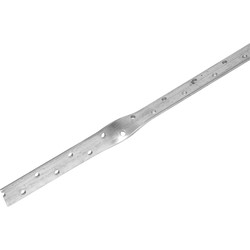
Looking at this instead to strap the ceiling joist to a purlin above.
 

If you need to find a tradesperson to get your job done, please try our local search below, or if you are doing it yourself you can find suppliers local to you.

Select the supplier or trade you require, enter your location to begin your search.


Are you a trade or supplier? You can create your listing free at DIYnot Local

 
Back
Top