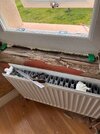
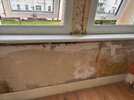
I have a bay window which is lathe and plaster. When I was sanding the skirtings, I discovered the plaster under the windows is soft and breaking away. It seems like the windows have been leaking (new windows going in as we speak). The plaster under the centre section is full of filler and it feels like the lathes have come away from the studs - there’s a good bit of movement in it. For context, there used to be a huge radiator that was shaped into the bay and mounted on boards. I now have two singles and that centre board was removed - so I wonder if the board has been ripped off, loosening the lathes. Under one window, there was black mould under the wall paper.
It’s looking like I’m going to have to repair it myself as our schools come off for two weeks on Friday and apparently so does every plasterer I’ve contacted
My gut instinct is to remove the plaster under the windows, possibly the lathes as well and reboard and skim. One got told me that he’d just leave the existing plaster but board the centre section, using long screws to hopefully pull the lathes back on to the studs. He also said he’d just fill where the plaster is soft and breaking away. Surely I need to see if there’s any damage to the timbers behind that plaster?
The sides of the bay at the windows are sound, so I can get away with just taking off the lower section. What thickness plasterboard would I need to try and matching in with the lathe and plaster I’m leaving?
Does what I’m thinking of doing sound reasonable or over the top?
It’s looking like I’m going to have to repair it myself as our schools come off for two weeks on Friday and apparently so does every plasterer I’ve contacted
My gut instinct is to remove the plaster under the windows, possibly the lathes as well and reboard and skim. One got told me that he’d just leave the existing plaster but board the centre section, using long screws to hopefully pull the lathes back on to the studs. He also said he’d just fill where the plaster is soft and breaking away. Surely I need to see if there’s any damage to the timbers behind that plaster?
The sides of the bay at the windows are sound, so I can get away with just taking off the lower section. What thickness plasterboard would I need to try and matching in with the lathe and plaster I’m leaving?
Does what I’m thinking of doing sound reasonable or over the top?