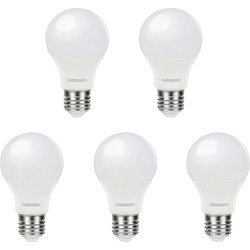
Lighting puzzle

Polarity isn't such a problem on modern ES holders. There are 2 safety features to prevent problems.
1) The metal is enclosed so fingers can't touch it.
2) There are 2 thread rings. The one close to the end has the supply connected to it. The outer one is only connected by the lamp, when the lamp is almost all the way in.
We cannot blindly assume all holders comply with a uniform standard.
 
Just pointing out things have improved.

Sunray. Not sure what you mean. It’s fine the lamp has metal thread
 
They will still have a metal/conductive thread thereby usually outside any small portion of the holder screw thread anyway, if its "old" or "bad make" it very well take the problem well outside any perfect modern lamp holder anyway thereby negating that improvement. It might take a zillion years of use before nearly all situations benefit from that modernisation of a well established lampholder type (Note - Lamp not Bulb, Bulbs grow in gardens, this is an Electrical Forum not a Gardening Forum ;)) . So a N outer Thread on a lampholder has got a good chance of being safer than a Line outer thread . Innit?
 
Right I managed to print out, checked it and hey presto , like I thought can`t be done without adding wire from LH SW l to Extreme LH switch.
If that was already in place it would be a doddle.
Terminals wired differently and linkwires placed in where required I think are allowed under the OP.
And no Wifi/Bluetooth or relays/Smart switches .
So my answer is NO,
sorry.
 
They will still have a metal/conductive thread thereby usually outside any small portion of the holder screw thread anyway, if its "old" or "bad make" it very well take the problem well outside any perfect modern lamp holder anyway thereby negating that improvement. It might take a zillion years of use before nearly all situations benefit from that modernisation of a well established lampholder type (Note - Lamp not Bulb, Bulbs grow in gardens, this is an Electrical Forum not a Gardening Forum ;)) . So a N outer Thread on a lampholder has got a good chance of being safer than a Line outer thread . Innit?
Sorry but AFAIC the glass things enclosing a whitehot filament were always bulbs and I see no need to change that, the things we clipped them into were, and AFAIC still are, bulbholders. The bulbholder is very likely to be part of a lamp.

The very first hit in my google search for "60W bulb":

However there are many which incorrectly (in my opinion) follow your reasoning and describe the light source which fits in a lamp: as lamp - doesn't really make sense does it?

My google search for "lamp" shows not a single hit on the first 4 pages for a bulb
 
Sorry my old friend. A lamp holder holds the lamp (a.k.a the bulb) but bulb is actually a wrong term), the lamp is, traditionally, a bulbous shape though, I will give you that one ;).

another wrong term is "Plastic", any material having plasticity my be referred to as plastic but it may be metal or something else though.
In the same way a Glass might be called a Hard or a Brittle perhaps.
 
Sorry my old friend. A lamp holder holds the lamp (a.k.a the bulb) but bulb is actually a wrong term), the lamp is, traditionally, a bulbous shape though, I will give you that one ;).
Well fifty years ago a lamp generally required one of 4 things to generate light: A candle, oil and wick, carbon rods to strike up an arc or a bulb and they were often referred to as: Bulb, Light bulb or lamp bulb. I've been in a theatre tonight preparing for a panto and there is a cupboard marked "Bulb Store".

I know like so many other things the term has been corrupted over the years but to the average person of my age it's still a bulb.
another wrong term is
Ah so you accept lamp is the wrong term.
"Plastic", any material having plasticity my be referred to as plastic but it may be metal or something else though.
In the same way a Glass might be called a Hard or a Brittle perhaps.
 
Ah so you accept lamp is the wrong term.
No - I accept that the term bulb is wrong. :LOL:

Although yes we pretty much always used the term bulb when I was young too, everyday folks often, very often we did too.

Whilst as I got older and enjoyed hobby electronics and indeed hobby electric I learned the correct term to be lamp, filament lamps for example and they fitted into lampholders, a complete "light" plus or minus its lamp was a "luminaire" .
We each use everyday terms in our ordinary life but in specific trades or professions the meaning of terms is often more refined.

Hence the Electricians oft used phrase "We put Bulbs in Gardens and Lamps in Lampholders" it is a bit of mirth really.

The door catch we used on our back gates we termed as "Snecks" or "Door Snecks" that is not the real name is it? But everybody knew what we meant.
On this forum for example, someone refers to a "Spur" and often we know they are calling a FCU (switched or unswitched) a spur yet in reality "Spur" actually refers to something else, often an FCU is used on a spur this helps the wrong actual name be used so often, so long as we know what they really mean then we get by with that though.

I will not mention folk using the term "Live" instead of the term "Line" either, they both begin with L so often use it as a one letter abbreviation, than does not help does it?
A bit like PCN having different meanings and the "P" in PCN being a different word depending on whether we mean on a public road or a private car park. And - none of those are actually "fines" either.

 
Back to the plot.
The following in bold is in error - Please disregard.

Many thanks to Sunray for querying i
t :giggle:

The example shown by Sunray where the L & N change places and allow for the lampholder to terminals to change polarity could possibly be utilised but to make things a bit "safer" at the lampholder itself it could be fed by a bridge rectifier (or simply 4 diodes) placed in such as a rose or a junction box (Well a ceiling rose is merely a junction box of sorts but just prettier than a standard junction box).
I am not sure if it is deemed allowed by the OP though from his first post? (and any objections by others) and it will mean ignoring an additional volt drop of around 1.4V.

.

I did once see that someone had wired a burglar alarm and placed a SCR in each ceiling rose on a 4 plate wiring system to Join Perm L to SW L in each rose in the house, a signal wire from the alarm panel to trigger all the lights from bell output with an intermittent timer, result was alarm activates and all lights in the household also flash.

1761380821206.png
 
Last edited:
Back to the plot.
The example shown by Sunray where the L & N change places and allow for the lampholder to terminals to change polarity could possibly be utilised but to make things a bit "safer" at the lampholder itself it could be fed by a bridge rectifier (or simply 4 diodes) placed in such as a rose or a junction box (Well a ceiling rose is merely a junction box of sorts but just prettier than a standard junction box).
what would that do?
I am not sure if it is deemed allowed by the OP though from his first post? (and any objections by others) and it will mean ignoring an additional volt drop of around 1.4V.

I did once see that someone had wired a burglar alarm and placed a SCR in each ceiling rose on a 4 plate wiring system to Join Perm L to SW L in each rose in the house, a signal wire from the alarm panel to trigger all the lights from bell output with an intermittent timer, result was alarm activates and all lights in the household also flash.
While running wires around the house I'd have opted to run a single SL to a central point and operate them with a multipole relay. I have known it done converting everything to 2 way with the L origin at the relay thereby flashing every lamp regardless of whether it's on or off at the time.
 
Hi Sunray, I think some of us might be a bit averse to running those singles from many points/places around the house on the thought that it might confuse others (or even ourselves at a later point in time say) although it could be said to be slightly irrational as a thought because with lighting circuits we might start on the premise of three basic methods of wiring being "fairly common" and adding another "quite uncommon" method into the mix of things) especially if for more than one circuit. and then we might end up with two circuits in one box which we usually try to avoid)

The SCR one as a simple concept seemed OK but then again (the trigger wire was in bog standard alarm flex cable) unexpected voltages in poorly insulated conductors for one thing and the "how many circuits" converging in one place without warning questions too.

I have done a very few switch arrangements with, example, switching 5 Lamps/Bulbs/Luminaire1 for each of the 5 and then the 6th to overide all 5 into the "illuminate all five" position. Suitably labelled at the switch and the consumer unit and with a suitable diagram at the consumer unit.
 

If you need to find a tradesperson to get your job done, please try our local search below, or if you are doing it yourself you can find suppliers local to you.

Select the supplier or trade you require, enter your location to begin your search.


Are you a trade or supplier? You can create your listing free at DIYnot Local

 
Back
Top