
Pad foundations

Joined
30 Mar 2015
Messages
4,620
Reaction score
92
Country
United Kingdom
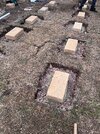
I’ve used this arrangement for the foundations of a garden room I am building
IMG_9203.jpeg

It has around 40mm of mot type 1 and then some mortar, finally the concrete blocks.

With the excess gaps around each block, can I fill with mud or is that going to interfere with the strength of this? I didn’t know whether it will make the mot more prone to settling, etc.

Can you please advise. Thanks in advance.
 
Sorry, it's me getting my metric units confused. I have at least 10cm of MOT Type 1 in each hole. I then have a bed of mortar under each block.
I'm unsure on what I should do with the excess space around the block. I have plenty of mud that I excavated out but wanted advice on whether it's a good idea to pack this in?
 
Put down some membrane (or cut up 1 ton bulk bags) around the blocks and top off with some chunky shingle.
Or fill level with the ground with a weak concrete mix.
Both cheap options that keep your MOT clean.
 
Whatever it's made from, if it's in topsoil then it will definitely sink. Top soil is made from organic matter that is continually rotting, worms and other creatures will be tunnelling under it.

We had a wooden shed that was built on slabs in top of sand, on topsoil. 20 years later, it was like some sort of fairground haunted house to walk around in, all buckled and bent in all kinds of directions.

Dig down and do it properly or don't bother. Don't build on top of anything black - you need to dig to clay, sand or rock.
 
Put down some membrane (or cut up 1 ton bulk bags) around the blocks and top off with some chunky shingle.
Or fill level with the ground with a weak concrete mix.
Both cheap options that keep your MOT clean.
I still have some MOT left over. Could I lay the membrane and then chuck some MOT in these gaps? Will help keep the membrane down too. I doubt I have enough to completely fill all these gaps. Is that a strength issue, if they are not completely filed?
 
Dig down and do it properly or don't bother. Don't build on top of anything black - you need to dig to clay, sand or rock.

This. You need to be down to something substantial - not topsoil. Wacked MOT is suggested as the approved method for installing easypads which I have very successfully used, but that was with the MOT on the clay layer (incidentally just like our edwardian which as very shallow corbelled brick foundations just standing on the clay)
 
This. You need to be down to something substantial - not topsoil. Wacked MOT is suggested as the approved method for installing easypads which I have very successfully used, but that was with the MOT on the clay layer (incidentally just like our edwardian which as very shallow corbelled brick foundations just standing on the clay)
I dug down until we had firm ground. Patted down at least 10cm of MOT Type 1 and then a bed of mortar followed by the concrete block. I read and saw multiple people doing the same and hence, followed this approach. I think that's okay? Not sure I can do much as all the blocks are now laid using this method.

I do want to understand what I should do with the gaps around the blocks, as seen here.
1790696358084.png


Do they need something for further strength or are they fine as they are? I do have a membrane that I will lay across this.
 
In essence, the load spreads at 45 degrees from the edge of the block downwards, so doing anything to the surface is irrelevant. You could calculate the area bearing on the clay, you could also try and calculate the bearing strength of your own ground depending on type, but, for a timber framed building on those blocks with the MOT down to firm ground, my gut feeling is you'll be absolutely fine :)

FWIW I did rough some calcs for my own garden room. It stands on "2.5T" easypads, which from the pad area and my own ground (firm clay) seemed appropriate. I calculated my building at max weighed no more than 12 tonnes (it has a slate roof - but I expect in reality a fair bit less), and I have 12 pads, so no more than 1T per pad, which all seemed well within safe limits to me! In real world it hasn't moved a smidgen in 3 years - no movement cracks in the internal skim
 
No good patting down type 1: needs to be properly compacted. I doubt you'll have any major issues but others reading should note.
 
Thanks for all your help. I will lay down the membrane and spread the remaining MOT across this. It will keep it down and stop it flapping.
I won’t bother filling in the spaces around the blocks.
 

If you need to find a tradesperson to get your job done, please try our local search below, or if you are doing it yourself you can find suppliers local to you.

Select the supplier or trade you require, enter your location to begin your search.


Are you a trade or supplier? You can create your listing free at DIYnot Local

 
Back
Top