Paddle Mixer Bricklaying Mortar

Joined
6 Sep 2023
Messages
40
Reaction score
3
Country
United Kingdom
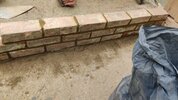
So today I done pointing on a garden brick wall before I lay some additional bricks on it. I wasn't too happy with the consistency of the mortar and wondering whether I'm doing something wrong/maybe made it too dry or could the issue be using a paddler mixer as opposed to mixing by hand?

I used a 4:1 ratio of building sand, cement and a splash of plasticiser and water (gradual). I used those household 1L cooking measuring jugs mixed 8 sand and 2 cement if that helps to get a better idea. In terms of the total water refilled bottled water and was probably about 700ml?

Mixed the sand and cement dry with paddle mixer low speed. Added a splash of plasticiser slightly faster speed, gradually started adding water and mixing. I got to a stage where I didn't want to add more water to ruin it. However the mixture wasn't butter smooth like you see on YouTube? It wasn't lumpy either a little bit gritty but it didn't crumble, held it's shape when squeezed.

I was able to do the pointing and overall to the eye it seems fine but just wondering whether the mix may have been compromised or how I can improve it?

Thanks.
 

Attachments

  • IMG_20260422_184644.jpg
    IMG_20260422_184644.jpg
    860.9 KB · Views: 38
  • IMG-20260426-WA0000.jpeg
    IMG-20260426-WA0000.jpeg
    472.7 KB · Views: 35
Probably not enough water. The quoted amount of water you used is a bit meaningless as it totally depends on how wet the sand from the bag is. When you say padel mixer do you mean on the end of a drill?
If it’s got a bit of a gritty feel and it’s definitely building sand, my moneys on a little bit more water/plasticiser needed…
 
Are you sure that's building sand? It looks a bit yellow. Building sand would normally be more red/brown.

Some places sell building sand which is actually really sharp sand and that can make crap unworkable mortar

It's impossible to "compromise" a mix. It does not matter what is used to mix it, how it is mixed or how the ingredients are added. If it's all mixed together properly and uniformly then it should be fine.
 
Probably not enough water. The quoted amount of water you used is a bit meaningless as it totally depends on how wet the sand from the bag is. When you say padel mixer do you mean on the end of a drill?
If it’s got a bit of a gritty feel and it’s definitely building sand, my moneys on a little bit more water/plasticiser needed…
Sand in the bag wasn't that wet if at all as has been out in the "sun", based in London.

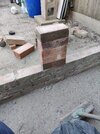
An actual dedicated paddle mixer (attached photo).

Yeah I bought the sand from Wickes over a week ago. Will take a photo of the bag tomorrow. It's definitely building sand as I have 2 tonne bags of sharp sand but can't use that for bricklaying so got building specifically.

In terms of plasticiser if I recall the instructions said 100ml for 25kg of cement i.e. basically a full bag, I probably put like 25ml in a small mix probably 2KG of cement. Can I ever put too much which would impact the mix?

Are you sure that's building sand? It looks a bit yellow. Building sand would normally be more red/brown.

Some places sell building sand which is actually really sharp sand and that can make crap unworkable mortar

It's impossible to "compromise" a mix. It does not matter what is used to mix it, how it is mixed or how the ingredients are added. If it's all mixed together properly and uniformly then it should be fine.
Bought it from Wickes over a week ago, building sand. Will double check tomorrow but I'm sure it is.

Will take a few photos of the sand itself as well as if the sand itself may be at fault don't want to be using that for building anything!
 

Attachments

  • Screenshot_2026-04-26-22-55-46-21_40deb401b9ffe8e1df2f1cc5ba480b12~2.jpg
    Screenshot_2026-04-26-22-55-46-21_40deb401b9ffe8e1df2f1cc5ba480b12~2.jpg
    33.8 KB · Views: 12
Sand in the bag wasn't that wet if at all as has been out in the "sun", based in London.

An actual dedicated paddle mixer (attached photo).

Yeah I bought the sand from Wickes over a week ago. Will take a photo of the bag tomorrow. It's definitely building sand as I have 2 tonne bags of sharp sand but can't use that for bricklaying so got building specifically.

In terms of plasticiser if I recall the instructions said 100ml for 25kg of cement i.e. basically a full bag, I probably put like 25ml in a small mix probably 2KG of cement. Can I ever put too much which would impact the mix?


Bought it from Wickes over a week ago, building sand. Will double check tomorrow but I'm sure it is.

Will take a few photos of the sand itself as well as if the sand itself may be at fault don't want to be using that for building anything!
You need to beat it for longer. :censored:
 
Mixing for longer gets more air into it and makes the mortar more workable without adding too much water. Tiny air bubbles act as ball bearings in the mortar. I worked with a Welsh brickie who said the only sand they could get was so bad that they used to leave to mix for a long time to get it workable.
 
You need to beat it for longer. :censored:

Mixing for longer gets more air into it and makes the mortar more workable without adding too much water. Tiny air bubbles act as ball bearings in the mortar. I worked with a Welsh brickie who said the only sand they could get was so bad that they used to leave to mix for a long time to get it workable.

I probably mixed the whole mixture for close to 10 minutes? Gradually adding water to see how the consistency changes/improves before adding more guess maybe need longer/more?

@all I have attached photos of the sand that I am working with.
 

Attachments

  • WhatsApp Image 2026-04-27 at 08.09.28 (1).jpeg
    WhatsApp Image 2026-04-27 at 08.09.28 (1).jpeg
    480.3 KB · Views: 18
  • WhatsApp Image 2026-04-27 at 08.09.28.jpeg
    WhatsApp Image 2026-04-27 at 08.09.28.jpeg
    362.2 KB · Views: 18
Normally I put most of the water in at the start until it's just a bit too dry and then let it mix for 5 minutes to get some air into it. By then it's usually about right, but sometimes needs a bit more water. When mixing lime mortar I let it mix for about 15-20 minutes, then leave it for 20 to fatten up, then mix for another 5.
On site the hoddies normally have not got the time for that, they usually sling most of the water in first, and then a bit more as it's mixing till it looks about right then tip it out. It's got more water in it than it really needs to make it workable, but it's the way it's usually done on site, although nowadays the big sites use silos.
 
Last edited:
So I had another go today at the mortar mix and began bricklaying. Consistency was creamy this time just needed a touch more water!

How creamy can I go? As I had a few issues "beating" the brick down low enough, either due to adding too much mortar or mortar still bit too dry?

Put a full bed on the brick (bottom) then grooves/waves through the middle and slapped a bit on the center of the side and scraped the sides outwards.

If I pick up a good amount on the trowel and hold it vertically the mortar held there as an indicator of when it's ready, is that the correct way?
 
So I had another go today at the mortar mix and began bricklaying. Consistency was creamy this time just needed a touch more water!

How creamy can I go? As I had a few issues "beating" the brick down low enough, either due to adding too much mortar or mortar still bit too dry?

Put a full bed on the brick (bottom) then grooves/waves through the middle and slapped a bit on the center of the side and scraped the sides outwards.

If I pick up a good amount on the trowel and hold it vertically the mortar held there as an indicator of when it's ready, is that the correct way?
There is no 'correct' mix. Well mixed gear is always better than poorly or partially mixed gear. We use a wetter mix for dryer porous bricks and for running in. We use a slightly firmer mix for cornering up or engineering bricks. We like it wetter for blockwork but not wet blocks.

All I will say is, mix it well.
 
Are you tooling the joints straight away? They look a bit toothpastey. Lay them scraping off flush with the trowel then point every hour or so (weather dependent). Do them in the same order, so the freshest gets pointed last.

I find with the cement mixer that what starts off as wet crumble will transform into creamy smooth mortar just with mixing time. The apparent wetness is mostly fine air bubbles, which froth up as a result of the plasticiser and mixing time. It's a lot easier to leave a mixer running, as you don't need to hold the thing, but yours does look dead, like it needed longer mixing to froth it up.

Start with the plasticiser and some water, mix this with half the sand, then cement, then the rest of the sand, then more water until it looks damp. Then just keep mixing.
 
There is no 'correct' mix. Well mixed gear is always better than poorly or partially mixed gear. We use a wetter mix for dryer porous bricks and for running in. We use a slightly firmer mix for cornering up or engineering bricks. We like it wetter for blockwork but not wet blocks.

All I will say is, mix it well.
So maybe my mix wasn't the issue for the lower course as had a lot of trouble "beating" it down. Due to lack of experience and as there was basically a lip/wall on one side of the brick guess the excess mortar would compact there preventing/making it harder to get down to level if too much mortar was used?

Once I started the upper course where all 4/3 sides were basically exposed allow the mortar to squeeze out if needed waaaay easier.

Are you tooling the joints straight away? They look a bit toothpastey. Lay them scraping off flush with the trowel then point every hour or so (weather dependent). Do them in the same order, so the freshest gets pointed last.

I find with the cement mixer that what starts off as wet crumble will transform into creamy smooth mortar just with mixing time. The apparent wetness is mostly fine air bubbles, which froth up as a result of the plasticiser and mixing time. It's a lot easier to leave a mixer running, as you don't need to hold the thing, but yours does look dead, like it needed longer mixing to froth it up.

Start with the plasticiser and some water, mix this with half the sand, then cement, then the rest of the sand, then more water until it looks damp. Then just keep mixing.
Thanks for bringing that up, as I checked online for advice on that many times and couldn't find anything, all results would just mention re-pointing existing brickwork. On the existing I would tool after about 10 minutes whilst filling any empty gaps.

Will try that out, as currently have been mixing cement and sand dry, add splash of plasticiser and water, mix, then gradually add water, it goes from dry to lumpy bits, then after more water and mixing does become buttery no bits.
 
So maybe my mix wasn't the issue for the lower course as had a lot of trouble "beating" it down. Due to lack of experience and as there was basically a lip/wall on one side of the brick guess the excess mortar would compact there preventing/making it harder to get down to level if too much mortar was used?

Once I started the upper course where all 4/3 sides were basically exposed allow the mortar to squeeze out if needed waaaay easier.


Thanks for bringing that up, as I checked online for advice on that many times and couldn't find anything, all results would just mention re-pointing existing brickwork. On the existing I would tool after about 10 minutes whilst filling any empty gaps.

Will try that out, as currently have been mixing cement and sand dry, add splash of plasticiser and water, mix, then gradually add water, it goes from dry to lumpy bits, then after more water and mixing does become buttery no bits.
You should point up as soon as the muck has firmed up a bit. If you are a slow bricklayer and the bricks are dry, this usually means as soon as you have levelled them up.
 
As soon as you've done a course perhaps. If you do it immediately after laying that brick then you'll get that toothpaste look, where the tool sinks in too far, and you get ridges sticking out from the edges of the tool.

Leave it a little time and it resists the pressure and those bits that get squeezed out fall off instead of staying attached and/or smearing across the faces.
 
It comes with experience knowing when to joint up. If it's really hot when laying a softer, more absorbent brick on a long run, you might find it easier to rub the bed joints up after each course and leave the cross joints. After a few courses the cross joints might be ready and you can do them, and then run the jointer back over the bed joints. If you leave the bed joints too long they can be really hard to joint them up and you will leave burn marks on them.
 

If you need to find a tradesperson to get your job done, please try our local search below, or if you are doing it yourself you can find suppliers local to you.

Select the supplier or trade you require, enter your location to begin your search.


Are you a trade or supplier? You can create your listing free at DIYnot Local

 
Back
Top