I boil my water with a stove kettle - gas is 1/4 of the price of electricity. Probably slightly less efficient, but not 75% less. And helps warm the room a little in winter.
Last April I started turning off everything not in use and noticed a drop in bills. Not sure how much.
I watched my daughter boil the electric kettle, and pour the water into the pan, and asked her why, she said it was faster, and I replied I don't think so that ring is rated 5.5 kW and the kettle is 2.8 kW.
So she did the demo, filled kettle to mark, poured it into a pan, filled again to mark, turned of gas, and turned on the kettle, and there was a very marked difference in the time, lid was on the pan, but it took some thing like twice as long, so if twice and long to boil and twice as much power being used that is ¼ the efficiency of gas.
So there is not real gain using gas to boil the kettle, in fact if to factor in how much hotter it makes the kitchen, and the fact you need a cooker hood to remove combustion gases, then it is likely more expensive to use gas.
But maybe due to using a hob rather than kettle, so when I got home, did the same test, and the 3 kW induction hob boiler the water same time as the 2.8 kW kettle.
The idea of just putting enough water in the kettle does not really work, some one will some time forget and boil it dry, however the one cup kettle
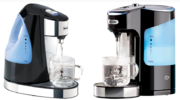
does work, both same make, one on left fixed size, so need cups to match, one on right you can set cup size, and stop it mid flow, so one on right seems better, but although same wattage, the one on left always faster, the cup size is a bleed back into main reservoir, so always boils a large cup of water, even if only set to deliver small cup.
However main advantage is nothing to do with how much is costs, it is the speed, in the adverts on TV there is enough time to go to loo and make two cups of coffee before the program restarts. Big cup for me, small cup for wife.
We have a kettle which boils all the water in it, but only used when brewing beer.
If I want to save energy I could drink cold water, I still have hard wired phones, but we are moving to fibre, and that means phone will not work without router being powered. And when I have made those two cups of coffee last thing at night, easier to say hey google turn on landing lights, than to put the coffee down and switch them on with an old style switch.
And when I know there is a good program on TV, easier to get it to record rather than planning life around the TV.
I am sure I could live in a house the size of a caravan, with like a caravan a 16 amp electrical supply to work all, but the question is do I want to live in a house the size of a caravan, or do I enjoy living in a large three story house, and I do, so am willing the pay the extra to live in a house rather than a bed sit.
I did at one point start measuring how much stuff used,
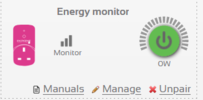
or
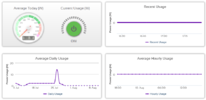
I can monitor what I use with each plug in appliance, but soon lost interest, I will use it to see when battery charger has finished, or if beer brewing OK, but why bother? With a few exceptions like seeing if freezer is working OK, knowing what it used does not help, we buy a washing machine which weighs the cloths, and auto adjusts the cycle time, and water used, so it never uses the same amount of power even with same program, so what is the point in measuring?
As to dish washer, time is between 58 minutes and around 3 hours, it seems likely using 58 minutes uses less power, but not if the dishes are not clean and it needs doing twice. And yes it says for what each program is for, how many people sort out the dishes into hard and easy to clean? We don't, they all go in together.
To conclude, there is no point buying labour saving devices, then using labour to decide when to use them. You don't buy a dog and bark yourself. I am sure I could get a oil heater and just heat one room in the winter, one of these
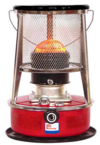
placed in the fire place would heat the room I am sure, but unless I do some thing silly like have a heat pump fitted, I should never need to do that, back in the late 50's early 60's these were common, I hope we have moved on since then?


 ) I have what must be the most 'ridiculous' and energy-inefficient of cookers known to man, otherwise known as an Aga!


