Very Old Installation!

Joined
11 Jan 2004
Messages
46,100
Reaction score
3,600
Country
United Kingdom
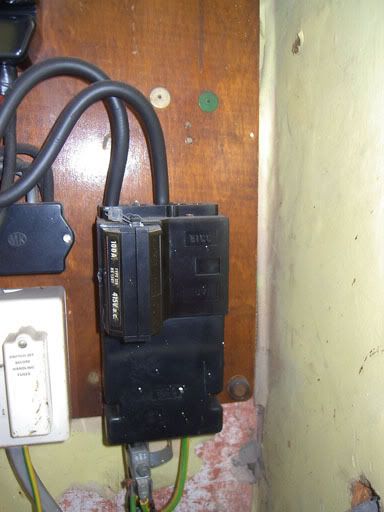
I saw this today:

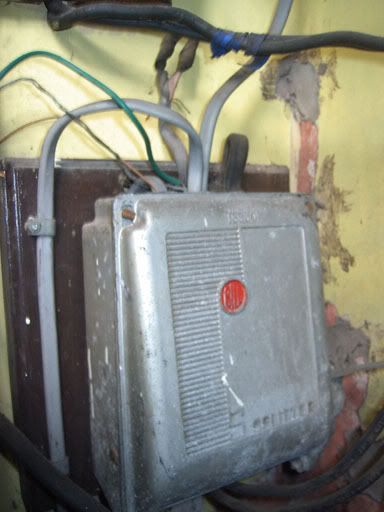
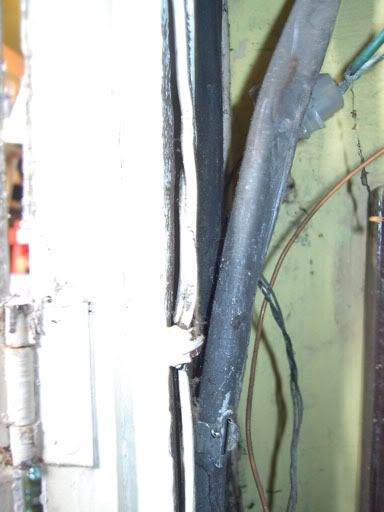
A nice bit of lead sheathed, unearthed, and remodelled with a hammer.
EPSN0102.jpg


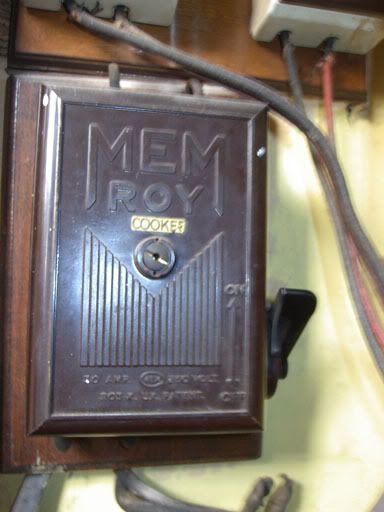
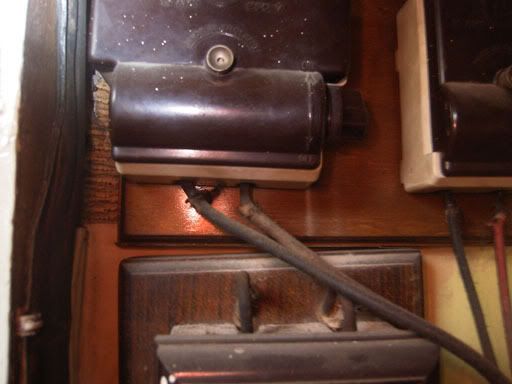
Various CU's...
EPSN0103.jpg


EPSN0104.jpg


EPSN0105.jpg


EPSN0106.jpg


Intake with no earth connection:

EPSN0108.jpg


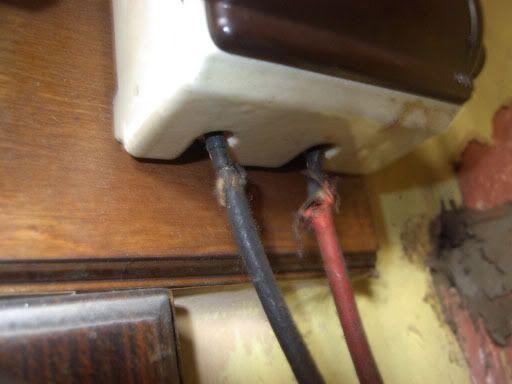
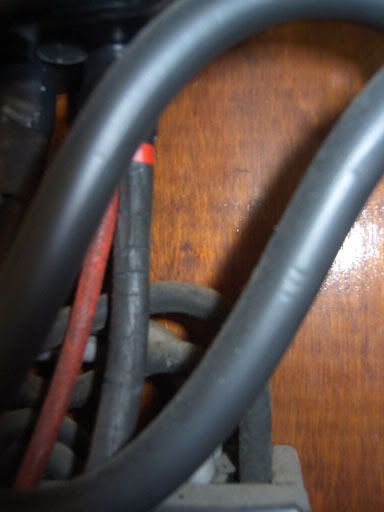
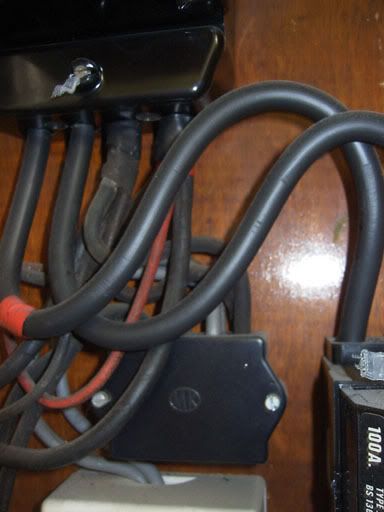
Cracked tails & stuffed meter & henley block..
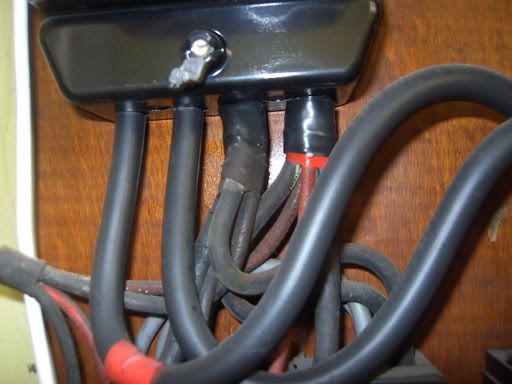
EPSN0109.jpg


EPSN0111.jpg


EPSN0113.jpg


And the big joke was, next to this lot was this sign:
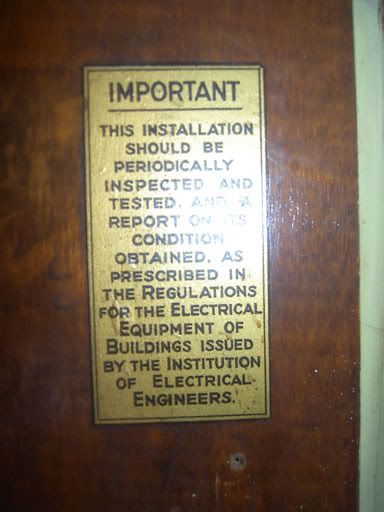
EPSN0116.jpg
 
So the DNO actually fitted a new main fuse and meter at some point in the last 10-15 years (it looks pretty new), and said nothing of what they were connecting to the grid?? And those 20,000 meter tails going into their meter, which THEY sealed?? :shock:
 
Yeah. The meter had 1991 on it, the cut-out has obviously been changed and an earth taken from sheath via an EC14 (YUK!), but no earth comes off the cut-out. The only bit of the install which is properly earthed is that ivory one way Wylex. The rest is connected to the water pipe...
 
Metermen are hardly ever Sparkys (or if they are they are so old the install looks normal to them or are so young they havn't got the experience to notice)
 
Flippin heck securespark....you sure you've not strolled into a museum by mistake mate.
 
The first time I came across lead sheathed cable was during a rewire of an old victorian house, when taking out the VIR I saw this cable and thought that at least some of it was PVC :)
How wrong was I :? :?

It all came out in the end though.. :twisted: :twisted:
 
Also when house hunting recently I saw an old fuse box.... wooden construction with a ceramic rotary knob :shock: How old.

Funny thing was though, although urgently in need of a rewire the house was done up beautifully to the nines
 
RF Lighting said:
The seals on the cutout and meter do not look like proper DNO seals.

Yeah, they are the older lead seals with twisted wire. Quite how these were around in 1991, I don't know!
 
securespark said:
they've been doing some work in some of the service shafts at uni and i've noticed a rather large number of theese that still apear to be in use mounted on top of some equally old looking busbar trunking.
 
We have a number of these in the college stores, made by 'BILL' I think so stereotypically british, feel really solid, and inside on the cover it proudly states 'made in GT. Britain' followed by instructions to lubricate it every 6 months. The switch closes with a satisfying 'clunk' as well! (but then again, so do the more modern MEM ones with the turn handle), they seem to lack a proper place to terminate an earth, but I suppose they are from a time when no one put extra cpcs into metal conduit, etc (and SWA is quite often still adequate without extra cpc cores)

Some of them have flash pads (the rest just have reminants of flash pads!) that look worryingly like asbestoes, but it should well be a subsitite... I just generally don't distrub it whatever it is :)
 
Adam_151 said:
they seem to lack a proper place to terminate an earth, but I suppose they are from a time when no one put extra cpcs into metal conduit, etc (and SWA is quite often still adequate without extra cpc cores)

The smallest version of these are called 'Bill Radette'.They generally have nowhere internal to terminate a cpc.There is a screw with washer on the outside and it was general practice at the time to drill a hole just by the screw and bring any cpc fitted through the hole and into the terminal.
On later models the terminal was moved to the inside.
 

If you need to find a tradesperson to get your job done, please try our local search below, or if you are doing it yourself you can find suppliers local to you.

Select the supplier or trade you require, enter your location to begin your search.


Are you a trade or supplier? You can create your listing free at DIYnot Local

 
Back
Top