Sorry - another one! We don't use our immersion heater much, but we had a problem with the usual boiler heating method so turned on the immersion. It worked ok the first time ... but a day later, tried it again, all the lights went out.
The immersion is on its own circuit (actually shared with a socket for the shower pump) protected by an MCB. The RCD covers the whole house and it is that which is tripping every time I try to turn on the immersion.
What I've tried so far:
- I've tested the thermostat and it seems to be working correctly. Resistance between terminals is either 0 or infinite (using multimeter). No detectable connection from either terminal to the probe sheath. In any case, I also tried removing the thermostat completely and connecting the element directly to the supply - that tripped when turned on, so its not the thermostat.
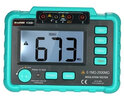
- I've tested the resistance of the heating element - 19ohms, which I think is correct. No detectable connection from either terminal to the tank itself, though I'm only using a multimeter and not an insulation tester.
- the cable leading to the immersion heater looked a bit iffy - some heat damaged insulation - so I replaced it with a new rubber sheathed "immersion heater" cable. No difference.
- in case there is something weird going on elsewhere, I plugged a 2kW heater into the shower pump's socket (same circuit as the immersion) and ran it - no problem, from which I infer that the general cabling is probably ok.
What's left?
The immersion is on its own circuit (actually shared with a socket for the shower pump) protected by an MCB. The RCD covers the whole house and it is that which is tripping every time I try to turn on the immersion.
What I've tried so far:
- I've tested the thermostat and it seems to be working correctly. Resistance between terminals is either 0 or infinite (using multimeter). No detectable connection from either terminal to the probe sheath. In any case, I also tried removing the thermostat completely and connecting the element directly to the supply - that tripped when turned on, so its not the thermostat.
- I've tested the resistance of the heating element - 19ohms, which I think is correct. No detectable connection from either terminal to the tank itself, though I'm only using a multimeter and not an insulation tester.
- the cable leading to the immersion heater looked a bit iffy - some heat damaged insulation - so I replaced it with a new rubber sheathed "immersion heater" cable. No difference.
- in case there is something weird going on elsewhere, I plugged a 2kW heater into the shower pump's socket (same circuit as the immersion) and ran it - no problem, from which I infer that the general cabling is probably ok.
What's left?
 A multimeter is unlikely to find an insulation fault between the element & the sheath because the test voltage is not high enough. You've eliminated everything else so its time to get the immersion heater out of the tank...when you do, I suspect that you'll find the sheath has split.