• Looking for a smarter way to manage your heating this winter? We’ve been testing the new Aqara Radiator Thermostat W600 to see how quiet, accurate and easy it is to use around the home. Click here read our review.

Do I need an Earth Rod Fitted?

Joined
23 Oct 2011
Messages
29
Reaction score
4
Location
Surrey
Country
United Kingdom
Hi everyone,

I noticed the inspection sticker on our consumer unit earlier this week and realised we are horribly ovdue an EICR check, which I am planning to get booked in, but there is one thing I wanted to bounce off the gurus in this forum first.

We currently have a powered shed with its own local RCD and MCB protected fusebox for lights and sockets (which also feeds an outdoor socket a few metres away in the garden).
The shed (and outdoor socket) is currently earthed using the house earth, which is on a TN-S setup, which was commented on (i.e
told it was "not ideal") by the last electrician we had out to do some work.

Is this setup a safety issue, and will it fail the EICR under current standards if I don't get a local earth rod fitted (assuming everything else is OK)?

Thanks
Rich
 
Hi everyone,

I noticed the inspection sticker on our consumer unit earlier this week and realised we are horribly ovdue an EICR check, which I am planning to get booked in, but there is one thing I wanted to bounce off the gurus in this forum first.

We currently have a powered shed with its own local RCD and MCB protected fusebox for lights and sockets (which also feeds an outdoor socket a few metres away in the garden).
The shed (and outdoor socket) is currently earthed using the house earth, which is on a TN-S setup, which was commented on (i.e
told it was "not ideal") by the last electrician we had out to do some work.

Is this setup a safety issue, and will it fail the EICR under current standards if I don't get a local earth rod fitted (assuming everything else is OK)?

Thanks
Rich
There is nothing wrong with properly maintained TN-S. It could be argued that it is the superior Earthing system in many ways, although costlier for the DNO/DSO to implement/maintain.
 
BTW unless the home you refer to is a holiday home or rental property there is no requirement, unless requested by your insurers , to have an EICR done
 
It's mainly for peace of mind rather than anything else.

The electrics haven't been checked for over 15 years, and we've had mouse problems (with lots of gnawing noises coming from under the floorboards), leaking showers, rotted joists and various other issues since then.

With two small children and electricity
running to risky places (garden, shower etc), I'd sleep better knowing the wiring could pass an EICR.
 
We all like to wrap our children in cotton wool, I know I did, and so in the early 90s I installed RCD's on all circuits, but as to how far we should go, is something else.

I have a TN-C-S supply system, which I feel should never have been allowed, there is a very small chance we could lose the PEN on the supply if we did, as well as the danger, we would likely lose a lot of equipment due to over voltage.

I do have an earth rod, but this is because I have an uninterruptible supply (UPS) as part of the solar panel install, and since linked to the DNO supply, a loss of PEN would still cause voltage swings, and likely over the 50 volt permitted to true ground. So in the main we just cross our fingers, for an EV charging point, or outside hot tub, we may take further measures, but in the main we trust to the lord.

There is a limit to how much we can do, and crossing the road is far more dangerous. And a TN-S supply is far safer to my TN-C-S supply.

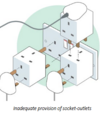
An EICR is unlikely to find rodent damage, we don't expose all cables, in the main it is a visual inspection. We will check the ring final is still a ring final, and the RCD/RCBO trips at the correct current, but incorrect connection of down lights 1756454610278.pngmay fall foul of an EICR inspection, but in real terms most people turn off lights before changing the bulb, and this 1756454724470.png from the best practice guide is rather questionable, yes too much hanging from a socket which could damage the socket, but split the outlet using a short extension lead with 10 way outlet, is not a problem, so not really inadequate socket outlets, but overloading weight wise of the outlet, and use of non BS1363 items in the sockets
1756455223373.png
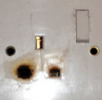
can cause dangers as well see here for more and a pedantic inspector could say the socket has been strained and should be replaced.

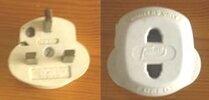
But you don't need an EICR to tell you this 1756455407458.png is not safe and needs changing. This is not safe shaver-adaptor-old.jpg as it has no fuse so can allow 32 amps with a small flex, but technically not covered with an EICR, it is down to you to look for BS1363 on anything which plugs into a 13 amp socket, in the main some common sense.
 
Sorry
1756512680318.png
mixed up pictures, this one shows one with and two without fuses, and one without shutters, point is, simply looking at the units you can see which comply and which do not.

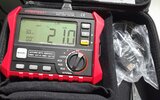
Plugging in a tester RCD tester ramp.jpg can tell you more, tripping times etc. I question removing down lights to inspect,
1756513300792.png
it can so easy damage the ceiling, the same with sockets
1756513448712.png
it is all well and good showing socket removal on a plain wall, but often we realise to remove is going to damage the paint work. Yes, unless maintenance free, we should test the screws for torque setting, but if I tried to do that in this house, it would take a few days.

So we tend to use the test a sample method, if the sample is OK we assume the rest are OK, if the sample is not OK, we test a larger sample.

The down light shown is open for debate, no cable clamps, cover on JB missing, but in the ceiling space does it really matter?

I know that line - neutral loop reading for sockets on a ring final should be around 0.94Ω to be within the volt drop, but it's not a fail if not within volt drop limits, and little one can really do about it, so why measure it? If a socket near the centre of the ring was selected and the loop impedance noted, then test to see if ring is intact, assuming all is OK, in the future it would only need the loop measuring and compare to last reading, but that is rarely done, so somewhere one does need to test the ring is intact. And one needs to test there is an earth to all sockets and class I appliances, but the main thing is a visible check.

And to test if an earth rod is required takes a few minutes. And does not need a full EICR.
 
BTW unless the home you refer to is a holiday home or rental property there is no requirement, unless requested by your insurers , to have an EICR done
What do you mean by "a holiday home" - are you simply giving an example of a "rented property", or what?
 
I have a TN-C-S supply system, which I feel should never have been allowed, there is a very small chance we could lose the PEN on the supply
True, but if you had a TN-S supply there would be a small (I would imagine greater) chance that your installation would totally loose it'searth.https://electrical.theiet.org/wiring-matters/years/2021/84-march-2021/broken-pen/
.... if we did, as well as the danger, we would likely lose a lot of equipment due to over voltage.
Not impossible, but isn't the most common situation one in which a 'lost PEN' results in 'under voltage'?
 

If you need to find a tradesperson to get your job done, please try our local search below, or if you are doing it yourself you can find suppliers local to you.

Select the supplier or trade you require, enter your location to begin your search.


Are you a trade or supplier? You can create your listing free at DIYnot Local

 
Back
Top