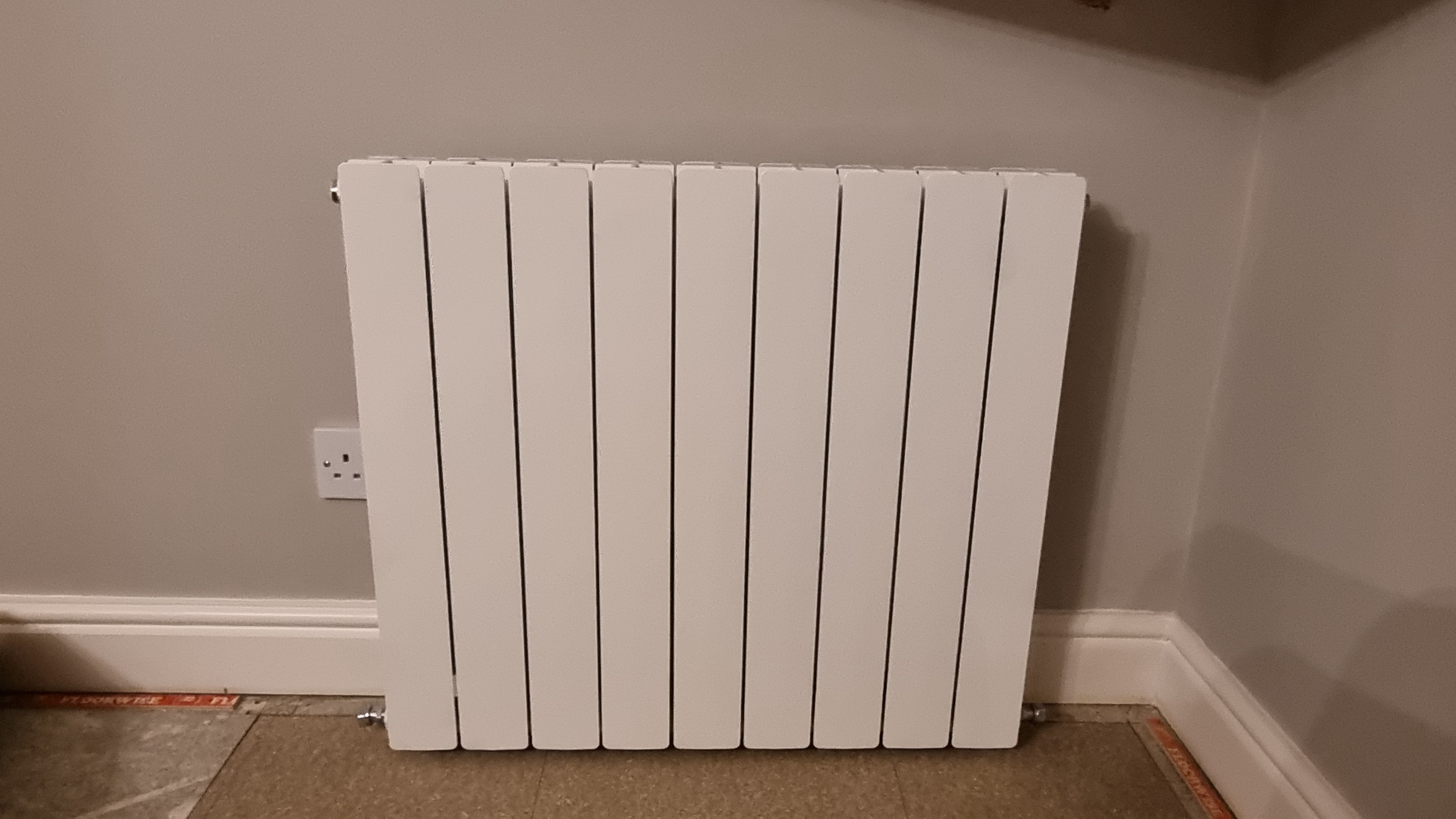
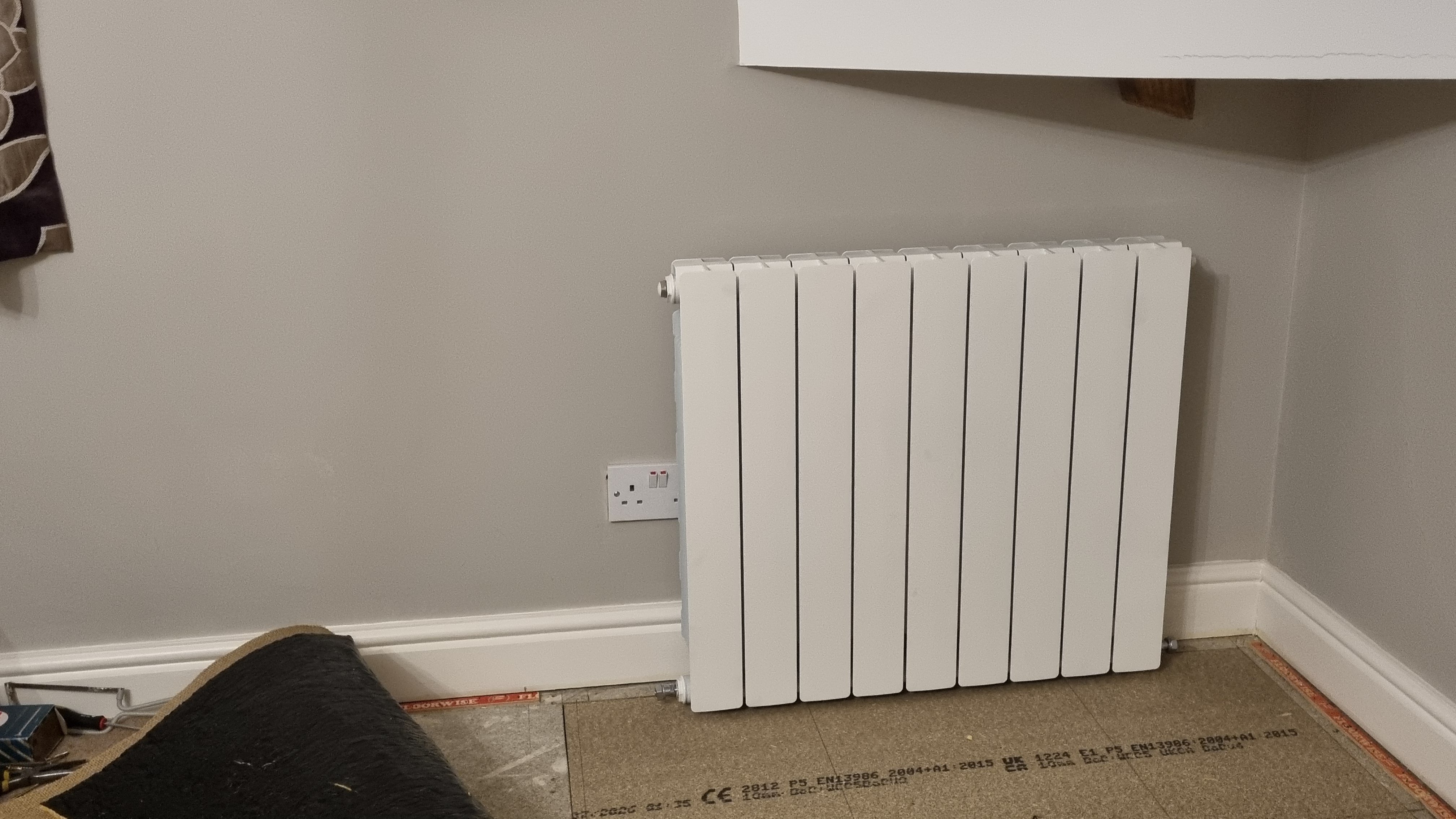
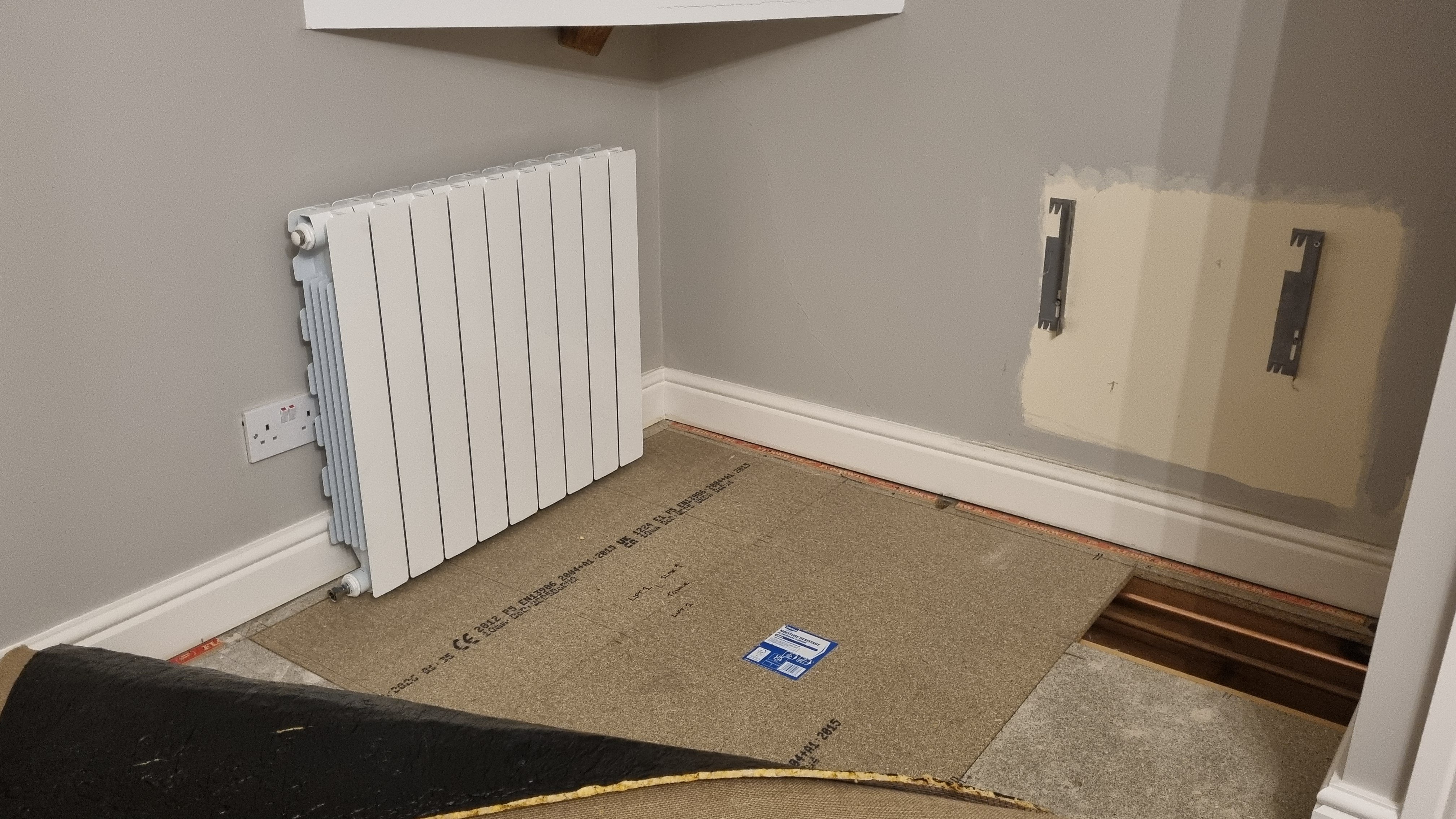
I'm in the process of moving a radiator and have an issue with an existing double socket.
Here's a photo showing the location of the bedside cabinet, the existing socket and where I want to place the radiator:
The wall is an outside wall; a breezeblock inner with plasterboard stuck using plaster dabs. I would assume the cables are run along the face of the breezeblock and the plasterboard fitted over the top of them.
As you can see, the position of the radiator means the socket needs to be moved to the left so it is positioned behind the bedside cabinet.
I already have access to underneath the floorboards and can see two cables running upto the socket from below. Having taken the socket front off there is absolutely no movement in the cables, suggesting they are possibly bedded in by the plaster used to fit the plasterboard. I was really hoping I could pull them down from the socket where I could have extended them, but without cutting away all the plasterboard and chipping away the plaster, I don't think that is possible.
Another thought was to cut the cables underneath the floorboards and connect up two new lengths to feed to the new socket, however, there isn't enough loose cable to do this as it is very tight in the way it runs up from the floor to the socket.
My third idea was to replace the double socket with a single socket blank, which would allow me to connect to the existing cables in place, and run them horizontally to the new socket. It will be necessary cut a channel from the single blank to the new socket as it sounds like there is plaster behind the plasterboard.
I would appreciate your thoughts, possibly another option I haven't considered? Any pros and cons of using a blanking plate, apart from it being unsightly? Obviously, I would ensure it could be unscrewed while the radiator was in place, so would avoid it being partly behind the radiator. I would prefer not to use a blanking plate, but it feels like the easiest solution.
A few more photos of the area I'm working in.
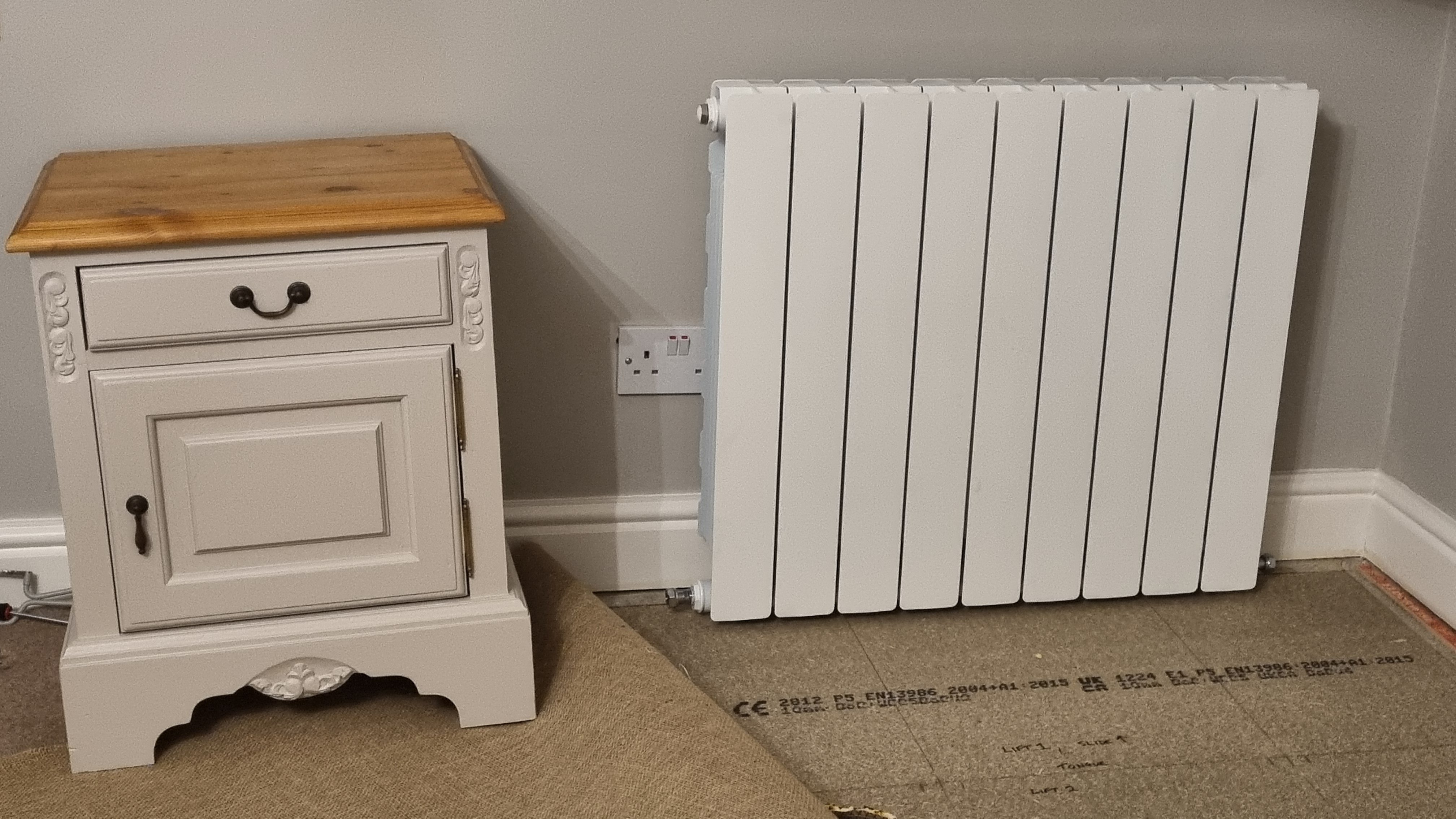
Here's a photo showing the location of the bedside cabinet, the existing socket and where I want to place the radiator:
The wall is an outside wall; a breezeblock inner with plasterboard stuck using plaster dabs. I would assume the cables are run along the face of the breezeblock and the plasterboard fitted over the top of them.
As you can see, the position of the radiator means the socket needs to be moved to the left so it is positioned behind the bedside cabinet.
I already have access to underneath the floorboards and can see two cables running upto the socket from below. Having taken the socket front off there is absolutely no movement in the cables, suggesting they are possibly bedded in by the plaster used to fit the plasterboard. I was really hoping I could pull them down from the socket where I could have extended them, but without cutting away all the plasterboard and chipping away the plaster, I don't think that is possible.
Another thought was to cut the cables underneath the floorboards and connect up two new lengths to feed to the new socket, however, there isn't enough loose cable to do this as it is very tight in the way it runs up from the floor to the socket.
My third idea was to replace the double socket with a single socket blank, which would allow me to connect to the existing cables in place, and run them horizontally to the new socket. It will be necessary cut a channel from the single blank to the new socket as it sounds like there is plaster behind the plasterboard.
I would appreciate your thoughts, possibly another option I haven't considered? Any pros and cons of using a blanking plate, apart from it being unsightly? Obviously, I would ensure it could be unscrewed while the radiator was in place, so would avoid it being partly behind the radiator. I would prefer not to use a blanking plate, but it feels like the easiest solution.
A few more photos of the area I'm working in.