
Chimney

The reason roofers get called in to do brickwork and pointing on chimneys in the private sector is that nowadays they are the only ones with ladders to go up and do it. It's the same with lead flashings. Traditionally it's the plumber that was trained to do the job properly, but it's hard enough for people to get a plumber out anyway and even less chance of getting one up on the roof.
When you work for a company the scaffold would be set up for the correct trades to come in. e,g, bricklayers to rebuild the stack, roofers to tile to it, plumbers to do the flashing.
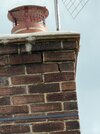
 
this is the other side of the chimney. I did notice these cracks about a year ago when the roofer came to remove and re cement the top of the chimney. I guess there was a miscommunication because I thought they had been repointed/ fixed at the time and it wasn’t until we got a better picture today I’ve realised they are still the same.

I’ve asked a brick layer to come and have a look in the week. I’ve sent him these photos plus ones from inside the loft. He’s not overly concerned and said he will diagnose better when he’s here but not to worry.

I guess my next question is would it be worth having this removed to the roof? Or could that cause more issues later on? I have no idea what would be the best
 

Attachments

  • d4054da1-58db-430b-bcb6-3ec85a87df38.jpeg
    d4054da1-58db-430b-bcb6-3ec85a87df38.jpeg
    467 KB · Views: 23
OP,
Dont remove the chimney stack - there are many good reasons for keeping stacks.
The above pic shows a few bricks that can be re-pointed - or they could be
carefully removed, cleaned & re-bedded. The whole stack needs to be correctly re-pointed.

Hopefully, the flues have been swept, and there is ventilation in the fireplace blocking?
 
Thank you for your reply. There’s no air brick so the person I spoke to yesterday said we can put one in. The flues haven’t been swept that I know of. The chimney hasn’t been in use for almost 30 years. We’ve owned the house 2 years but it’s the house I grew up in so there’s lots of projects that were started and never finished
 
Hi sorry to bother you. Recently our new neighbours mentioned that their chimney leans in a little. This got me looking at ours and im wondering if it needs looking at? Is it normal for them to lean a little? It’s a 1960s build with the fireplace inside bricked up but not removed.
They lean, and its generally not a problem. More important to get the flashing right, which appears to be the vase.
 
OP,
Lack of through ventilation in flues esp. soot dirty flues can cause chemical attacks to stack mortar (see post 11). Its a possibility that chemical attacks have been gradually taking place in your redundant flues for some time.
Occasionally you can pass a house gable where the back wall of a chimney breast shows a long dark streak - that streak is from unswept/unventilated flues.
 
OP,
Lack of through ventilation in flues esp. soot dirty flues can cause chemical attacks to stack mortar (see post 11). Its a possibility that chemical attacks have been gradually taking place in your redundant flues for some time.
Occasionally you can pass a house gable where the back wall of a chimney breast shows a long dark streak - that streak is from unswept/unventilated flues.
Thank you. Your post has brought back some memories of when I was younger and we had a coal fire, my dad would sweep the chimney I’m not sure if it as done when the gas went in and the fireplace was bricked up but there’s definitely no ventilation so I’ll get an air brick put in.

It might be a daft question but the chimney the other side of the house that joins to next door has a gas fire in it. We’ve not used it and I have a feeling it was disconnected. I’ll find out next time the plumber is doing some work but if it’s not being used will I also need an air brick there?
 
OP,
Gas appliances using a chimney flue are usually fitted with a SS flexi liner - if the appliance & flue are made redundant then any flue liner should be removed.
The same applies to any lined flue using solid fuel. If no liner then sweeping only is needed, the open fireplace doesnt need a vent
You should easily see if the gas fire is attached to a liner.
The last pic shows a strap-on Colt or Brewster cowl which could be connected to a liner?
 
Last edited:
OP,
Gas appliances using a chimney flue are usually fitted with a SS flexi liner - if the appliance & flue are made redundant then any flue liner should be removed.
The same applies to any lined flue using solid fuel. If no liner then sweeping only is needed, the open fireplace doesnt need a vent
You should easily see if the gas fire is attached to a liner.
The last pic shows a strap-on Colt or Brewster cowl which could be connected to a liner?
I have no idea about the flues or liners. The chimney that is leaning had a parkray fire in there when I was growing up after doing a bit of research today about air bricks, I don’t know what state the inside of the chimney breast is in or what could be there (aib board?) would putting an air brick in make any dust, dirt or fibres be released into the living room with the air flow? Sorry if that seems a silly question this could be my anxiety over thinking

We asked the roofer to fit the chimney cowls last year, I just assume they are held on by a hose clip around the top of the chimney pot
 
Last edited:
Sorry to ask another question. In previous posts I mentioned that the chimney breast in the loft hadn’t been removed. It hasn’t but it isn’t a chimney breast all the way down to the floor it’s kind of built in and stepped diagonally into the wall if that makes sense?
 
Sorry to ask another question. In previous posts I mentioned that the chimney breast in the loft hadn’t been removed. It hasn’t but it isn’t a chimney breast all the way down to the floor it’s kind of built in and stepped diagonally into the wall if that makes sense?
What's the question?
 
What's the question?
Is it normal for a chimney to be built into a wall to look like steps that are going the wrong way? Sorry I’m not explaining this very well. I assumed it would be bricks going straight down at the width of the chimney to support it
 
I'd guess you mean the chimney is corbeled over to exit the roof at the ridge. It was quite common on older houses for the chimney from the back of the house to do the same and meet at the centre. It meant all the flues from the house could exit from one central stack. At the ridge means it doesn't need to be built as high.
 

If you need to find a tradesperson to get your job done, please try our local search below, or if you are doing it yourself you can find suppliers local to you.

Select the supplier or trade you require, enter your location to begin your search.


Are you a trade or supplier? You can create your listing free at DIYnot Local

 
Back
Top