It's getting rough round our way.

Joined
31 Mar 2006
Messages
20,030
Reaction score
1,396
Location
Leeds
Country
United Kingdom
Even the sheep have been covered with graffiti
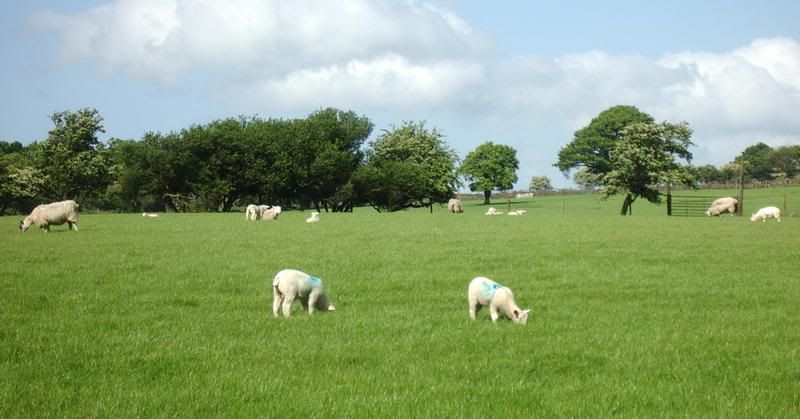
sheeps.jpg


:D
 
Do you know why some had paint on and some didn't? Well I'll tell you a useless fact.

What the farmer does is he gets his prize ram, and attaches a paint container too it. It's then let loose in the field. When the farmer goes back later he can take a look at the sheep with paint on their back and can figure out which ones the ram has, er, rammed. Next week he'll do the same with different colour paint. That way he can plan the birthing.

End of lesson.
 
wedge69 said:
Do you know why some had paint on and some didn't? Well I'll tell you a useless fact.

What the farmer does is he gets his prize ram, and attaches a paint container too it. It's then let loose in the field. When the farmer goes back later he can take a look at the sheep with paint on their back and can figure out which ones the ram has, er, rammed. Next week he'll do the same with different colour paint. That way he can plan the birthing.

End of lesson.
That's what noseall was getting at.
 
Look again Wedge the ones with the marks are this years lambs.....!
 
and i dont think the pads on the rams reach quite that far forward, with letters on either!
 
Not that I want to delve too far into my knowledge of sheep breeding (being a Welshie and all :wink: ) but the numbers on the sides of the lambs correspond to their order of birth. The first ewe to give birth will have the number '1' sprayed on her side, same as her lambs. Then the next ewe to pop will have '2' as will her lambs ... etc

This way, the farmer knows both which ewe the lambs belong to and how old they are as well as which ones to take to market first.  8)


PS; Velcro suits are the way to go!
 
The ones that kick/bite are usually sprayed red...

The ram paint pad is used during breeding so that the ones that have been served by the ram can be removed allowing him time to concentrate on the others.

Later, before lambing, ewes are scanned and the ones with singles, twins or triplets are marked with different colours so they can be seperated at lambing. Usually bring the ewes with 3 in to lamb, then one of the triplets gets stuck with a ewe with a single.

Then the lambs are sprayed with numbers to match the ewe's so they can be identified.
 
Back
Top