
Old steel gas pipe removal in 1930's house

Joined
29 Sep 2005
Messages
46
Reaction score
1
Location
London
Country
United Kingdom
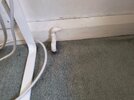
In a bedroom of a 1930's house there is what I assume is an old capped town gas pipe. I assume that it was for a gas heater which would have been removed many years ago. The house has a modern natural gas supply to the kitchen only (ground floor), feeding the boiler and cooker. The bedroom is upstairs. It is a 2 storey house with 3 bedrooms upstairs.
I want to remove this old pipe from the bedroom, or at least bring it below floorboard level so it is out of the way.
In the front garden there are the remains of steel pipes in the ground which are not capped. It is my guess that these are old town gas supply pipes.
Questions:
1) Is there a way for me to check if this pipe is live? I am fairly sure that it is not live, but what should I do to check? Perhaps turn off the gas at the modern meter, unscrew the old plug and try to detect a smell?
2) After confirming that it is dead, could I unscrew the cap, then try to find a joint under the floorboard to unscrew and screw the cap into that?
See photo to check what it looks like.
Many thanks.
 

Attachments

  • GasPipe202603.jpg
    GasPipe202603.jpg
    443.6 KB · Views: 31
1. Unless you have a current gas safe registration there is nothing you can or should do.
2. Get a gas safe registered engineer to do the work of identifying whether it is a gas pipe or not, and then:
2.1 Re-capping it somwhere below the floor boards. Nothing to stop you lifting the boards in advance.
2.2 Better, tracing it back as close to the meter as possible and disconnecting it and capping it.
3. Finding old steel pipes in the garden does not necessarily indicate a gas supply.
4. The original pipes were generally used when town gas was converted to natural gas. (Yes, I do remember it!)
 
The original pipes were generally used when town gas was converted to natural gas. (Yes, I do remember it!)

They were in use much earlier than that. Our 1955 house had steel pipes, run along the back gardens, and quite leaky a just a few years ago due to rusting - For a few years leading up to them being replaced, we had Transco come along the back gardens regularly, with 'sniffers', inspecting for leaks.
 
1) Is there a way for me to check if this pipe is live?
All you can do is trace it back and see if it is connected to anything, you might find it has been disconnected. Other than that it needs to be a Gas Safe person.
 
They were in use much earlier than that. Our 1955 house had steel pipes, run along the back gardens, and quite leaky a just a few years ago due to rusting - For a few years leading up to them being replaced, we had Transco come along the back gardens regularly, with 'sniffers', inspecting for leaks.
I think you're misreading what OB was saying. Not that steel pipes weren't used before natural gas arrived (early 1970s), just that they weren't replaced at that point. Natural gas is less corrosive than town gas.
Reminds me of a Frank Muir story about that time. There's a knock on his door and 2 young men are standing there. They say "We're here to convert you" "Jehova's Witnesses?" "No, North Sea gas"
 
I think you're misreading what OB was saying. Not that steel pipes weren't used before natural gas arrived (early 1970s), just that they weren't replaced at that point. Natural gas is less corrosive than town gas.

No, read it correctly, it said 'generally used when town gas was converted to natural gas. That suggested to me that they installed the steel for natural gas. I just made it clear that steel had been in use long before.
 
No, read it correctly, it said 'generally used when town gas was converted to natural gas. That suggested to me that they installed the steel for natural gas. I just made it clear that steel had been in use long before.
I would think he meant re-used. He said "The original pipes were generally used when town gas was converted to natural gas." The pipes wouldn't be original if they were installed at the time of conversion. Perhaps OB will confirm.
Also after conversion for new runs it would be easier to use copper, no good with town gas.
 
We had copper installed, indoors, with town gas?
When was that?
Town gas originally contained traces of acetylene which reacts with copper forming copper acetylide, a very temperamental explosive. I suppose it's possible that at some point the gas was treated to remove the acetylene, I wouldn't know. If anybody on here knows, perhaps they'll post.
 
When was that?

!950's and I was quite young. The reason I remember it was, a bare earth wire had been run alongside it. There must have been some voltage difference between the copper pipe, and the earth wire, because it eroded a hole in the pipe, and ignited the leaking gas. This was run in the celler, by the front door.

I arrived home from school, let myself in, to be greeted by smoke, from the floorboards on fire. I was able to extinguish it with bowls of water, then turn the gas off.
 
50`s internal pipes would usually have been lead or iron/steel cant think of any houses predating mid 60`s that i have worked in that had copper internals
 

If you need to find a tradesperson to get your job done, please try our local search below, or if you are doing it yourself you can find suppliers local to you.

Select the supplier or trade you require, enter your location to begin your search.


Are you a trade or supplier? You can create your listing free at DIYnot Local

 
Back
Top