Flourescent tube for kitchen lighting.

You bought a led tube. Has Loads of LED lights inside. That won't work although you can buy bulbs and some bits to convert light but not worth it.
You need the older gas filled tube that's started to be discontinued.

Is it just the old style £4 ISH fluoresce tube?
2 foot tube?
Much appreciate all the replies to this, thanks again.

That is the fitting fitting, yep £4 two feet flourescent tube. Looks like I was trying to fit an LED into a fitting designed for flourescent.

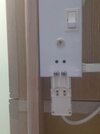
From memory I did a successful replacement about three or four years ago. I'll see if I can dig out an old T8? online. Not mission critical, three out of the four tubes are working.
 

Attachments

  • 1.jpg
    1.jpg
    318.4 KB · Views: 12
I am sure you remember the voltage optimizers, the whole reason for these was the excessive current drawn by fluorescent fitting when they had over voltage.
I'm not sure that I do remember.

However, what you're now (today and yesterday) talking about ('over-voltage' supply to fluoros) is different from "your usual". You usually tell us about the failure of fluorescent lighting to work when, due to a modest amount of voltage drop, they are supplied with an 'under voltage', even though that voltage (as supplied to the fitting) is still well within the range of permitted UK supply voltages.
 
Yes, not seen a 230 volt rated fluorescent light with a magnetic ballast that will work with a 209.7 volt supply, i.e. 6% drop on supply voltage and then 3% drop within the premises.

209.7 to 253 volts is a massive range. But switch mode power supplies have no problem with that range. Sockets 205 to 253 volts, it was all at 4% volt drop, now lighting 3% and rest 5%, this is on top of the DNO allowed volt range of -6% and +10%.

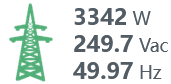
In real life, when the supply voltage dropped from 240 volts to 230 volts, we saw no change, 240 volts + 6% = 254.4 volts, so we only dropped 1.4 volts. Today my software tells me 1779972820533.png and this is normal, way over 230 volts, and with over voltage the fluorescent fitting still works, just uses a lot more power than what it is rated.

But the problem here is the electronic transformer often wired like this
1779973294510.png

with twin tubes, note terminals 3 and 5, this will not allow LED replacements. There is no option but to remove the electronic ballast and rewire.
 
Yes, not seen a 230 volt rated fluorescent light with a magnetic ballast that will work with a 209.7 volt supply, i.e. 6% drop on supply voltage and then 3% drop within the premises.
[ to be a little pedantic - if, as I think is what we're meant to do, we calculate the within-premises VD as a "percentage of 230V" (not as a "percentage of the actual supply voltage"), then it's actually 209.3 V, rather than 209.7 V ]

If that's true, then if one accepts the VD guidelines of BS7671, those fluorescent lights are really not 'fit for purpose' in UK, since they ought to work with the lowest 'permitted' supply voltage (216.2 V) and the highest guidline within-premises VD (3%).

Of course, in practice an extremely high proportion of UK installations have supply voltages well above 216.2 V (indeed, a high proportion above 230 V), so it should be rare for their to be any such problem.
 

If you need to find a tradesperson to get your job done, please try our local search below, or if you are doing it yourself you can find suppliers local to you.

Select the supplier or trade you require, enter your location to begin your search.


Are you a trade or supplier? You can create your listing free at DIYnot Local

 
Back
Top