
You are using an out of date browser. It may not display this or other websites correctly.
You should upgrade or use an alternative browser.
You should upgrade or use an alternative browser.

I wonder if these changes to the contracts and pension packages may help attract high quality people into these jobs in future
..and there was me thinking you all did it for the good of others
Soup kitchens are up and running in Spain. It will soon be the same here.
Just a matter of time.
Cream of Chicken please with hot buttered crusty bread MMmm
L
LooPrEvil
Madness, complete madness. Surely in a recession, we all have to take a hit.
I've just been told I will not be getting an increase in salary again this year (3 years running) and while costs increase to live I have had to cut my contributions to my private pension to offset losses elsewhere and even at that it's really not offsetting much any more.
Oh wait, I'll go on strike - the industrial equivalent of throwing one's toys firmly out of the pram.
Well if you are not prepared to fight for your rights then sorry, but dont come on here moaning - we can't do anything for you!!
Any way, vote Tory and this is what you would told would happen

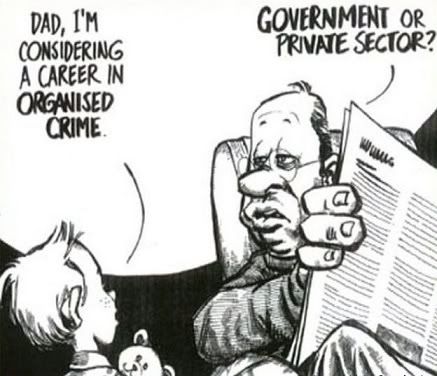
J
joinerjohn
I agree,,,, but,,,, All they'll do if the government hit them for more tax etc is to pass this on to the customers. So we lose out yet again.Let big business, banks and all the Utility suppliers who have been ripping us off for years avoiding BILLIONS of pounds of taxes for YEARS take the hit.
robber barons the lot of em...let them pay more
C
cantaloup63
Give me a hand and tell me the qualities of the people who you would want to teach your children. When you have defined the person specification then ask yourself whether this hypothetical person would be more or less likely to enter the world of teaching.I wonder if these changes to the contracts and pension packages may help attract high quality people into these jobs in future
Define Quality...
Madness, complete madness. Surely in a recession, we all have to take a hit.
I've just been told I will not be getting an increase in salary again this year (3 years running) and while costs increase to live I have had to cut my contributions to my private pension to offset losses elsewhere and even at that it's really not offsetting much any more.
Oh wait, I'll go on strike - the industrial equivalent of throwing one's toys firmly out of the pram.
Well if you are not prepared to fight for your rights then sorry, but dont come on here moaning - we can't do anything for you!!
Any way, vote Tory and this is what you would told would happen
Rights? What rights are you talking about. I'm private sector. Not soft public. What right have I to tell my employer what I should be paid. And that wasn't a moan it was a point (sometimes people do have them that differ from your views) saying that we all have to make sacrifices when it gets tough and being spoilt kids about it doesn't change the **** we are in - like it or not!
Give me a hand and tell me the qualities of the people who you would want to teach your children. When you have defined the person specification then ask yourself whether this hypothetical person would be more or less likely to enter the world of teaching.I wonder if these changes to the contracts and pension packages may help attract high quality people into these jobs in future
Define Quality...
Is this as a comparison for the obvious quality that's teaching them at present?
I'm sure that we have many qualified and competent people out there that can do the job equally as well if not better but due to lack of opportunity they cannot get their foot in the proverbial door.
You can't tell me that everyone teaching at the minute is "quality" *mainly as quality is a subjective measure. It must be defined to an upper and lower acceptable limit.
- Joined
- 2 Oct 2010
- Messages
- 3,624
- Reaction score
- 667
- Country

Would any public sector workers like to debate this...
A Public Sector worker earning £30,000 contributing 10% (£3,000) a year for 40 years will get an index linked pension of £20,000 (based on 1/60ths). Current life expectancy means they’ll receive this for about 20 years. This was acceptable, a few years ago when life expectancy meant they’d receive it for about 5 years. This is not acceptable now, annuity rates have dropped to a third (a £100,000 annuity now pays £3,333, it paid £10,000 twenty years ago), in the last 6 months alone annuities have gone down by almost another tenth. In twenty years the cost of private pensions has gone up threefold whilst Public Sector pensions have remained unscathed.
When they retire their pension contributions and national insurance payments will cease (thus saving them over 20%), their (age related) tax code will commence and they’ll also get a state pension (it’s being proposed this is raised to circa £7,000 a year soon). Their net income will be greater during retirement than when they worked. This is totally unjust and a mockery to other pensioners. The vast majority of this injustice will be funded by the Tax Payer.
Paying £3,000 a year for 40 years to receive £20,000 a year for 20 years is an exceptional deal. It’s absolutely ludicrous that they’re going on strike because they’re expected to pay a bit more, or work a bit longer, or receive a bit less.
In the Private Sector paying this £3,000 a year may just mean one escapes means testing in retirement. Any insurance company that forecasts a pension even close to £20,000 a year for this sum is lying.
I now expect to receive various responses to this post from the feel sorry for the Public Sector brigade saying that I’ve got the wrong view of how the deck chairs are arranged on their Titanic:
Namely:
1) The figures are incorrect – They’re close enough.
2) They’re on a 1/80ths scheme - Oh dear they might have to take a slight drop in income when they retire compared to when they worked.
3) They haven’t had a pay rise for 3 years – One way of reducing the costs of their final salary based pension is to slowly reduce their final salary.
4) They earn less than £30,000 – Then the comparable increase in their income during retirement will be even greater.
5) Their pensions are fully funded – These types of pensions ceased in the Private Sector because their liabilities can not be calculated, the shortfall in their schemes will have to be met by the tax payer.
6) They work very hard – Don’t we all?
7) They can’t work when they get too old – Neither can the rest of us.
 Their employer makes additional pension contributions - This is in effect extra pay, do their Unions add this when negotiating their salaries?
9) They don’t have 40 years in the Public Sector – Then they should have funded the rest of their pension from their time in the Private Sector and realise what a wonderful scheme they’re now on.
10) Everyone in the Private Sector has a company car – Which planet are these people on?
11) They also pay taxes – Which is 20% of their income, do they go to the pub with their mate and buy them a pint after they’ve been bought 5?
12) The Private Sector should demand better pensions – If Private Sector companies had to fund similar schemes they wouldn’t survive and there wouldn’t be a Private Sector and then there wouldn’t be a Public Sector.
They’ll have a million other reason for these strikes and believing the utter rubbish spouted to them by their Unions. The real and only reason is their unfettered and totally blinkered GREED.
A Public Sector worker earning £30,000 contributing 10% (£3,000) a year for 40 years will get an index linked pension of £20,000 (based on 1/60ths). Current life expectancy means they’ll receive this for about 20 years. This was acceptable, a few years ago when life expectancy meant they’d receive it for about 5 years. This is not acceptable now, annuity rates have dropped to a third (a £100,000 annuity now pays £3,333, it paid £10,000 twenty years ago), in the last 6 months alone annuities have gone down by almost another tenth. In twenty years the cost of private pensions has gone up threefold whilst Public Sector pensions have remained unscathed.
When they retire their pension contributions and national insurance payments will cease (thus saving them over 20%), their (age related) tax code will commence and they’ll also get a state pension (it’s being proposed this is raised to circa £7,000 a year soon). Their net income will be greater during retirement than when they worked. This is totally unjust and a mockery to other pensioners. The vast majority of this injustice will be funded by the Tax Payer.
Paying £3,000 a year for 40 years to receive £20,000 a year for 20 years is an exceptional deal. It’s absolutely ludicrous that they’re going on strike because they’re expected to pay a bit more, or work a bit longer, or receive a bit less.
In the Private Sector paying this £3,000 a year may just mean one escapes means testing in retirement. Any insurance company that forecasts a pension even close to £20,000 a year for this sum is lying.
I now expect to receive various responses to this post from the feel sorry for the Public Sector brigade saying that I’ve got the wrong view of how the deck chairs are arranged on their Titanic:
Namely:
1) The figures are incorrect – They’re close enough.
2) They’re on a 1/80ths scheme - Oh dear they might have to take a slight drop in income when they retire compared to when they worked.
3) They haven’t had a pay rise for 3 years – One way of reducing the costs of their final salary based pension is to slowly reduce their final salary.
4) They earn less than £30,000 – Then the comparable increase in their income during retirement will be even greater.
5) Their pensions are fully funded – These types of pensions ceased in the Private Sector because their liabilities can not be calculated, the shortfall in their schemes will have to be met by the tax payer.
6) They work very hard – Don’t we all?
7) They can’t work when they get too old – Neither can the rest of us.
Their employer makes additional pension contributions - This is in effect extra pay, do their Unions add this when negotiating their salaries?9) They don’t have 40 years in the Public Sector – Then they should have funded the rest of their pension from their time in the Private Sector and realise what a wonderful scheme they’re now on.
10) Everyone in the Private Sector has a company car – Which planet are these people on?
11) They also pay taxes – Which is 20% of their income, do they go to the pub with their mate and buy them a pint after they’ve been bought 5?
12) The Private Sector should demand better pensions – If Private Sector companies had to fund similar schemes they wouldn’t survive and there wouldn’t be a Private Sector and then there wouldn’t be a Public Sector.
They’ll have a million other reason for these strikes and believing the utter rubbish spouted to them by their Unions. The real and only reason is their unfettered and totally blinkered GREED.
C
cantaloup63
Bit of a harsh generalisation thereIs this as a comparison for the obvious quality that's teaching them at present?
 Assumed sterotypes is a pretty poor show and doesn't really add anything rational to your point [/quote]
The door is always open to those that wish to try - there is sufficient turnover in staff to facilitate this, and those that do apply are of varying quality, obviously, but "we're" not oversubscribed so I'm not sure where you're getting these willing applicants from.I'm sure that we have many qualified and competent people out there that can do the job equally as well if not better but due to lack of opportunity they cannot get their foot in the proverbial door.
I'm not claiming that everyone is, and as suggested above, you can't be claiming that the majority of "us" are that bad. Since the job isn;t exactlry attracting a plethora of graduates with first and upper second class degrees (which is possibly one criteria), how do you think that the current situation is going to help entice them?You can't tell me that everyone teaching at the minute is "quality" *mainly as quality is a subjective measure. It must be defined to an upper and lower acceptable limit.
Sure, things are tough but none of us are the allusion that teaching is a job for life, and none of us are in it to make a shed load of money. All we would like really is that given that we haven't had an above inflation increase in salary for at least 15 years, but have marginally increased out pension payments anyway, that our employers tried a little harder to keep their side of the agreed contract.
- Joined
- 2 Oct 2010
- Messages
- 3,624
- Reaction score
- 667
- Country
C'mon dex, your the maths guru on here
Then figures add up dont they? Not just a dumb ass plumber eh?
Then figures add up dont they?
Not just a dumb ass plumber eh?
C
cantaloup63
@misterdubya - I hear everything you say in your missive which, given the way in which you have listed most likely counterarguments gives one very little in way of rebuttal. The only point I can really take issue is the reference to our "greed". I never went into this job for the hours, the money, the career (I've done my time as Head of Depatment, Assistant Head of Year, IT Coordinator etc), but gave all of that nonsense up since I prefer to spend my time in the classroom helping children to understand and "get a buzz" out of knowing what I know about maths.
Many of my colleagues are of similar ilk, but we come across the more "experienced" (ie old and clapped out) from time to time who are shadows of their undoubted former self, and the prospect of having to do our job until we are beyond decrepit before being able to relax for our final few years (the mean average life expectancy of teachers who have done their full 40 years of service is 2 years) is of some natural consternation.
Many of my colleagues are of similar ilk, but we come across the more "experienced" (ie old and clapped out) from time to time who are shadows of their undoubted former self, and the prospect of having to do our job until we are beyond decrepit before being able to relax for our final few years (the mean average life expectancy of teachers who have done their full 40 years of service is 2 years) is of some natural consternation.
- Joined
- 2 Oct 2010
- Messages
- 3,624
- Reaction score
- 667
- Country
@misterdubya - The only point I can really take issue is the reference to our "greed".
Perhaps if you can explain the figures from a superior mathermatical view, I would take that comment back. Can you provide a like to your findings? I would like to understand why teachers seem not to enjoy a good retirement.
Similar threads

- Replies
- 79
- Views
- 10K


- Replies
- 121
- Views
- 10K


