SHort life of G10 and Mains Downlights

Joined
18 Feb 2007
Messages
1,410
Reaction score
79
Country
United Kingdom
I have just moved into a new house in which some mains downtighters are installed. I have only been in the house 4 weeks and alresdy 5 of the eight installed downlighter bulbs have failed. Even a replacement bulb bought from a different source as the original supplied units has failed.
I cannot identify why these should have failed. I thought maybe mains derived switching transients may be the problem, but my neighbours don't seem to be experiencing the same problem, which would be the case if a mains bourne transient was the cause.
Co-incidentally I have had one G4 - 10W bulb fail but I think this maybe is unrelated.
I am now at a loss to think of a cause.
Any ideas from any Sparkies who have had a similar experience
 
Using a Digital Volt Meter I am getting 240V but of course I can't check For any Supply Switching Transients. Looking back at the DIY.Com history I see way back in May 2007 a 'GeeTee' experienced a similar problem and there was never a real conclusion drawn to in that exchange.
I have a lot of GU10 fitting in my own home and in around 10 years I have only had to change two or three units. I also installed a lot in my sons previous house and in four years he did not have to change any. In this new house he has already changed five in 4 weeks out of a total of about 15 units. The only logical conclusion I can come up with is mains bourne switching transients, but I don't really know whether these GU10 units are that sensitive to such things. If they were then I would have thought a lot of the units would fail at the same time, when the transient happened. The situation is odd as one unit failed a week after it was replaced, and the replacement unit was from a totally different source to the initial units, as such we don't have a 'batch' problem. Also if transients were a problem. neighbours would be suffering the same problem, but in talking to one neighbour, they have not had any units fail in three months.
As a side, I have had one G4 bulb fail but as this is only one out of24 such bulbs I have put that down to chance, but maybe that failed on a transient, but there again if it were switching transients then I would have thought more than one out of 24 bulbs would have Failed at the same time.
My question was made in the hope that someone else had suffered the same failure rates and determined the cause and found a solution.
 
What brand are the lamps?

Are the back of the fittings surrounded with thermal insulation?
 
Hi RF Lighting,
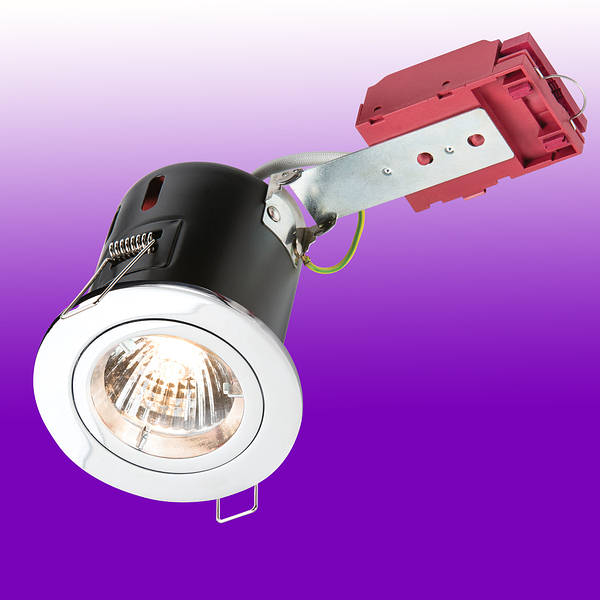
One of the GU10's I replaced was GE, but the make of the originals I am afraid I don't know. But the GE unit failed in about 7 days, and they are not really used that much. I withdrew a couple of the complete units today to see if I could see anything that would be suspect, just what I don't know, but what I found was that the lamp unit was constructed of a plastic tube about 3 in dia aby about 5 in high which completely enclosed the lamp holder. This is the first time I have seen such a construction as usually the ceramic lamp holder is quite open. The thought that struck me is that this design will not assist the lamp cooling as does the open design I am used to, and maybe the problem is lamp overheating, but surely the designers of the lamp will have addressed this issue. I did not note the name of the manufacturer but I must say it looked very robust and superior to the open type, but of course the robust design may be it's very downfall.
Now you have raised the question I am going to ask more neighbours if they are experiencing my problem if you think this could be the source of the failures and if the problem is common, then we all need to get the builder involved to change them all. What is you views on these enclosed type of GU10 fittings.
 
Are your fittings fire rated like this one?

FRDG10C.JPG


If so you need to make sure you are using PAR GU10 lamps and NOT the dichroic types.
 
Hi RF,
Yes - they are very similar but the connection box is black which I assume is not significant.
What I think is significant is that the originally installed units must have had the PAR GU10 lamps installed ????? and three of them failed fairly quickly.
Thanks for the information regarding PAR GU10's, I must admit I was totally unaware of the existence of this type of lamp. Are they only available from specialist retailer's ?
Maybe the spark who installed the original units is not aware either and he may have installed conventional GU10's?
If I take one of the original lamps out of it's holder, presumably the lamp will be identifiable as PAR GU10.
It gives me a good lead for further investigation.
Thanks so much for your help.
 
Vibration is also the cause of fatalities in the halogen lamp population.

Halogen lamps living in the ceiling of bungalows seem to last much longer than those in the ceiling of houses where the kids are doing elephant impersonations on the floor above.
 
PAR lamps are available from most places which sell lamps.
These for example: http://www.screwfix.com/prods/51055/

There is really no reason to use dichroics in any downlighter fitting, since the dichroics are intended for use in display lighting, where you don't want the item being illuminated to get hot.
 
Excuse my lack of basic knowledge here with respect to lighting.
RF recommends PAR GU10's not dichromic. I therefor expected that I could go to a store or the web and see a lamp specified as PAR GU10.
Flameport gave me a link to Screwfix but the corresponding item makes no reference to PAR . dichromic refers to two colours as far as I am aware,
My confusion is, what does PAR refer to and what is the difference between PAR and dichromic and more importantly, when buying GU10's how do I tell whether they are PAR and Dichromic.
I tried to identify what was installed in the present fittings and can only find GU10 50 Watt defined.
Does PAR refers to the LED versions of GU10's?. I personally do not like LED lighting as it emits a light which is 'cold' and towards the blue end of the spectrum.
So in conclusion - What does PAR refer to and How do I identify if a bulb is PAR or Dichromic?
 
Dichroic refers to the reflector. It's a coating that reflects visable light but lets the infra red (heat) through.

This means that the light fitting will get hot.
 
Dichroic refers to the reflector. It's a coating that reflects visable light but lets the infra red (heat) through.

This means that the light fitting will get hot.
Thanks for that Fred - But what does PAR refer to?

Parabolic, I believe, Parabolic Aluminized Reflector according to good old Wikipedia/Google.
 
I am getting some useful information here, but where I am puzzled is RF lighting suggested that in Fire Rated units I need to be certain I am using PAR GU10 's and not dichroic.
As far as I can determine as PAR refers to the reflector which is the dichroic bit, what is the difference between PAR and dichroic as suggested by RF lighting.
Because my bulbs are not lasting very long, RF suggested that as my units where Fire Rated I must use PAR GU10's. so I assumed these units must be operating at a lower temperature as the Fire Rated units where enclosed and as such allowing the bulb to over heat !!!!
The present conclusion is that PAR and Dichroic are the same thing, as such, RF's suggestion does not solve the problem.
 
PAR lamps have an aluminium reflector. Everything produced by the lamp is reflected forwards, heat and light.

Dichroics direct the light forwards, but do not reflect the infra red heat, so the beam from the front is cooler, and most of the heat goes out the back into the fitting, where it will cause overheating if installed in most ceiling downlighters. As fire rated fittings are enclosed, the problem of overheating is much worse.

Dichroics are often called 'cool beam' types. Some PAR types are unhelpfully called 'cool fit'.
 

If you need to find a tradesperson to get your job done, please try our local search below, or if you are doing it yourself you can find suppliers local to you.

Select the supplier or trade you require, enter your location to begin your search.


Are you a trade or supplier? You can create your listing free at DIYnot Local

 
Back
Top