@austin99 found a lead so it does seem in many ways a pointless discussion. I have wondered how much the earth voltage would rise with a loss of PEN? I think the problem is, when we started using PME the loads were reasonably even phase to phase, but today we have EVs which put a high load on the system, and solar panels which put a low or even negative load on the system.
If the EV and solar trip out due to over/under voltage, then a damaged PEN will not cause massive swings of PEN voltage, but of course the DNO is unlikely to admit that is why they want solar and EV supplies to auto disconnect if the voltage goes out of spec.
How often do we check the voltage, and how long would it take to realised there was a PEN fault, I don't mean total loss, but somewhere a poor connection so it swings more than it should, I note my voltage
every time I look to see how my solar is doing, and I know I have an earth rod, which one would hope limits the swing should a PEN be lost, look at google maps, and we can see the solar installs,
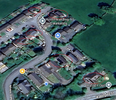
but we can't see EV chargers as easy, and next door to my for example has an EV charge point, but does not have an EV, so it is only used when he has one on test. And from google maps working out if solar or water panels on the roof is not easy. This house
I know there are failed water solar panels, as it was father-in-laws house, so we can only guess on the phase imbalance and so the result with a poor PEN conductor.
So are we told we must have loss of PEN detection for safety reasons, or are we told to have it so the load with a poor PEN is more even?
The PME name means multiple earths, I know this may not be the case with TN-C-S although we tend to reguard the two as being the same, but with multiple earths, without a high load on one phase, or minus load on one phase, the voltage should not swing too much, what would interest me, is with smart meters, how fast would the DNO know when a PEN is lost or damaged?



