Outside plug - How easy would it be to wire it into a plug socket rather than to a 3 pin plug?

Joined
22 Aug 2024
Messages
87
Reaction score
3
Country
United Kingdom
hi.

A few years ago with the help of you lovely people I saved £300 and did my own outside plug. It's been a GOD send.

I used one of these or one like that. I wired it in myself to a 3 pin plug, sealing it etc and it's worked fine!

However, now i want to add one to the back garden. I was wondering would it be possible to just wire it directly into the plug socket rather than to a 3 pin, taking up a socket? After watching a few youtube videos they say you simply add the ends of the wire to the terminals... Is this true?

The plug it's working into isn't on a spur. Things we will plugging into the outside plug will be a small water feature, a strimmer or fairy lights etc.

ty for any help you can give :)
 
It depends if a ring final or radial, or a spur off a ring final or radial, it is not simply just connect up.

The plug has a fuse in it, and we are only allowed a single or double socket on a spur, a double socket is rated 20 amps, not 26 amps, and the whole system is designed to limit the power to a safe level, there is also what happens if water does get in.

I have three outside sockets, two from a dedicated RCBO which are fed direct, and one from a wall socket on the front ring final, which is plugged in, so should I get a fault, which I did, I can simply unplug it.
 
It depends if a ring final or radial, or a spur off a ring final or radial, it is not simply just connect up.

The plug has a fuse in it, and we are only allowed a single or double socket on a spur, a double socket is rated 20 amps, not 26 amps, and the whole system is designed to limit the power to a safe level, there is also what happens if water does get in.

I have three outside sockets, two from a dedicated RCBO which are fed direct, and one from a wall socket on the front ring final, which is plugged in, so should I get a fault, which I did, I can simply unplug it.
ty! it's not a spur but not sure what a ring final or radial is sadly so I can't be sure about that one. I'll just do it through a plug then lol ty.
 
Ring and radial circuits.png
Ring final.jpg
 
So unless I am mistaken you have an external socket plugged into an indoor socket. So effectively an extension lead proteced by a 13 A fuse in the plug. As long as the inside socket you have it plugged into is protected by an RCD OR RCBO then you can do what you are suggesting,
ie. another extension lead. But if you have a heavy load connected to the other sockets you risk blowing the fuse in the indoor plug.
 
"ty! it's not a spur but not sure what a ring final or radial is sadly so I can't be sure about that one."

I`m a bit baffled by that statement unless you have wrongley interpreted a "spur" as meaning a Fused Connection Unit, it is a very common mistake even by some electricians etc so do not beat yerself up though.
 
The best way to find out if the socket is suitable to be used for your outside socket is to check the size of the MCB and the cables feeding the socket, as Pete said.

A ring final circuit is fed via a 30 or 32A device and normally has two cables at each point on the circuit, sometimes three if an unfused spur has been taken from that point.

See the diagram that Eric posted.

A radial final circuit is fed via either a 20A device, sometimes 16A, (in 2.5mm² usually solid core cable) or a 30 or 32A device (in 4mm² stranded cable) and usually has two cables at each point, sometimes three, and one at the end of the circuit, as (unlike the ring final circuit) there is no cable returning to the supply.

The cables I have described here are modern metric sizes. It is often said the quickest way to distinguish between cable sizes on socket circuits is that if it is solid core, it is 2.5mm² and if it is stranded, it is 4mm².

You may have stranded 2.5mm², or older imperial cable, which is the equivalent of 2.5mm² but stranded. This could have conductors that are copper coloured or silver coloured, that have been tinned.

Once you know what size the protective device is, turn it off, check the socket you want to attach the outside socket to is dead with a device you have just tested works in another socket, then open up the socket and see how many cables are connected to it.
 
@securespark has given a good answer, in essence a spur and a radial are the same, but we have English to contend with, if something is final as with ring final, you can't have a final final in English same as saying the very end, it is simply the end.

So a fused spur is really a new circuit, and a radial from the ring final, but English will not allow us to have a new circuit from a final circuit so we invented new words and phrases to label them.

So we have:-
Ring final - where sockets are supplied by two cables arranged in a loop. In the main using 2.5 mm² cable and a 32 amp MCB/RCBO. There may be old installations using 30A fuses, but to extend such a ring final one would need RCD protection so not straight forward. Maxium lenght is around 106 meters.

Radial final - Can be 1.5 mm², 2.5 mm² or 4 mm² with a 16 amp, 20 amp or 32 amp MCB/RCBO with 32 amp one needs to be careful to continue to use 4 mm² (or 6 mm²) with a 20 amp radial using 2.5 mm² maxium lenght is around 32 meters, which is why not popular.

A spur - uses a smaller total cross sectional area so typically 1.5 mm² or 2.5 mm² when comming from a ring final a single 2.5 mm² means half the cross sectional area as only one cable used, the spur is sub divided into a fused spur (really a radial) and an unfused spur, with the latter you are only allowed a single device, this means if people have followed the rules, you can identify an unfused spur as only one cable goes to it. However, this relies on those before you following the rules, with a fused spur, you can have as many sockets as you want.

What I have done when I have found a doner socket supplied with an unfused spur, is to add a fuse. IMGP7387c.jpg Using the LAP grid switch system, a socket, fuse, and switch will fit in a double socket box, shown here where I wanted to extend an unfused spur circuit.
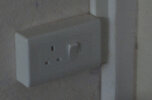
The regulations allow circuits installed under a previous edition to remain as they are, but if you add new, then it needs to comply with the current edition, so if there is no RCD protection you need to add it. With surface cables easy enough you just use a RCD socket, but with buried cables the cables also need protection, so using a RCD FCU (fused connection unit) is likely the easiest option.

Of course we should complete a minor works certificate, link here filling in the certificate serves as a checklist, it does say inquiry is a valid method to get readings, so most of the certificate you can copy the readings given in the installation certificate,
1780995897534.png
is important, as is
1780995951058.png
and if on a ring final also
1780996052912.png
It does not really matter if you can't measure less than 1 Ω what you are doing is confirming it is a ring.

For the electrician it is easy, we use our expensive meter, RCD tester ramp.jpg and write down the readings, shown here testing the RCD, so we can take a loop impedance reading before starting, (this also tells us how long the cable is so not exceeding 106 meters) and note reading, test the continuity while fitting the socket, at the socket, and then loop reading again when complete, and this will highlight any errors, like a wire popping out of the terminal, the DIY guy does not have this option, so you have to be very careful to ensure all wires are tight.
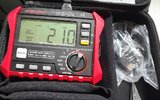
But even if these 1780996749526.png testers don't show if the loop impedance is low enough, as will pass at 1.9 Ω and the pass mark for a ring final is 1.38 Ω, they will pick up most major faults.


 

If you need to find a tradesperson to get your job done, please try our local search below, or if you are doing it yourself you can find suppliers local to you.

Select the supplier or trade you require, enter your location to begin your search.


Are you a trade or supplier? You can create your listing free at DIYnot Local

 
Back
Top