The copper is very likely exposed.
Well, don't you think you ought to check, before getting all wound up wanting to move the socket to compensate?

The copper is very likely exposed.
Do you mean the copper of the neutral (which has/had blue, conceivably black, insulation) OR the bare copper 'earth' wire?The copper is very likely exposed. Can I relocate the 2 gang socket down so it's 28cm from ground? Then no additional joints needed
Brilliant thanks. I will turn the B32 RCBO off, test the wire using a voltage tester then see if the wire is actually nicked (exposed copper) if the sheath is cut but the live/earth/neutral wires are not then I'll tape over it. If the live/earth/neutral is cut I will then relocate the socket down 8cm. That way no extra jointYes.
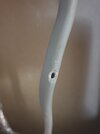
Probably the neutral copper as I can see (bear in mind the cut is literally 4mm across and less than 1 mm deep) a bit of blue. It's a tiny cut literally a glancing cut from a multi cutter not a full 'go through'Do you mean the copper of the neutral (which has/had blue, conceivably black, insulation) OR the bare copper 'earth' wire?
That's what I'm doing 1st thing tomorrow, and if there's no exposed copper I'll wrap tape around it and leave aloneWell, don't you think you ought to check, before getting all wound up wanting to move the socket to compensate?
OK. If it's not 'fully through' the blue insulation, you wouldn't be able to see any copper of the neutral.Probably the neutral copper as I can see (bear in mind the cut is literally 4mm across and less than 1 mm deep) a bit of blue. It's a tiny cut literally a glancing cut from a multi cutter not a full 'go through'
There is not enough flex in the cable for 180 degree turns.
So I would use this wago instead x 3 (one live one neutral one earth):
WAGO 221 2-Way Inline Lever Connectors 32A 0.2-4mm²: https://www.toolstation.com/wago-221-2-way-inline-lever-connectors/pAC293
is this ok?


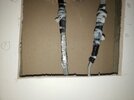
Image (2) is the 2.5mm2 cable nick turns out it was only through the outer sheath and did not go through the inner sheath no sign of exposed copper.Pictures would help us understand the situation.
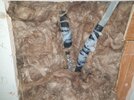
Pic (filename ending ..535) I decided to wrap electrical tape around the cable, then put waterproof tape over that and then use cable ties to make sure it stays on
I have accidentally nicked a 2.5mm2 twin/earth cable
Well the property has enough problems without adding risk of electric fires to it.All I can say to that, is good grief! Well and truly, well over the top, for a tiny nick to the outer. At the most, a single layer serving, over the top, would have been perfectly adequate.
You originally reported 'a' cable nicked, your photos suggest you have in fact repaired two cables - why?

Well the property has enough problems without adding risk of electric fires to it.
Do mice/rats eat through electrical tape and waterproofing tape? I saw some partially chewed cables (in a different property years ago) due to rat damageAdding that amount of thermal insulation, is marginally adding to the risk of fire, rather than reducing it. Cables rely upon a cooling air flow, to help dispose of their internal heat.
The sheath, is the outer protection from mechanical damage, usually grey. The insulation, is the brown/black/red/blue, beneath the sheath. Damage to the outer sheath, is of much less consequence, than damage to the insulation of a cable.

I decided to wrap electrical tape around the cable, then put waterproof tape over that and then use cable ties to make sure it stays on

If you need to find a tradesperson to get your job done, please try our local search below, or if you are doing it yourself you can find suppliers local to you.
Select the supplier or trade you require, enter your location to begin your search.
Are you a trade or supplier? You can create your listing free at DIYnot Local